June 24, 2019
Danny, the best Saskatchewan guide, historian and host that you could ask for, had given us a recommended itinerary for spending our day today. After breakfast we headed north to visit Batoche and Duck Lake, two historic sites that were part of the development of the fabric of this country.
The trip north was different, as we had left the trailer and the kayaks at Danny’s house. The SUV felt nimble and without the kayaks on the roof, there was no wind noise.
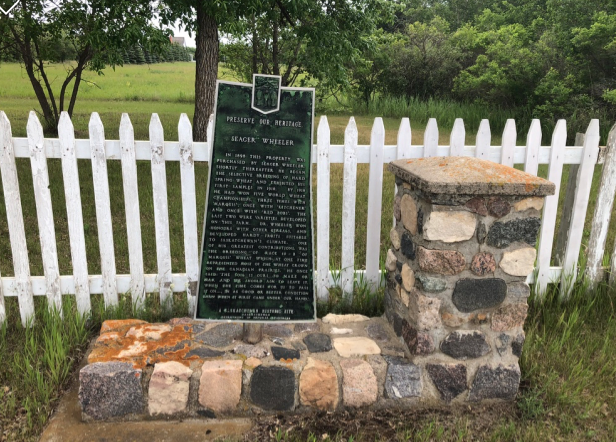
On the way we stopped at the Sieger Wheeler farm site. This was the home of Dr. Wheeler, who developed the world’s best strain of hard Marquis wheat that changed the farming industry and put Canada on the map as the world’s premier wheat supplier. The farms and fields in this region are evidence of the importance of wheat farming. Unfortunately the farm site was closed to the public today.

We continued on to Batoche, a National Parks Canada Historic site. In the early 1800’s French Canadian farmers and homesteaders were moving west to start farms and new lives. They were known as the Metis, and they surveyed their plots of land and developed the area of Batoche along the South Saskatchewan River. They had developed their cultural way of life, married local indigenous partners, raised families and farmed and prospered. The village of Batoche housed 500 townsfolk, and there was a population of approximately 1500 in the region. Trade and commerce was booming and farming was a success.
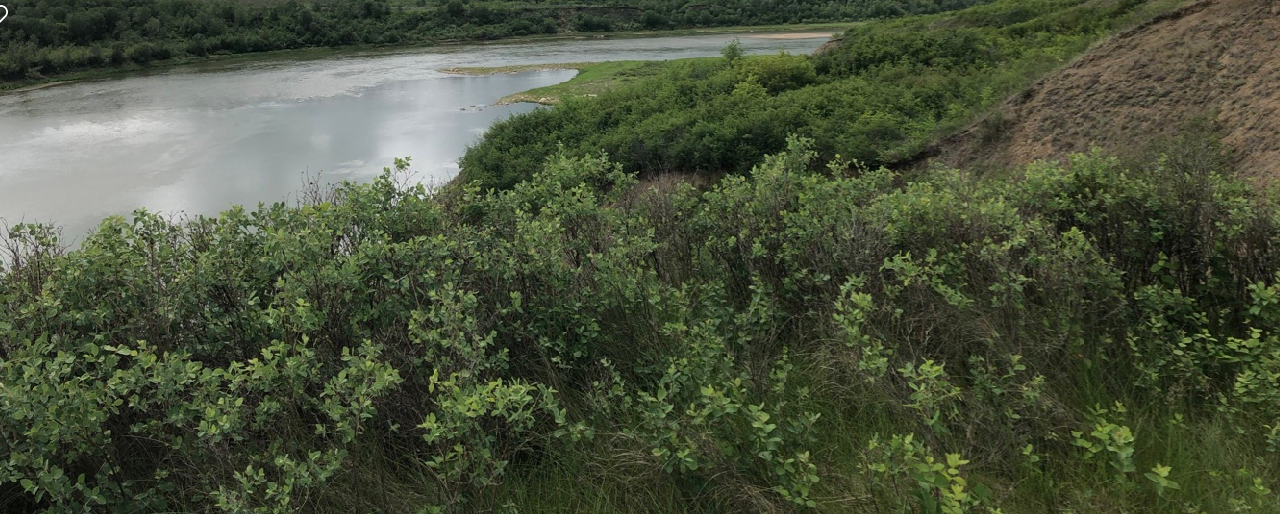
The Canadian government of the day was encouraging homesteading, however the formula for granting land and their rule of government was not being accepted by the Metis and the Indigenous peoples, including the “half breeds”. Louis Riel had been involved in the forming of an alternate government in the east, unsuccessfully, and was now in hiding in Montana. He was brought back to Canada, and plans were made to try to persuade the Canadian government of the Metis needs. These attempts were made with the assistance of Gabriel Dumont, a local, well respected Metis hunter and fearless man. Several attempts were made by the Metis to petition the government to develop a workable solution but they fell on deaf ears. At last the Metis decided that they would put up an active resistance to the plans of the federal government.
It was therefore, in March of 1885, the Government under the direction of Mackenzie King, the prime minister, formed a battalion of soldiers and a short battle took place in Batoche. Several soldiers and residents of Batoche were killed, the townsfolk surrendered and the village was destroyed.
The site is now a National Historic Site. There are several buildings still standing that have been restored and Parks Canada hosts tours and developed interpretive displays and films.
As we arrived, 7 school buses had also arrived with end of the year tours for students. Madison, a park host, greeted us. She assured us that the student tours would not affect us. After her explanation of the site, we toured the museum and enjoyed a short informative movie, before we set out to walk around the area. The entire site is spread out over a large area. Most of the students were toured around the vast property on shuttles but we decided to walk.
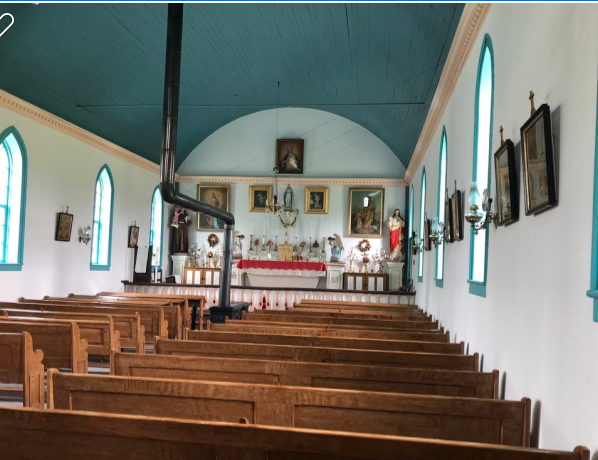
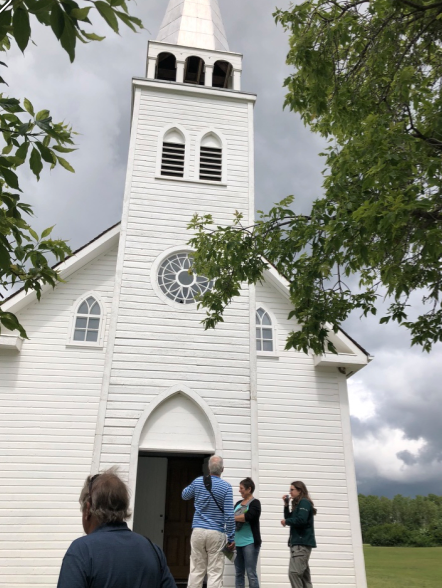
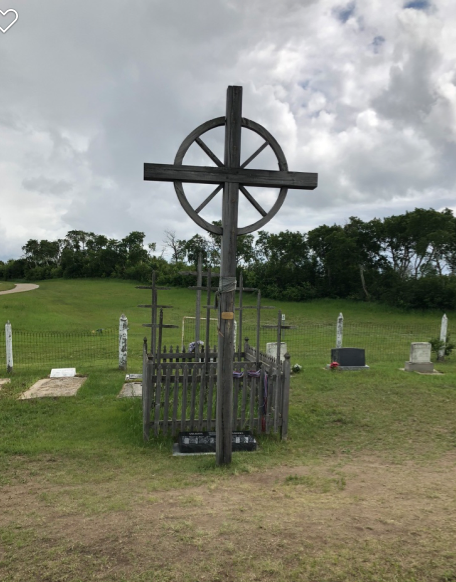
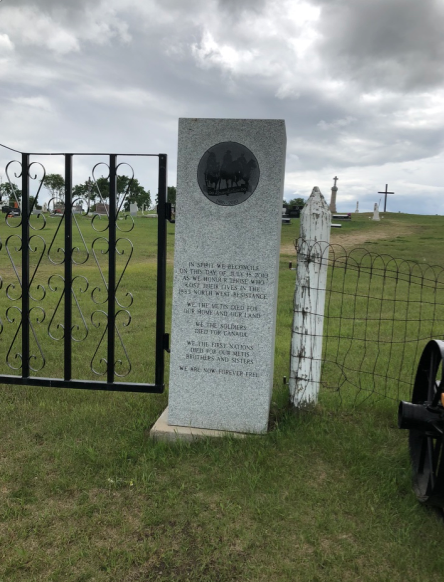

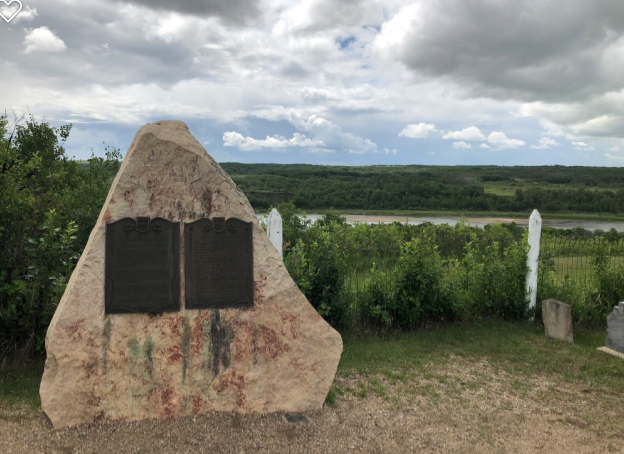
Kiara, a park information host, provided our own personal informative and in depth session of the life of the Metis in Batoche. Kiara, is a third generation Metis and was in period costume. Many of the items in the church and rectory belonged to the priest and the teacher who lived in the rectory. After our visit with Kiara, we set out to visit the cemetery and battle sites. We walked the path to visit a restored home of a Metis family that was approximately half a kilometer from the cemetery. About half way there, the rain started as a drizzle, and by the time we arrived at the house, the rain was pelting down and the house was locked! We could see across the river that the storm was wide ranging and was to last for a while. We decided to walk back, in the rain, arriving at the interpretive centre looking like drowned rats!!
About 50 feet before arriving at the interpretive centre a kind park employee offered a ride on a gold cart! We were soaked by then so 50 feet did not make any difference. It was a nice gesture non-the less. We bought a coffee to warm us and dried off a little and then said goodbye to the hosts. As we were climbing back into the car, Madison ran towards us, and apologized fervently for abandoning us at the house. She offered to take the blame for the oversight. We tried to explain to her that we were not upset and complimented her for the informative afternoon.
It was now time to visit another informative site, Duke Lake. Duck Lake is famous as it was as a result of a skirmish at Duck Lake weeks before the Batoche incident that sparked the government’s decision to overthrow the Metis self proclaimed government. The skirmish at Duck Lake resulted in 2 people being killed. This incident is now looked at as a communication breakdown.
The NWMP were entering Duck Lake, to discuss the tensions that had increased in the area. A local Metis civilian was stopped by an interpreter roadside, an argument ensued and as a result they were both killed, many shots were fired and eventually the skirmish ended with the retreat of the NWMP. Obviously this incident was brought to the attention of the government.
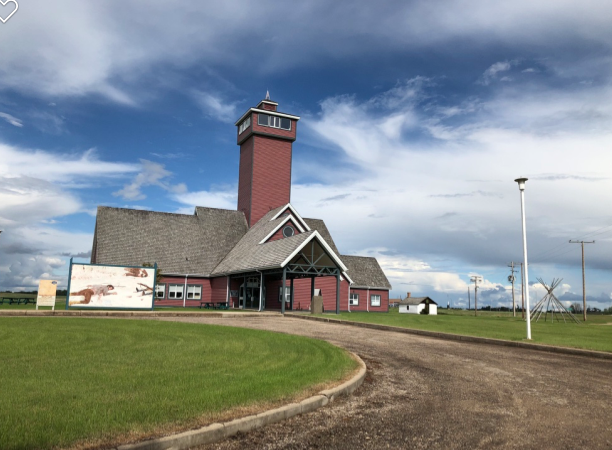
We drove to Duck Lake, a small village on the edge of hwy #11, approximately 30 kms from Batoche. It is an active farming community and in its heyday was rivaling Prince Albert as a hub for the railroad. We entered the museum. Again, this building is impressive and well arranged showing the culture of Duck Lake, its indigenous culture and that of the Metis, and how life went on in the 1800’s, and how the area progressed and prospered after the Batoche incident.
The museum’s main focus is a four-story tower. Small dioramas meet you at various levels as you climb the stairs. At the four points of the compass, you can look out at windows that focus on the points of interest in Duck Lake and points in the distance. The visit to this museum brought both of these historical events into perspective and gave us a better understanding of what happened then. It also allowed us to focus on how it affected how Canada dealt with similar situations in the future.
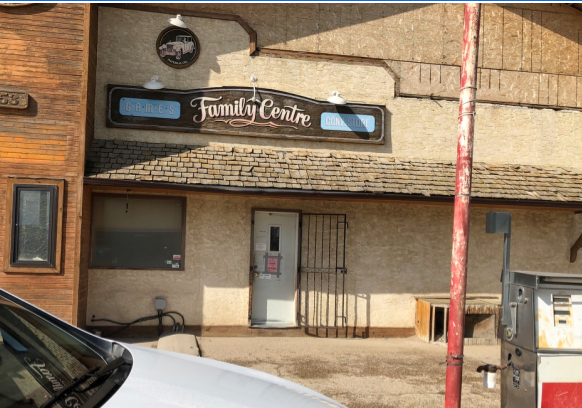
We simply could not leave Duck Lake without visiting the local quilt shop. We had both dried up and Debbie was intent on visiting this “diamond in the rough”. The building is a run down old service station that appears to be abandoned. After finding the entrance, she was astonished by the size of the store, and its huge inventory! It was like a maze inside, in which she constantly got lost. The owner was a very quiet First Nations woman, who helped Debbie maneuver her way around. The store had hundreds of bolts of material and supplies needed to finish the quilts. They had 2 long armed machines in the store that she uses to complete the many quilts that people drop off to be completed. The owner is also a Judy Neidemeyer instructor and has a whole room of her patterns and supplies. Debbie came out of there with a bag in hand and a smile a mile long!

It was now time to drive the hour back to Saskatoon. The rain had stopped but thunderclouds and lightning flashed on the horizon. When we got back, Danny had barbequed some delicious homemade sausage which we ate as we recalled the day. It had been a great day, full of information, surprises and fun.
In the evening Debbie and I reloaded the SUV, loaded on the kayaks, and hooked up the trailer, as we were heading south to Moose Jaw tomorrow.

 Quilting in a Kayak
Awesome post Bill..I have a couple texts from the 40’s about the NWMP that you might enjoy when you get back..they have been lent out a number of times🤓
LikeLike
HiDebie. Latest posts very interesting Great reads. But oh my god the rain!! You were so lucky with the tyres!! I miss you in our little groupDebbie !!! ——-Jennie
Sent from the I-Phone of Jennie Pringle
>
LikeLike