Aug 27, 2019
Our designated breakfast time is 7:00 so we were out of bed and getting dressed by 6:30. There are two meal times for each meal and we had been assigned the early times 7:00, 11:30, and 5:00.
Breakfast is served in the dining room and the maitre’ de, attempts to mix the groups so each time you sit you eat with a different couple. This method certainly encourages you to learn different words in French/English.
After breakfast we sat in the main lounge and talked to various people and couples, some bilingual, some not. The majority of the present passengers were making a round-trip of this tour going to Blanc-Sablon and then returning. There was a variety of types of trips that people were taking. Some were going on to visit places in Labrador. Others were disembarking at the settlements on the lower north shore and driving back south on highway 138. (Others were coming on board from the settlements and travelling to other settlements.) There were only a few of us that were leaving the ship in Blanc Sablon and crossing to Newfoundland.
The weather was warm with no winds and the water was flat. Our first port of call was to be Port Menier on Anticosti Island. We would be arriving at 5:00pm. At 11:45am we all met in the main salon on deck 5 to receive the mandatory safety drill, learned where our muster stations were and the use of the lifeboats and floatation equipment.(“In the unlikely event…”).
The events coordinator, Isabella, showed us a short documentary on the development and life on Anticosti Island.
This island is in the middle of the St. Lawrence River. The island is 222 kms long and Port Menier is the only settlement on the island. (pop. 205). The history of the island is that Henri Menier, a rich French chocolate maker, in the late 1800s, purchased island. Menier wanted to make this his personal island, (he only visited it six times), but developed a small community on the island. He introduced several species of other animals onto the island, some survived to thrive and some didn’t. Red and silver fox, ruffled grouse, and white tail deer survived. The estimated deer population on this island is about 160,000! At present the main industry is logging however the tourist industry is growing with based on recreational hunting and fishing activities. Because of the diverse climate and uniqueness of the island and its natural beauty, it has been declared a UNISECO heritage site and plans are under way to assist the island in developing its reputation as such.
We cruised upstream towards, Anticosti Island, occasionally seeing whale spoutings. This area near the western tip of the island is heavily populated with whales and the speed of 10 knots has been enforced for ships passing through this area. Belle Desgagnes reduced her speed and we sat on the outer decks scanning the waters for whales and watching as Port Menier appeared on the horizon. (We learned later that entering the harbor of Port Menier we had only 30 cm’s of water below the ship!)
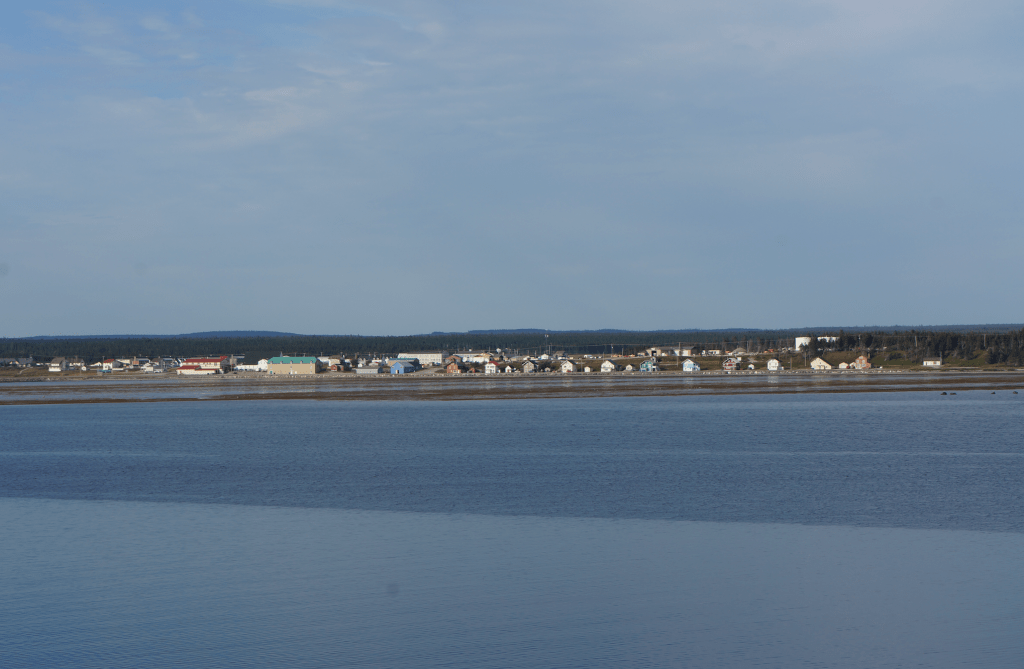
Two groups of passengers had expressed an interest to go ashore and visit the small community, including us. We hopped aboard a local shuttle van that took us the one and half kilometers into Port Menier.
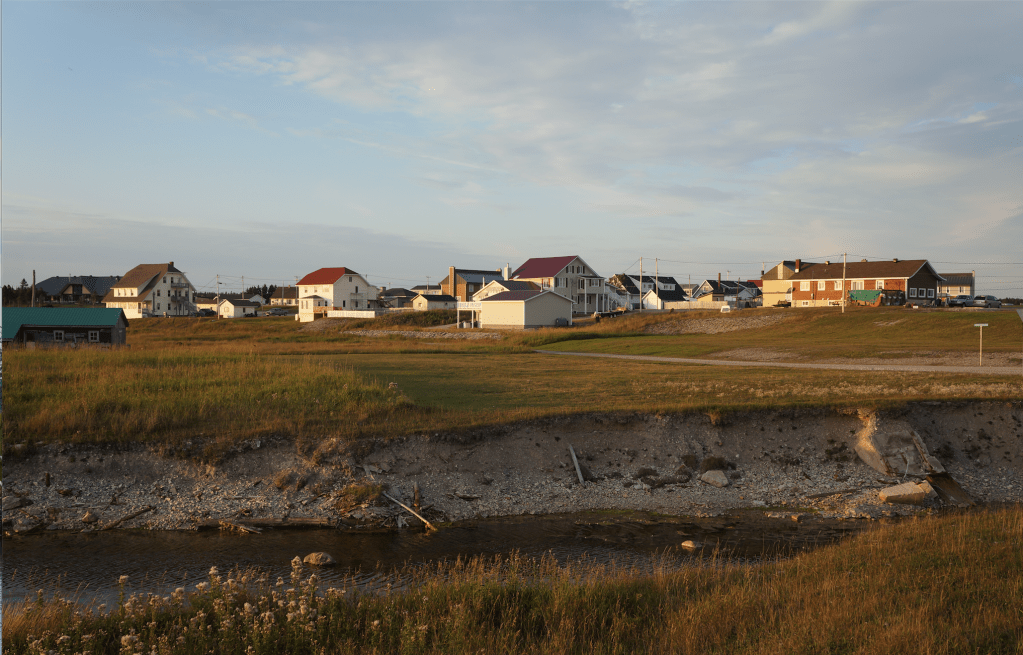
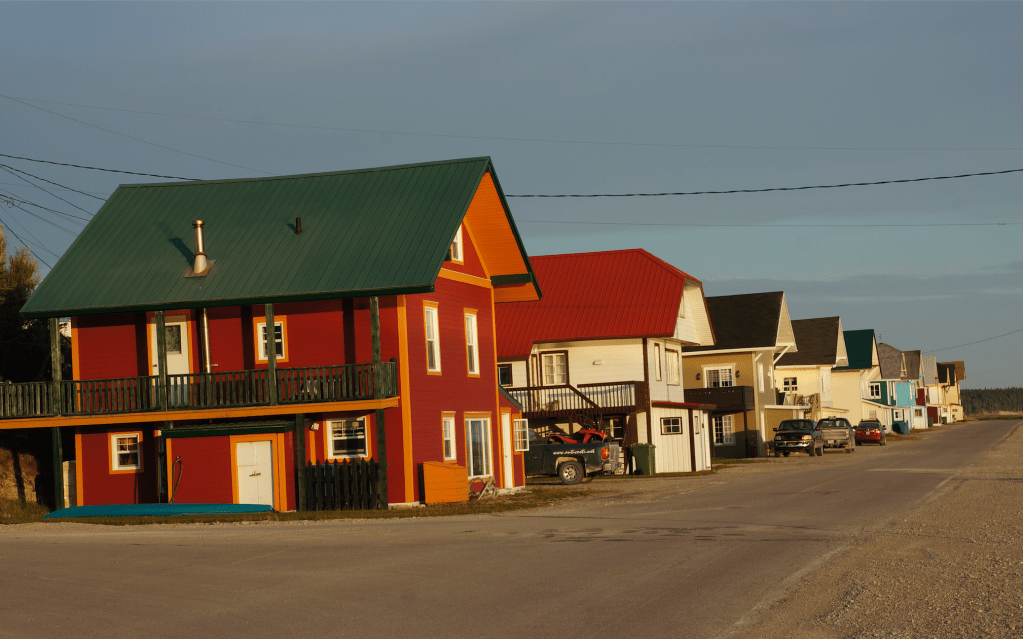
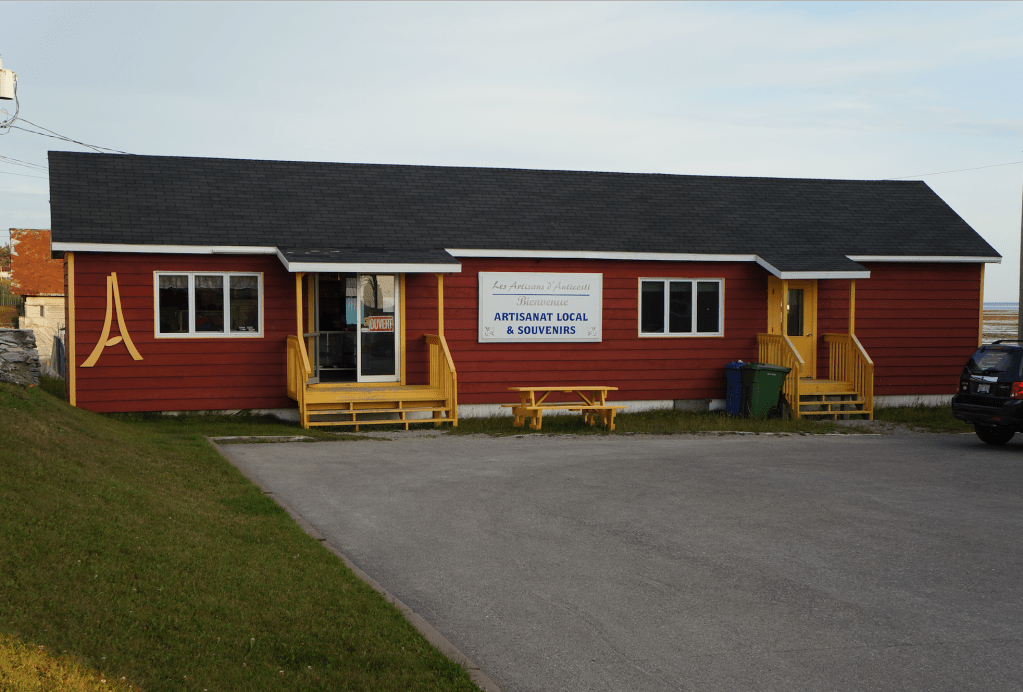
The community is situated along the shoreline and the brightly painted houses line main-street. The homes were constructed in 1910 and are still lived in and well maintained. Near the church (which also serves as the museum) is a small bungalow that sells souvenirs and local artisan crafts. Deer are quietly grazing on the grass and simply look up as you pass by. They are everywhere. Dogs are not allowed on the island. Debbie and I walked around the community for the hour allotted to us and then walked back on the quay to the ship. It was still busy loading and unloading when we returned, but left port shortly after.
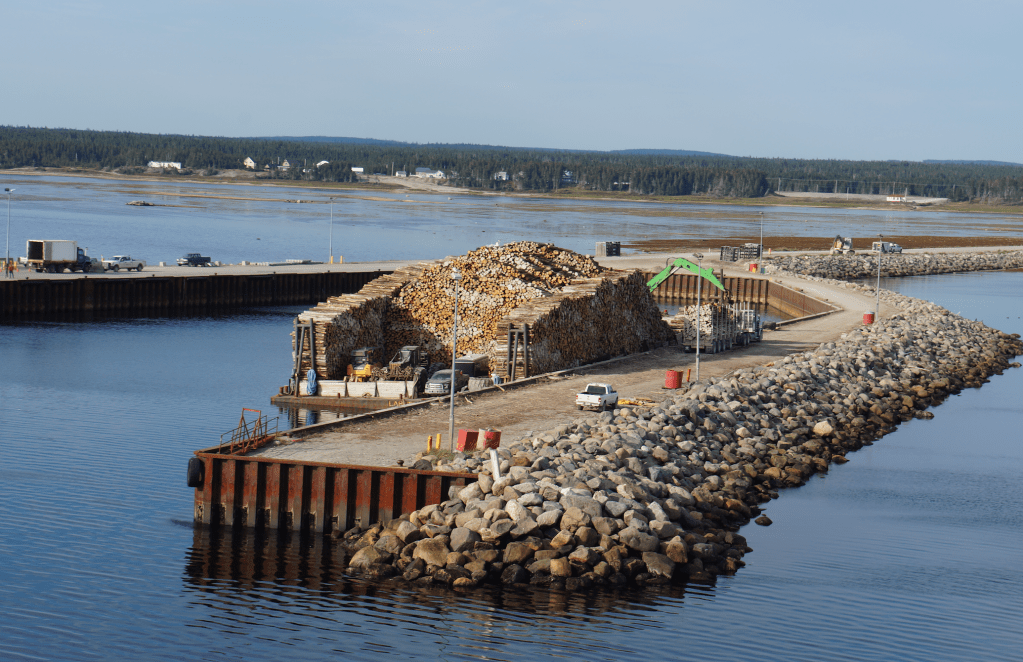
On the opposite side of the dock, a large barge was being loaded with logs. Heavily loaded logging trucks, backed alongside the barge and a small crane lifted the logs in bunches onto the barge. The pre cut logs are about five feet in length and neatly stacked on board. The barge was almost full. I learned that two of theses barges leave Anticosti Island each week, for Rimouski. As the sun was setting we steamed away for our next port of call Havre-Saint Pierre.
Before we went to bed, we watched a series of small documentaries about each of the communities that we would be visiting this week. We had signed ourselves up for an onshore excursion to the Mingan Archipelago National Park Reserve, a Parks Canada National Park, which has unique rock formations and reportedly a “must see” visit. We would be disembarking the ship at 4:20 am! It was time to go to bed!

 Quilting in a Kayak