Sept 3, 2019
We woke up to the sound of rain, beating on the roof. The wind was gusty and harsh, so we cancelled the idea of kayaking. There’s a lot to explore here so after breakfast we headed out. We also had to fill one of our propane tanks before we got too isolated.
St. Anthony is the largest community on the north end of the peninsula and had several interesting things to see. But first we had to stop in at Tim Horton’s and enjoy a latte and a hot chocolate. We also need a star screwdriver to tighten a small screw on the stove, and another small clothing hook for the trailer. The local hardware store, Shears, is a well stocked store and served all of our needs.
During Debbie’s research she learned that we had to stop and look at some ceramic murals in the foyer of the hospital. Brochures in the hospital explained the themes of each mural that depicted the life and the relationship that the hospital had with the many different cultures in the region.
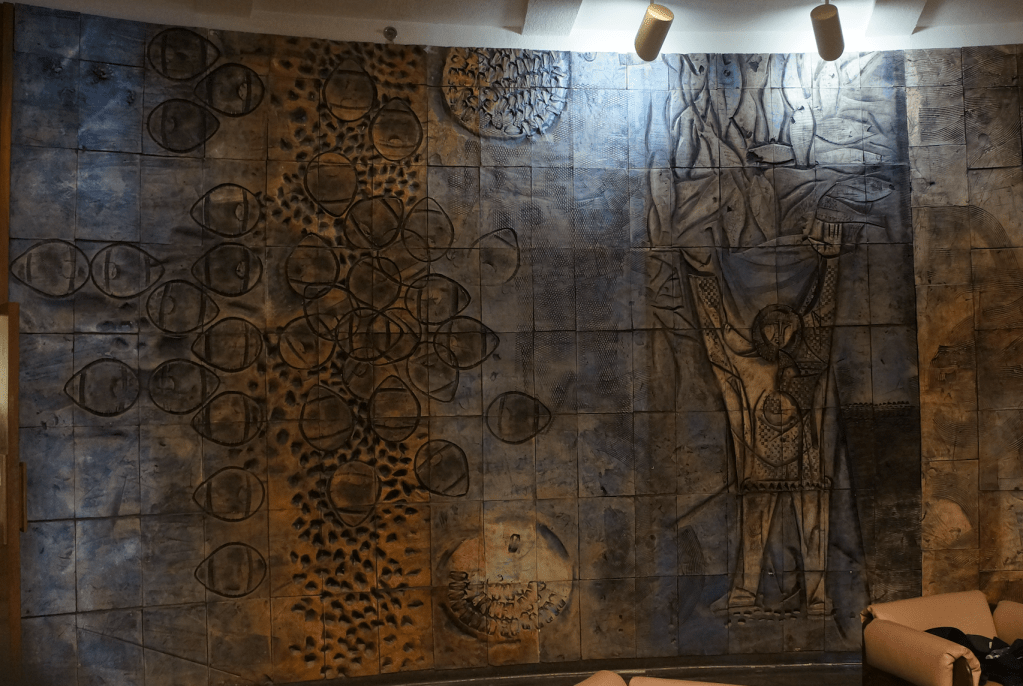
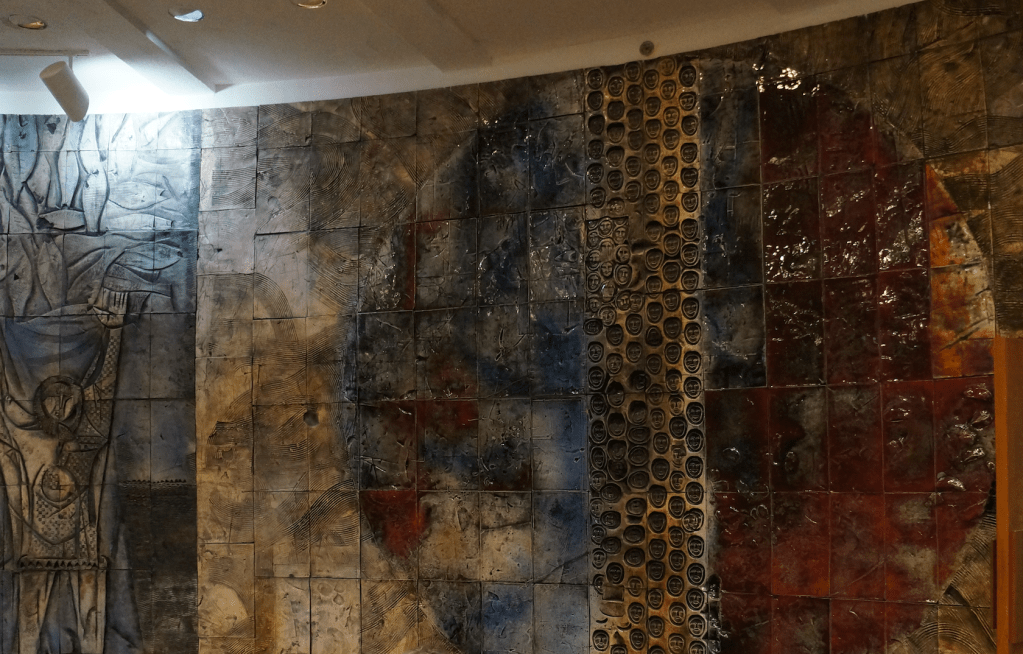
We noticed the name Grenfell on many of the buildings and the Grenfell interpretive Center was just across the street from the hospital. Dr. Wilfred Grenfell was a doctor in this area in the early 1900’s. He came from England to Newfoundland in 1892 at the age of 21. He practiced medicine in the northern region of Newfoundland and Labrador. He is responsible for developing several hospital and missions up and down the western coast of Newfoundland and the south-eastern coast of Labrador.
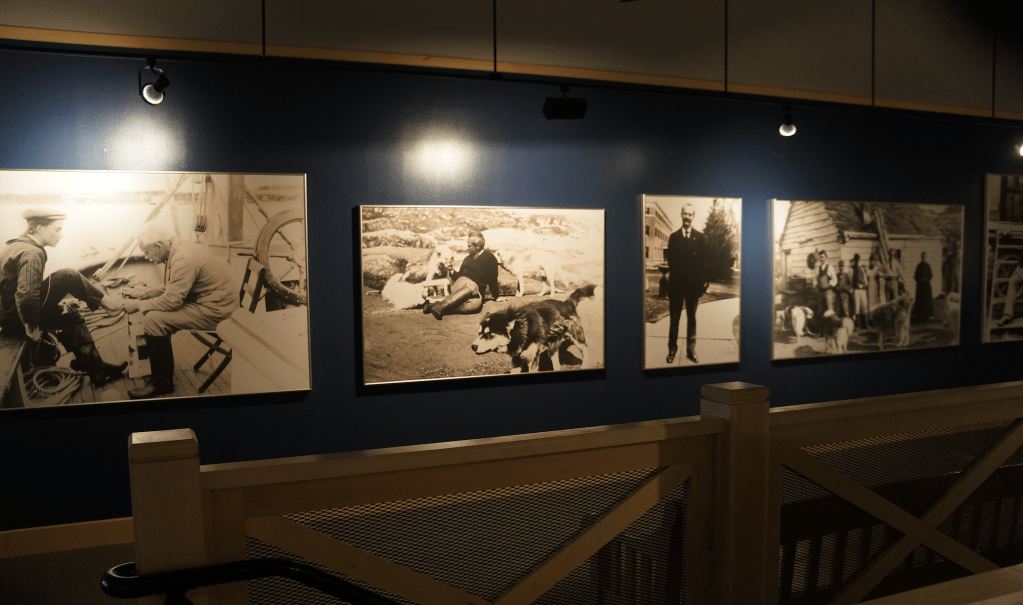
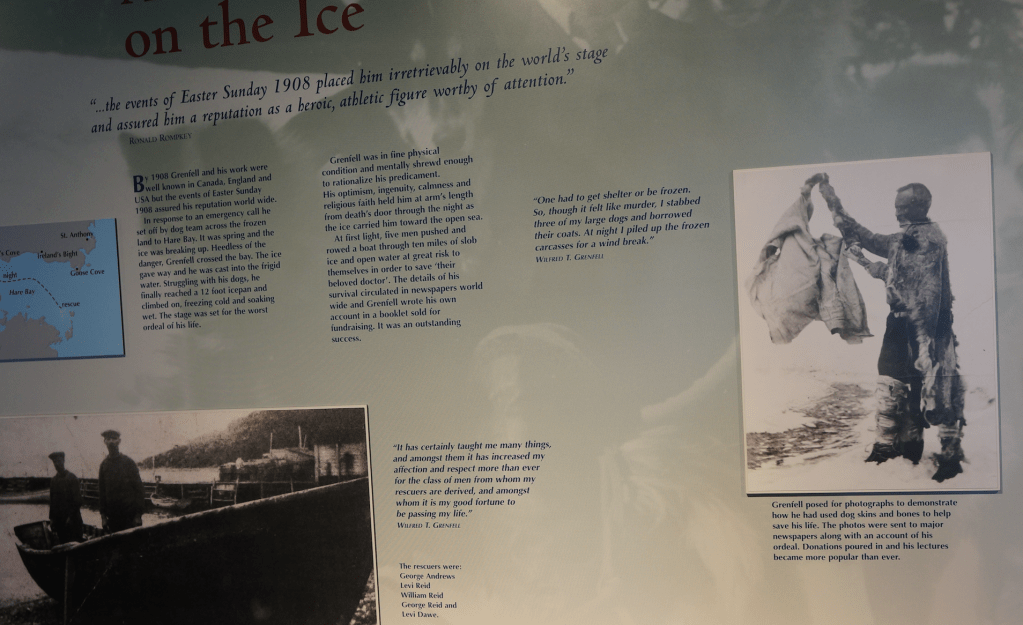

Grenfell was an extremely energetic man. He serviced the areas in a small hospital ship, started several remote medical missions, wrote over 30 books and developed the International Grenfell Association, a NGO to deliver medical and health care to the area. It operated until 1981, when the provincial government took over that responsibility. He survived possible freezing to death in 1908 when he got stuck on an ice pan making an emergency medical visit to a village. He sacrificed some of his sled dogs by skinning them to make a fur cover to keep him warm until he was rescued several days later. Along with many other awards, he was knighted in 1927 and his legacy lives on. He was a remarkable man.
We enjoyed the Grenfell museum. After leaving the lower north shore last week we understand why medical issues are so important in these isolated and remote villages that dot the coast.
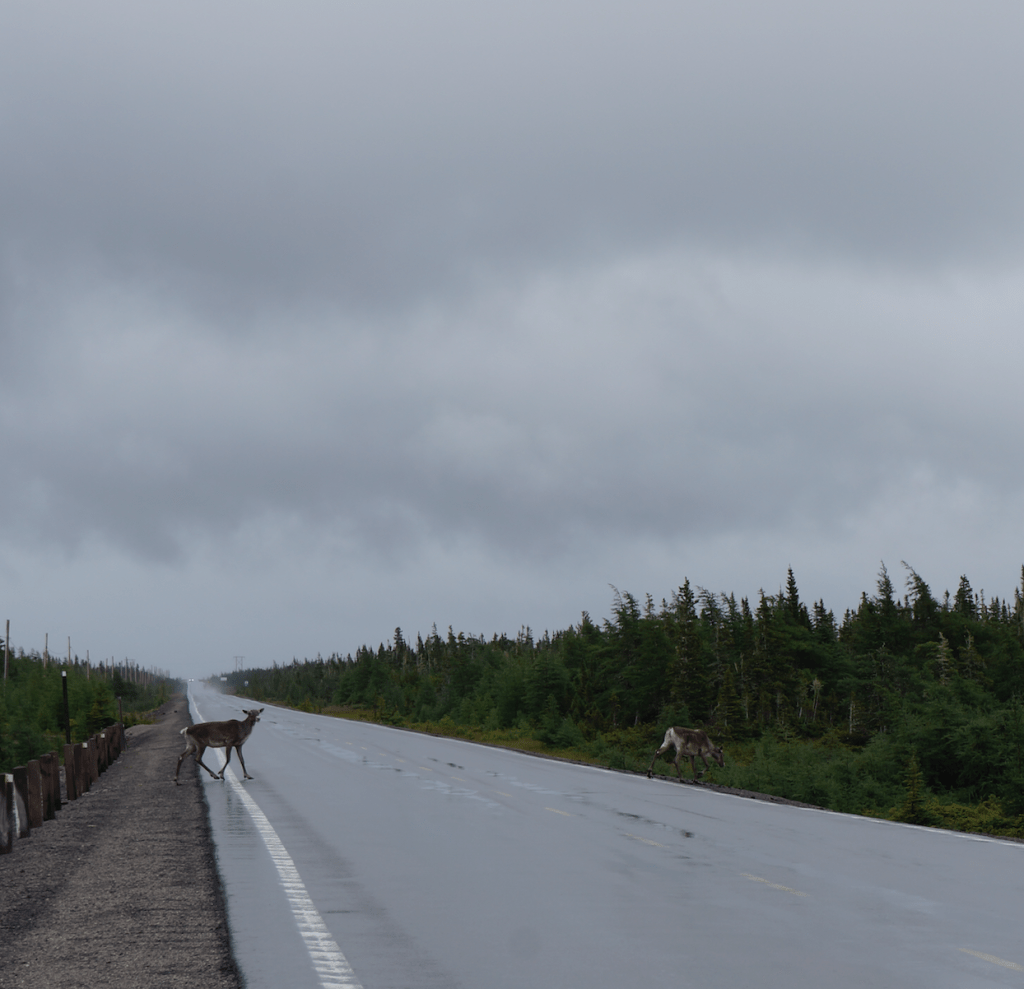
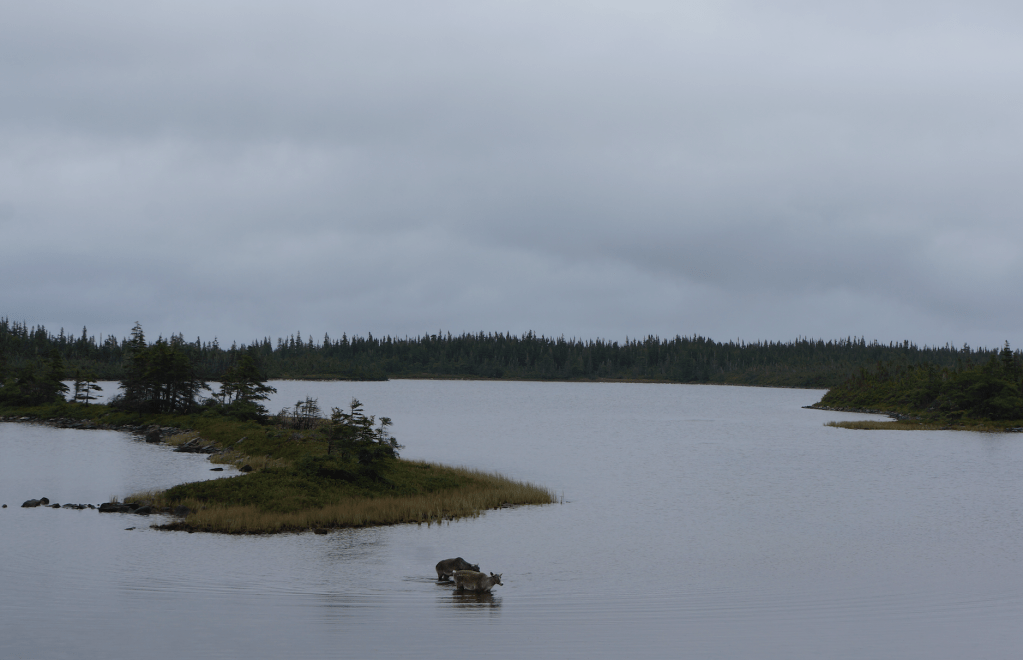
The rain had stopped and we started heading south along the coast. At one point, Debbie spotted two caribou entering a small pond. I was able to stop, turn the rig around and come back to the pond. The two caribou waded towards me as I stood on the shoulder of the road watching them. They climbed up the embankment and then crossed the road 50 feet in front of me.
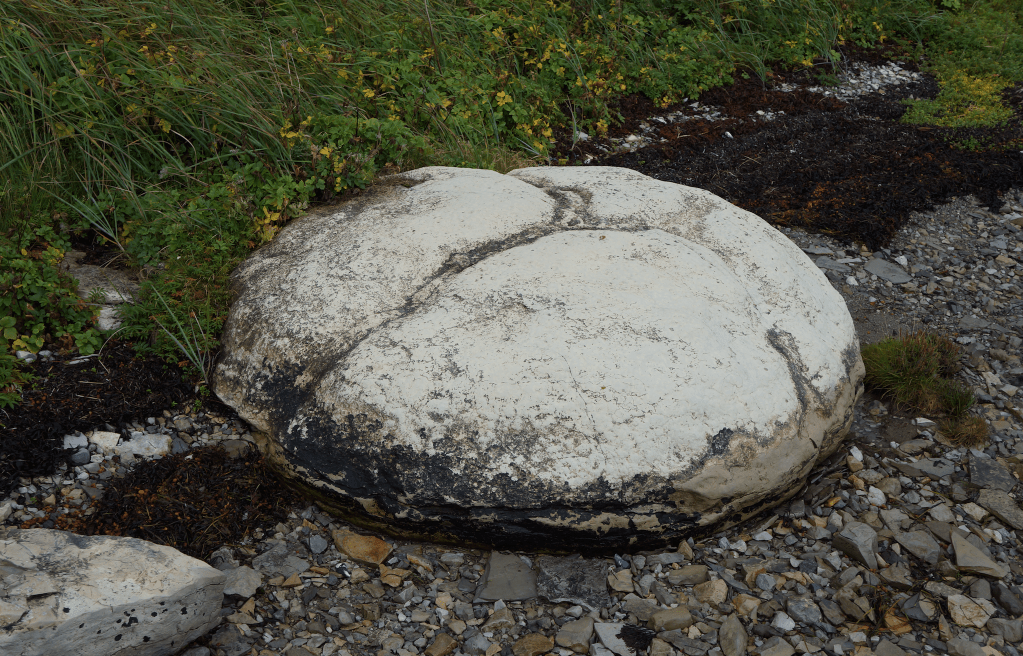
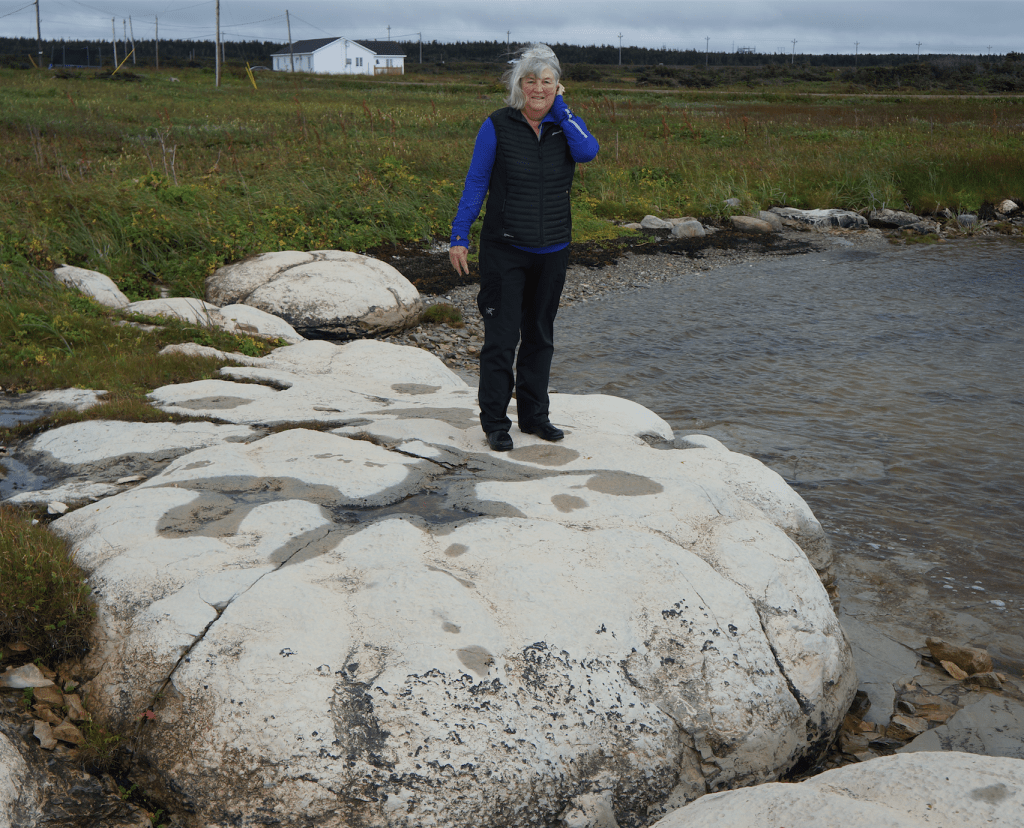
We stopped in Flower’s Cove to look at the thrombolites. The only other place to see them is in Australia. Thrombolites are ancient forms of microbial structures that formed millions of years ago to look like large stone buns.
As we headed south, we were stopped in a construction zone and met Constable Steve again. He rolled down his window, we filled him in on our recent travels and then he had to remind me by saying, “I’m following your blog and you are behind a few days!” Thanks Steve.
The wind was blowing strongly off of the Gulf and we drove into Port au Chiox to find a campsite in the Lions Municipal Campground. It was right on the edge of the shore, and waves and the wind were invigorating.
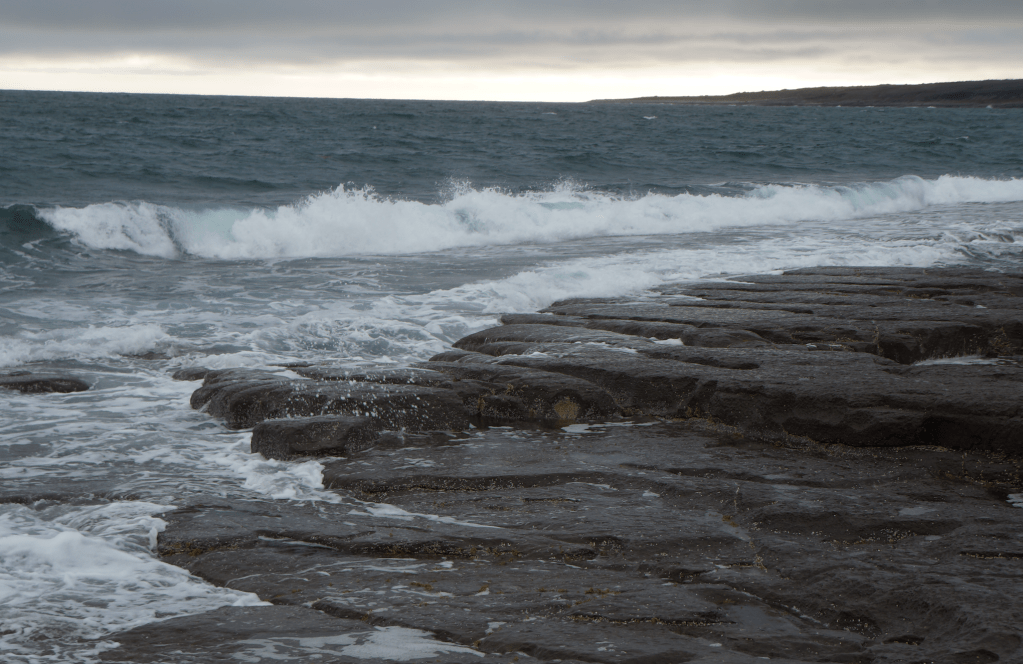
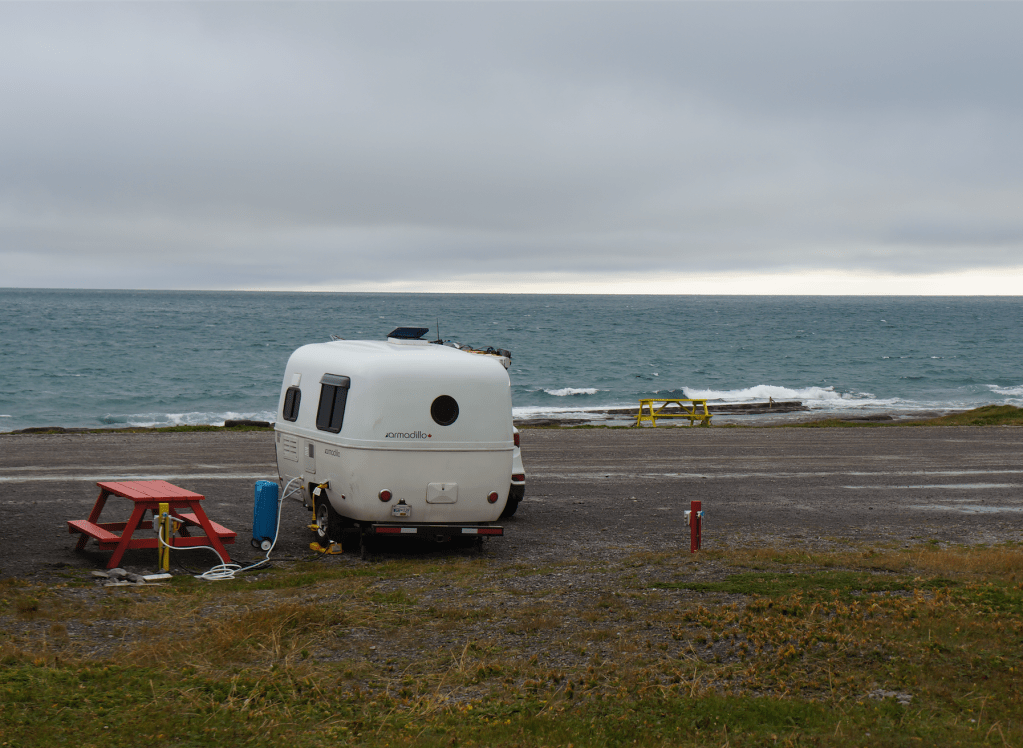
Debbie whipped up a delicious beef stew with dumplings. We watched a movie, and fell asleep to the sound of the waves crashing on the shore.

 Quilting in a Kayak