Sept 17, 2019
It’s a rainy day today but we are excited to explore this city. We decided that before we do, we should take care of business. Debbie wanted to do laundry, and I wanted to check out more details for some of the other plans that we have. We want to visit the French Islands before we leave Newfoundland, however, since we are now leaving earlier than we had planned we determined that we would not be able to make that trip. We discussed this with another couple camping here. They too wanted to see the French Islands but decided not to. The ferry to the islands are scheduled in such a way that there is only one day a week that you can travel there and back in one day. All the other trips require you to stay overnight. Our schedule was not going to work with that arrangement. That was a bit on a disappointment. We learned that this is set up in order to control the volume of people who visit the islands.
After the laundry was done, we had the rest of the day to explore some of the sights. We first drove to Cape Spear. Since we had travelled from the west coast, it was important to go to the most eastern part of North America. The wind was howling and we dressed for the weather. This National Historic Site gets about 750,000 visitors per year, but today it seemed to be a quiet day as there were less than 50 of us brave souls walking on the boardwalks. The Atlantic Ocean was crashing against the rocky shores. A lone Canadian Coast Guard ship was chugging through the waves and was working on a marker bouy about a kilometer from shore. We walked through the narrow underground hallways that once housed the military garrison that was so important to the defense of the Port of St. Johns. The footings of the some of the buildings are all that is left along with one barrel of a cannon. Above this site is the Cape Spear Lighthouse. Both the old fort and the lighthouse are built on the headlands that rise about 300 feet above the ocean.
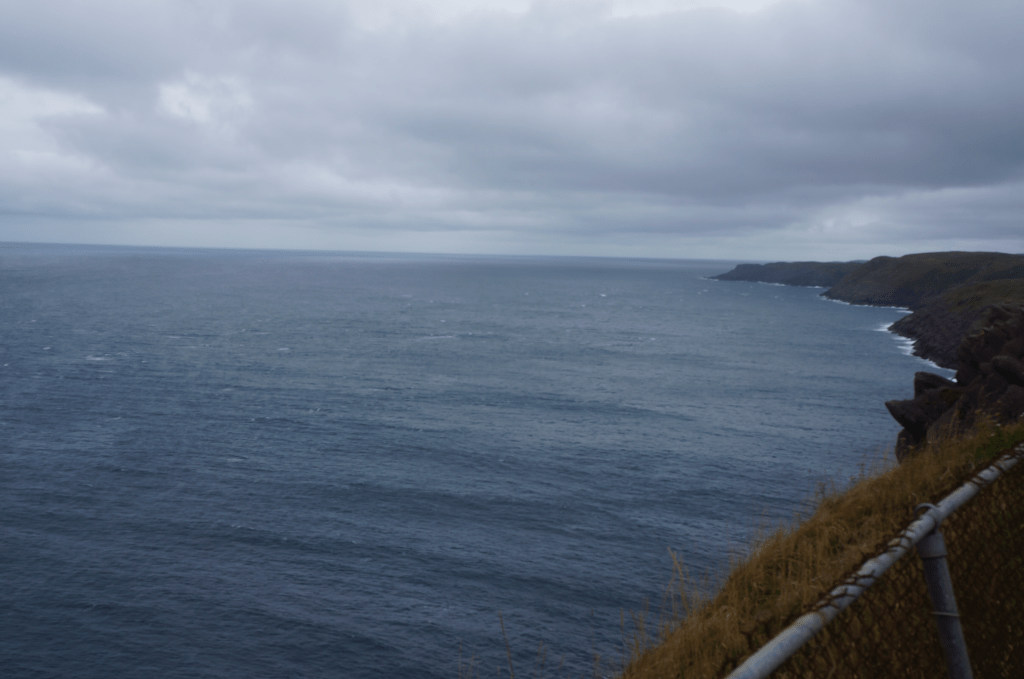
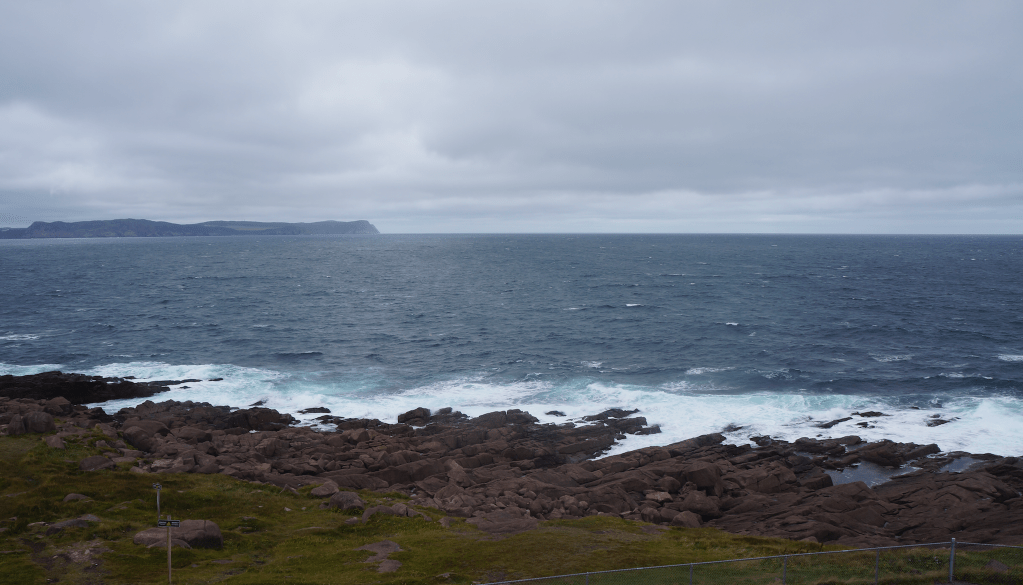
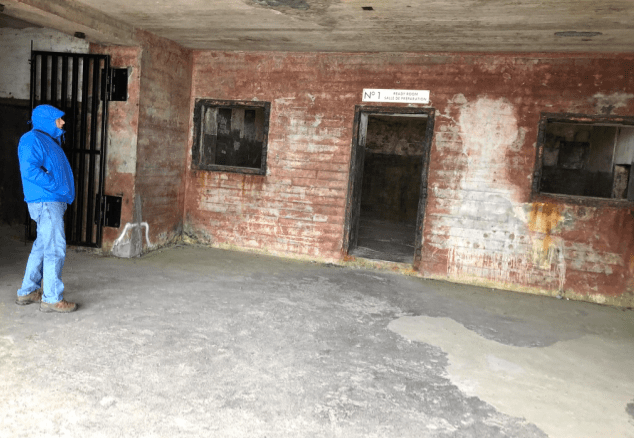

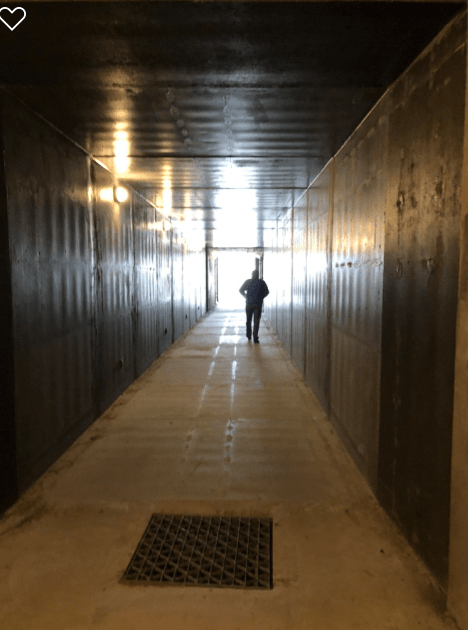
The original lighthouse was built in 1836. The main light tower is built in the center of the lighthouse keeper’s house. The lighthouse has now been replaced with an automated light tower nearby. The original lighthouse is open for viewing and I had the opportunity to speak to the Canada Parks guide about the life of the lighthouse keeper and his family.
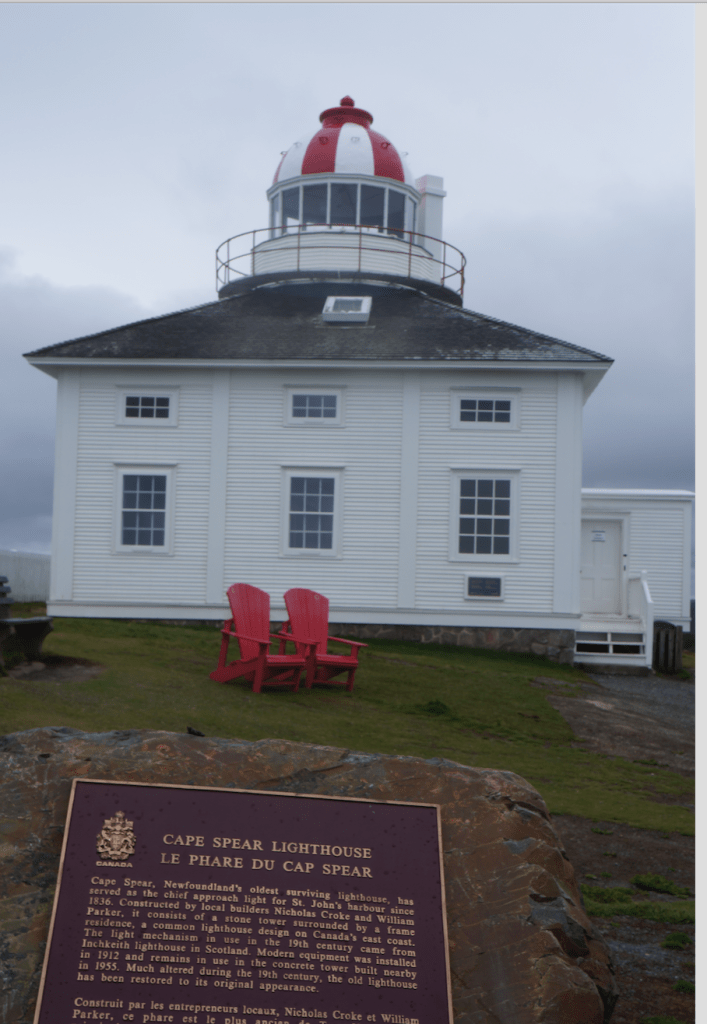
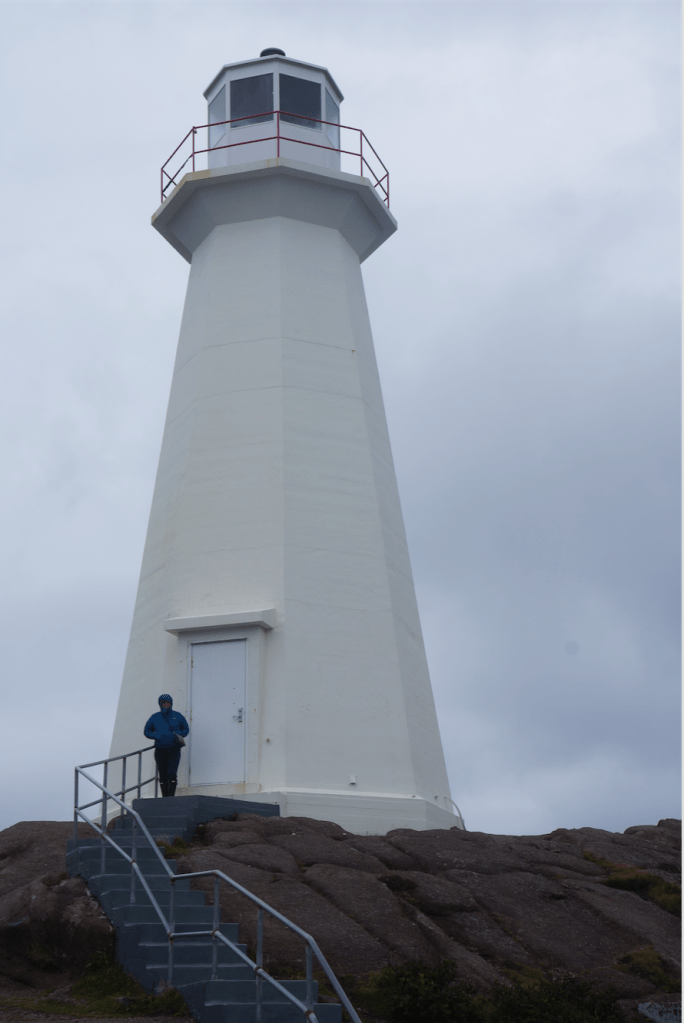
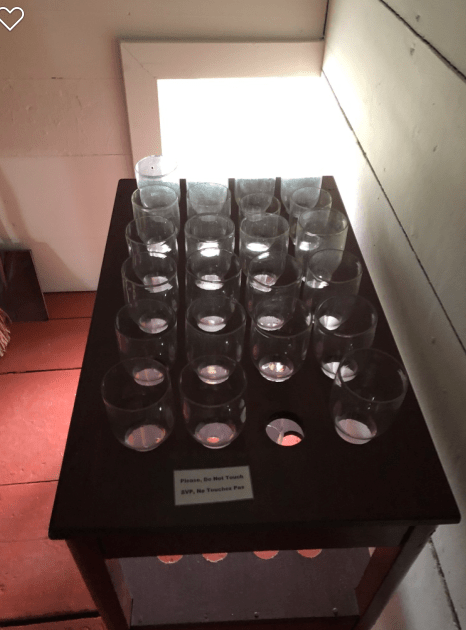
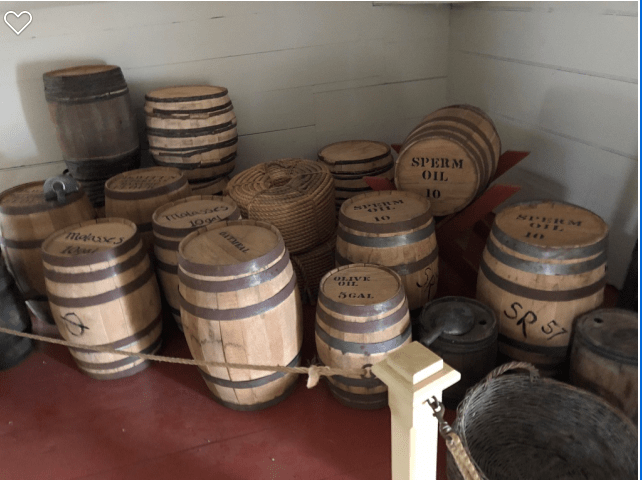
Sperm whale oil was used to light the lamps for the light. These lights look similar to coal oil lanterns and each had a glass chimney. The lighthouse keeper had to clean the glass every day to remove the soot from the reflectors and the glass chimneys. He also had to rewind the mechanism that rotated the light every three hours. This mechanism is spring loaded and on weights to make it rotate. On the top floor of his house is the warehouse that stored the twenty gallon wood barrels of sperm whale oil. These were brought to the lighthouse by horse and buggy and then hoisted to the third floor with the use of a rope and pulley system from the main kitchen entrance. Under the Canadian Lighthouse Act, the family of the lighthouse keeper and his children were to be employed as the keepers of the light, so the Cantwells were employed as keepers for 150 years! Incidentally, the lady that we talked to while doing our laundry is a cousin to the Cantwells. Her uncle was a lighthouse keeper at this lighthouse!
The wind was very strong as we walked outside and several times we had to hold onto the railings to prevent us from being blown off the boardwalk.
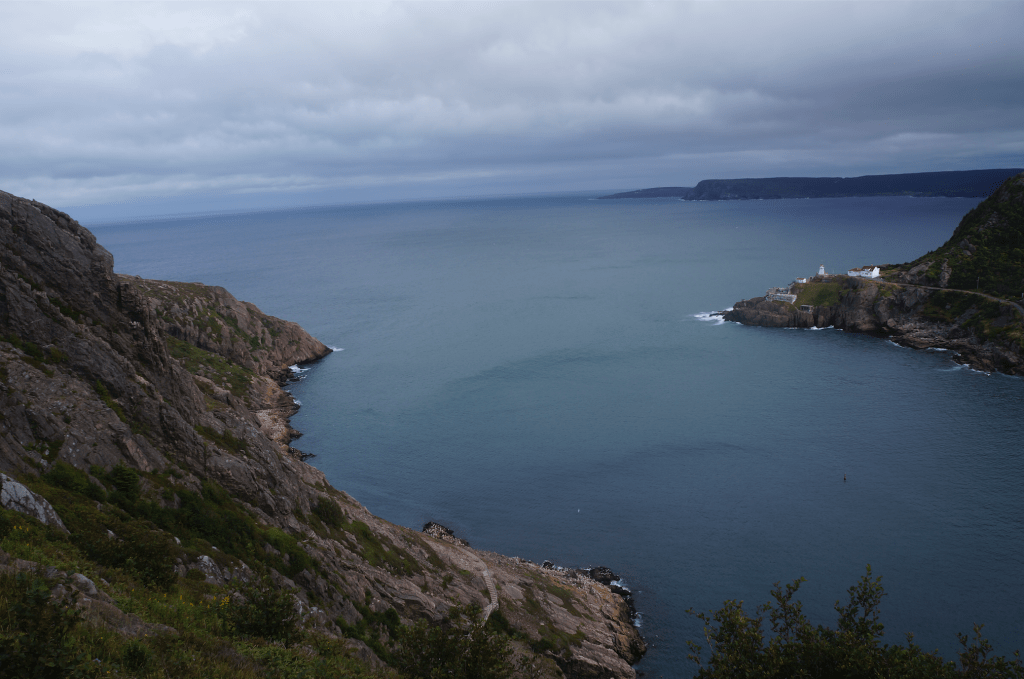
We then drove to the next famous National Historic Site, Signal Hill. You can see Signal Hill from Cape Spears and vice versa. This is an important fact because both these sites formed the defense of the St. Johns Harbor. This harbor is tucked in behind high headlands and ships had to pass through a narrow channel to enter the harbor. This harbor was so vitally important to Canada throughout history. During the Second World War, merchant marine convoys were sent to Europe from St. Johns under the protection of the Canadian Navy. A plaque near the site tells of over 5500 merchant ships that were lost in the conflict as they travelled to Europe to supply the war effort. The Germans were constantly threatening the harbor and their U-boats were successful in destroying several Navy vessels near the Harbor. From the vantage point of Signal Hill and Cape Spear the coastline and ocean can be viewed for many miles and cannon batteries have been placed on the headlands to defend the entrance to the harbor.
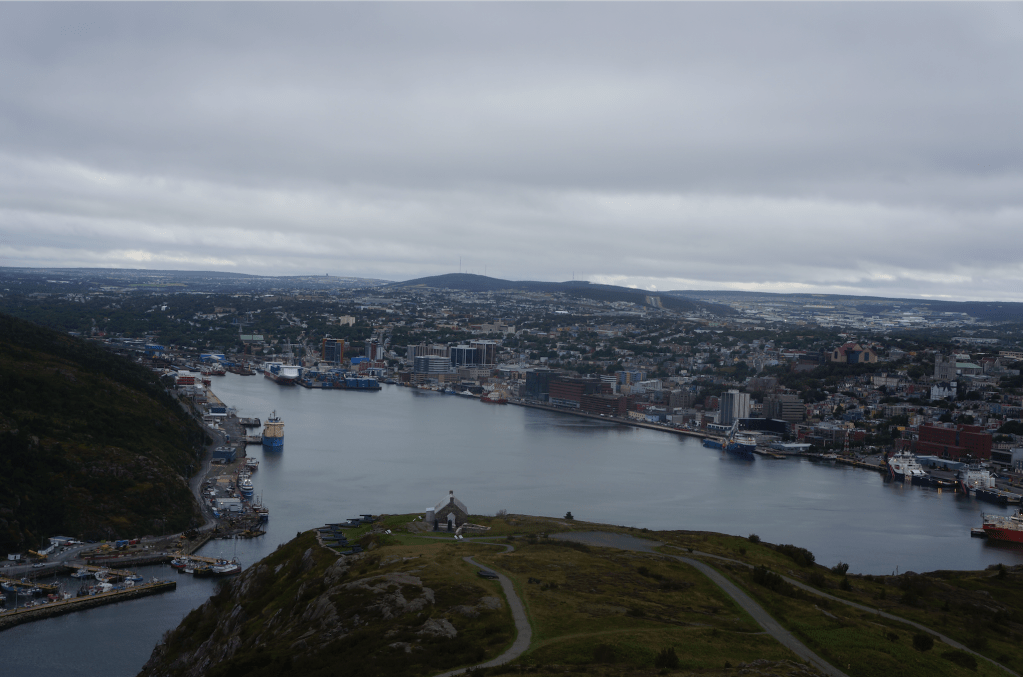
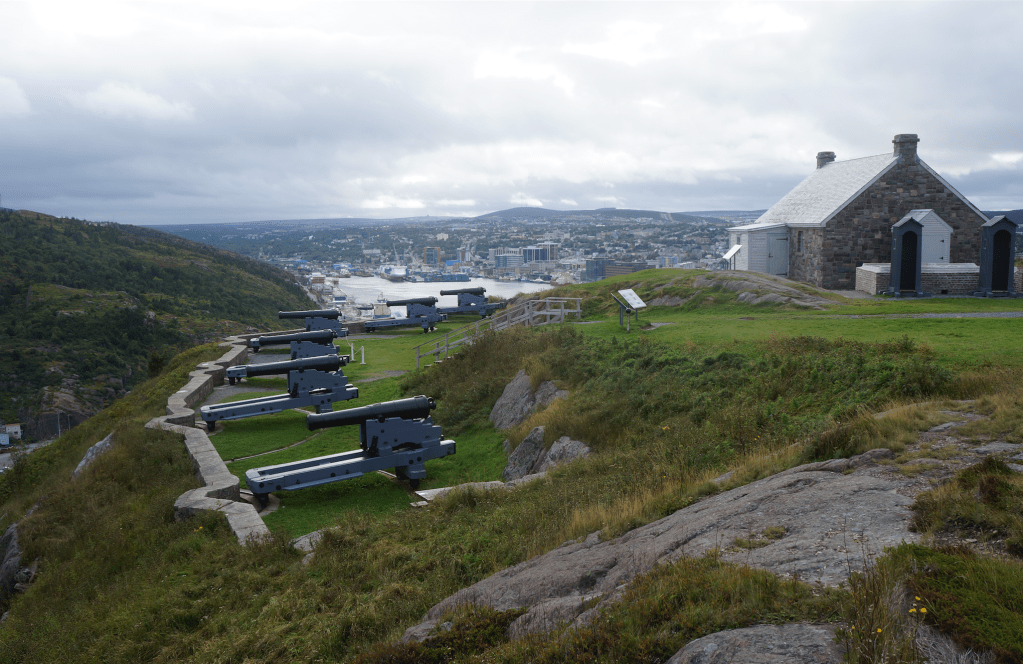
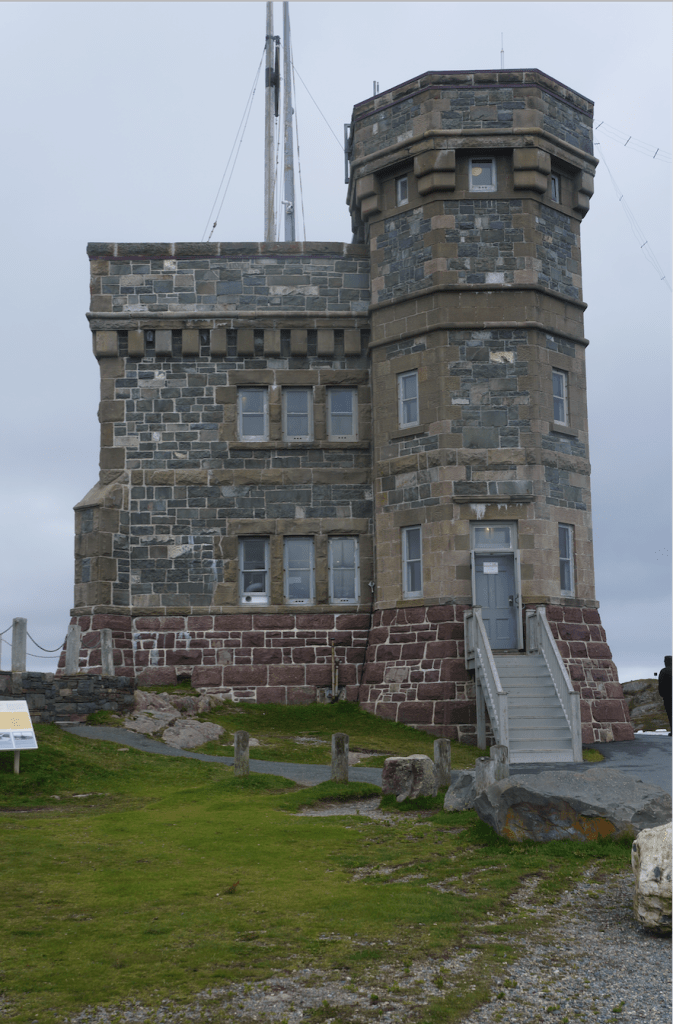
Signal Hill was also used by Guglielmo Marconi for his successful attempt to send radio signals across the Atlantic Ocean. On the second floor of Cabot Tower is a display of the equipment used by Marconi to send and receive the radio signal on Dec 12, 1901. This famous milestone in communications changed the way the world would communicate in the future.
We were both tired and wind blown when we finished visiting these two famous sites and so we returned to the trailer and changed into different clothes.
Downtown St. Johns was busy as the Toronto Maple Leafs and the Ottawa Senators were playing an exhibition game in St. Johns. It appears that Newfoundlanders are Toronto fans, judging by the many Leafs jerseys being worn downtown.

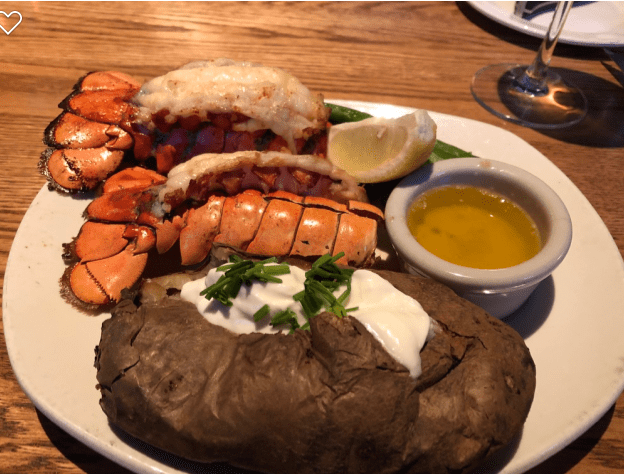
We were meeting Meg again downtown for supper. We met her at the Keg and enjoyed a tasty meal. We then walked Meg back to her hotel. On our way back to our car, we dropped into a small pub where a group of musicians were jamming. They were sitting around a table and some were playing fiddle, others playing guitar and there was an accordian and someone playing on a drum. They were playing Newfie and Irish/Celtic songs. We sat and enjoyed a beer listening to them. We sat with Gail and Dick from Peterborough Ontario. We had a great conversation with them and they told us about some of the places that they had gone to in St. Johns. After the beer, the jamming stopped and it was time for us to get back to our campsite. We said goodbye to them and walked back to our car and then returned to our trailer to end another interesting day in Newfoundland.
Coincidentally while we were having supper with Meg, her husband Jeff and our daughter Myra had met at the Frankfurt airport. Myra was coming from Africa and Jeff from Poland. They travelled back to Nanaimo together!

 Quilting in a Kayak