Sept 26, 2019
We had breakfast and showered and we were on the road by 10:00. I was a little nervous because I felt we were behind schedule, however, Debbie and Miss Taken assured me that we had plenty of time.
Our trip towards the Confederation Bridge along the coast meant that we were literally going through four provinces today. We were leaving Nova Scotia, entering New Brunswick, and once we crossed the Confederation Bridge we would be in PEI and the ferry would be crossing into Quebec to take us to the Isle du la Madeleine. We would be drinking a lot of Prosecco, toasting each province tonight!
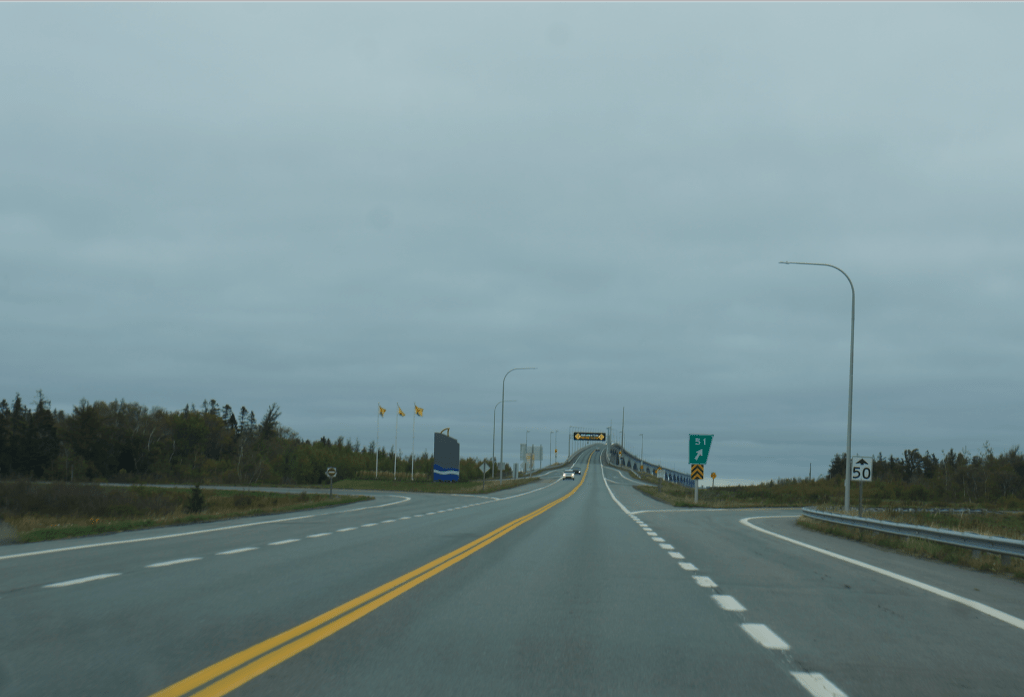
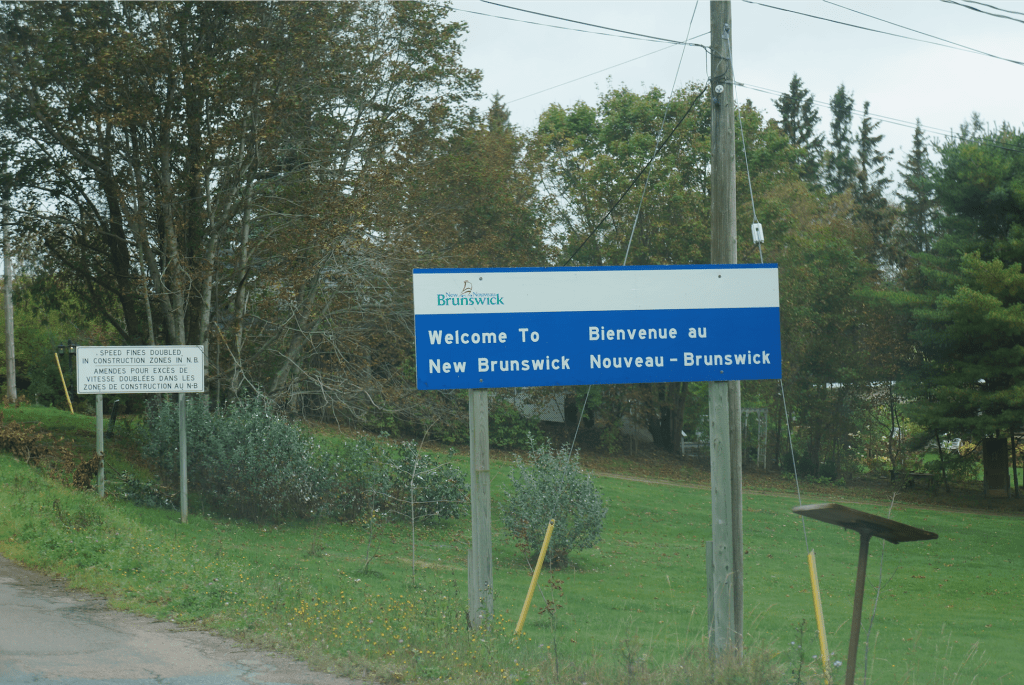
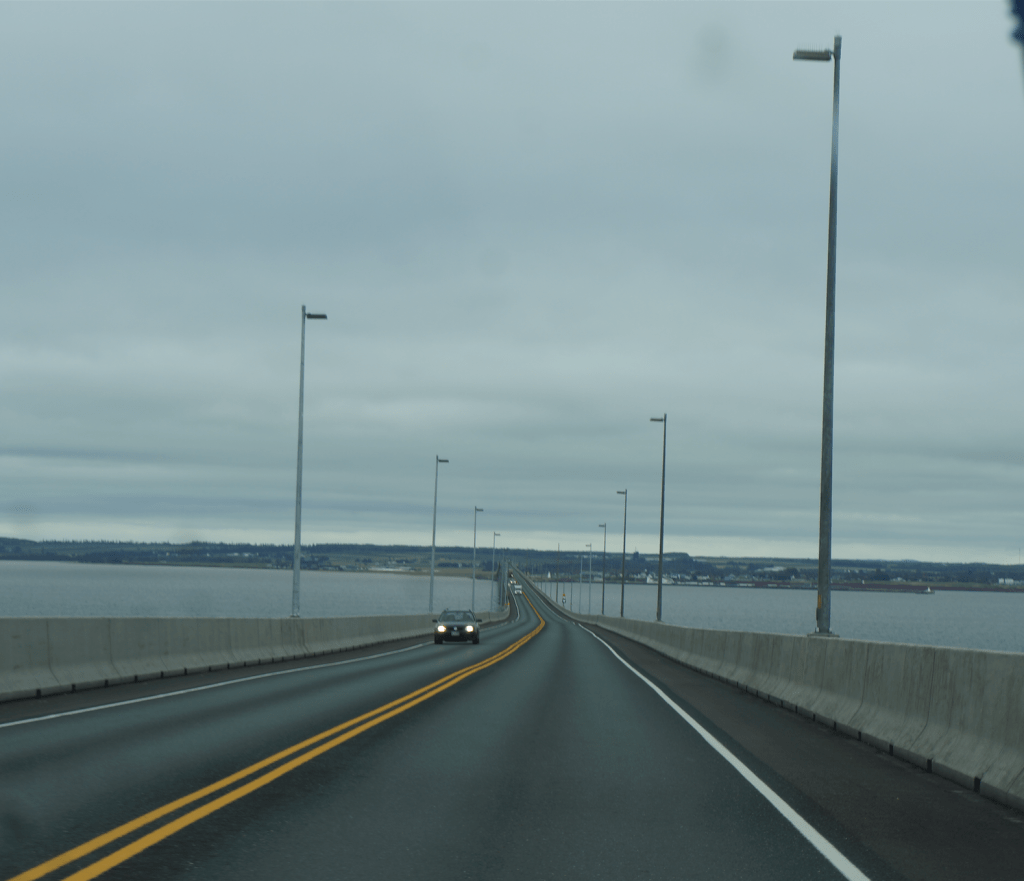
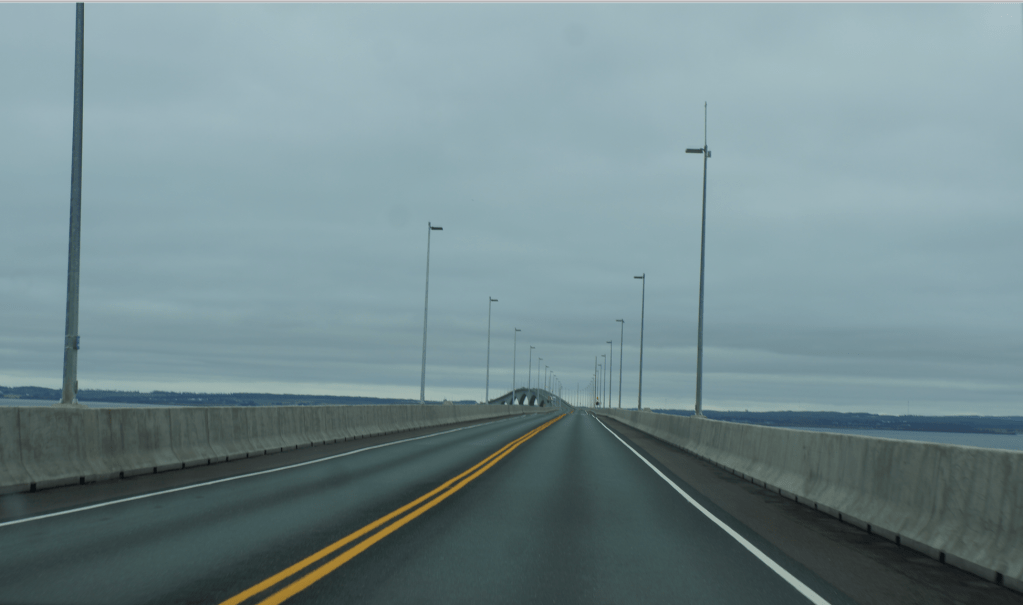
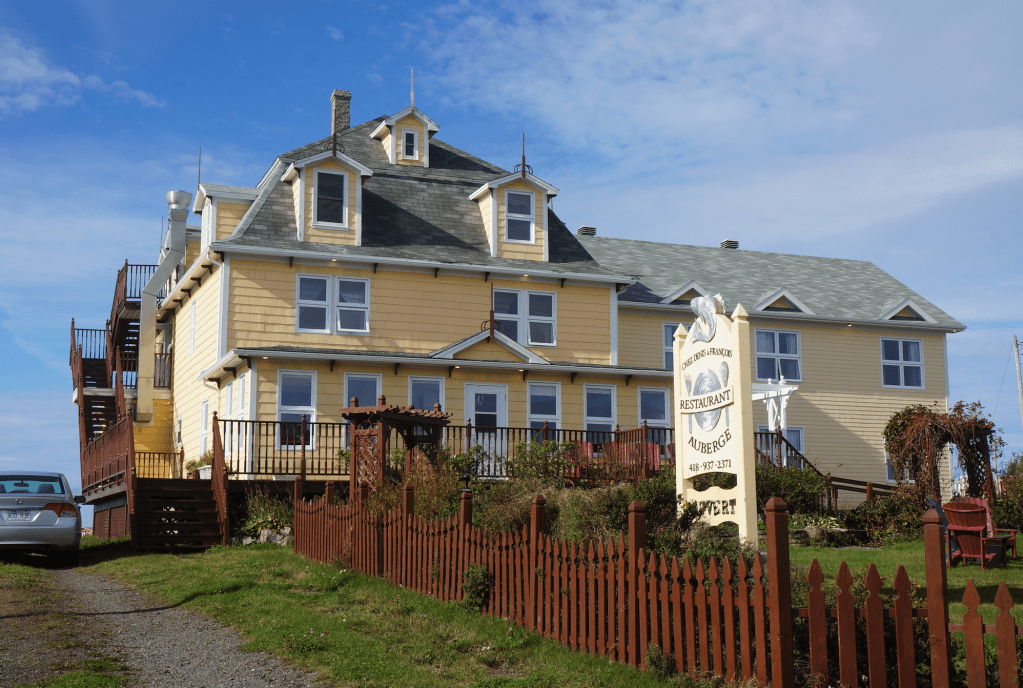
We had made arrangements to leave the trailer in Souris. Debbie had located folks living near the ferry terminal who would store the trailer on their property while we are away. We had reserved a room at a B+B, called Chez Denis de Francois. Driving to Souris took us through rural potato farms. The red soil, colorful trees and green pastures make for a beautiful landscape.
We are anxious to visit the Isle du La Madeleine and looked forward to exploring it. We are also visiting JP and Lucy who live there. Their kids and our daughter, Rina all swam in the Nanaimo Riptide Swim team. We recently saw them in Nanaimo, where they invited us to see them on this trip.
We arrived in Souris on time, located the folks called MacDonalds. Mr. Macdonald directed us to his back yard and we unhitched and secured our trailer. We could see the large ferry from his house, and my anxiety disappeared. We had lots of time for loading. We began loading at 2:00.
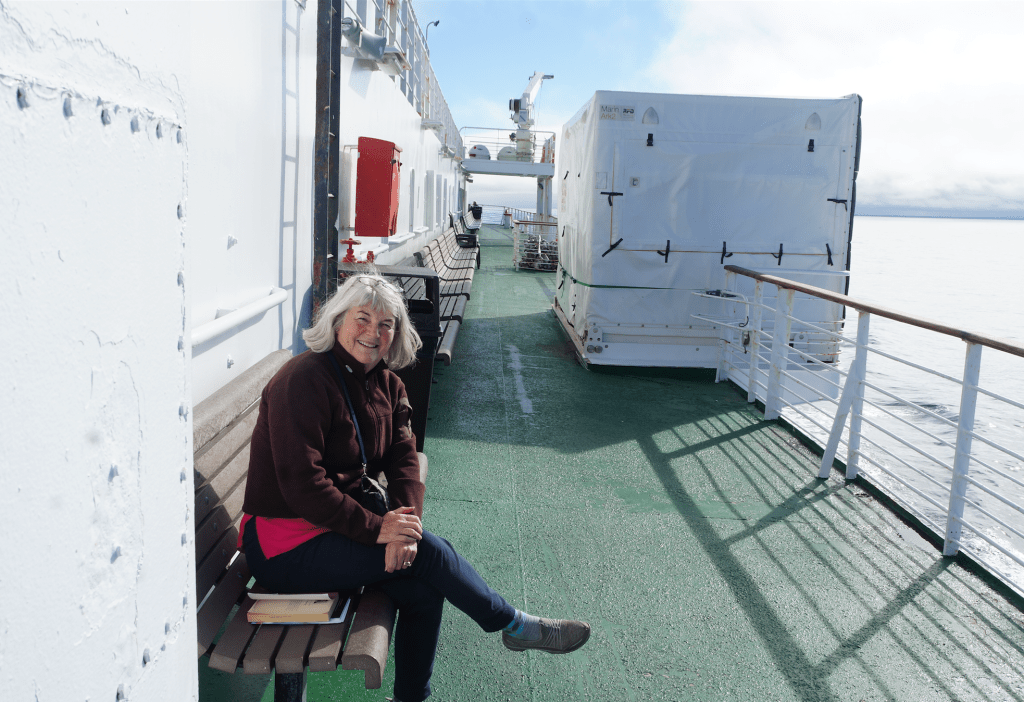
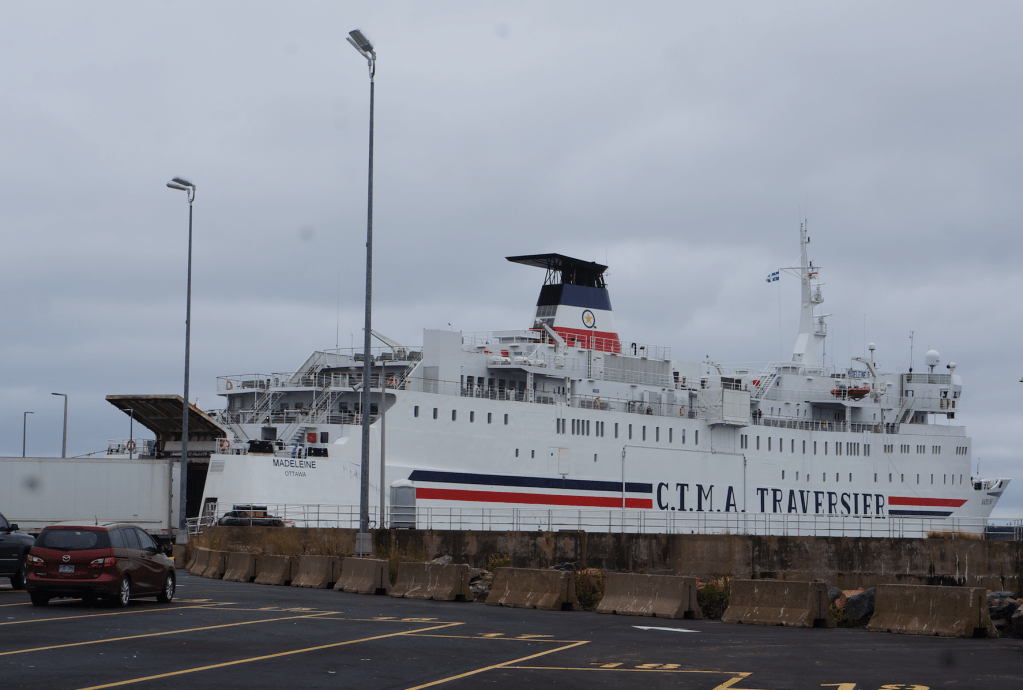
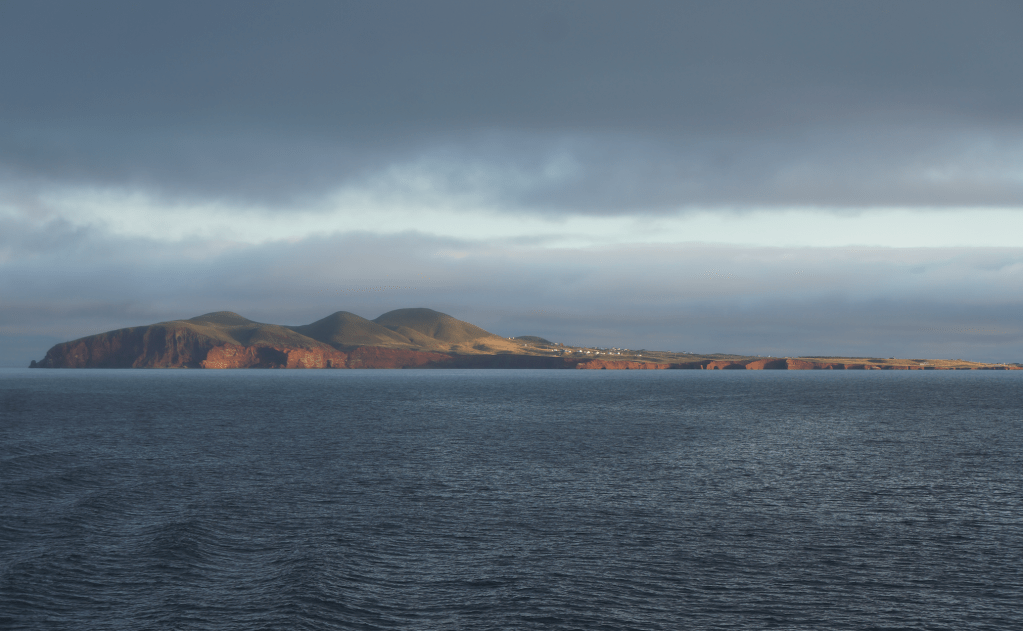
The five-hour ferry ride is on a large ferry that is the main supplier of goods and people to the island. Several transport trucks were shuffled onto the ferry however, there were not many passengers aboard as we are late in the tourist season. We later learned that the population of Isle di La Madeleine is about 12,000 people, but in the summer months this increases to approx. 80,000!! This ferry would definitely be busy during the summer months. The main language on the ferry is French, however, the personnel are somewhat bilingual and the announcements are in both official languages. We enjoyed a late lunch on board and then we read and relaxed. As we approached the islands, we first went past Entree Island. This island looms high above the ocean with bright red cliffs covered in green pastures. The only access to this island is by a small ferry. Approx. one hundred folks live on this island whose main industry is fishing and farming. There are no young people on this island and the population continues to dwindle.
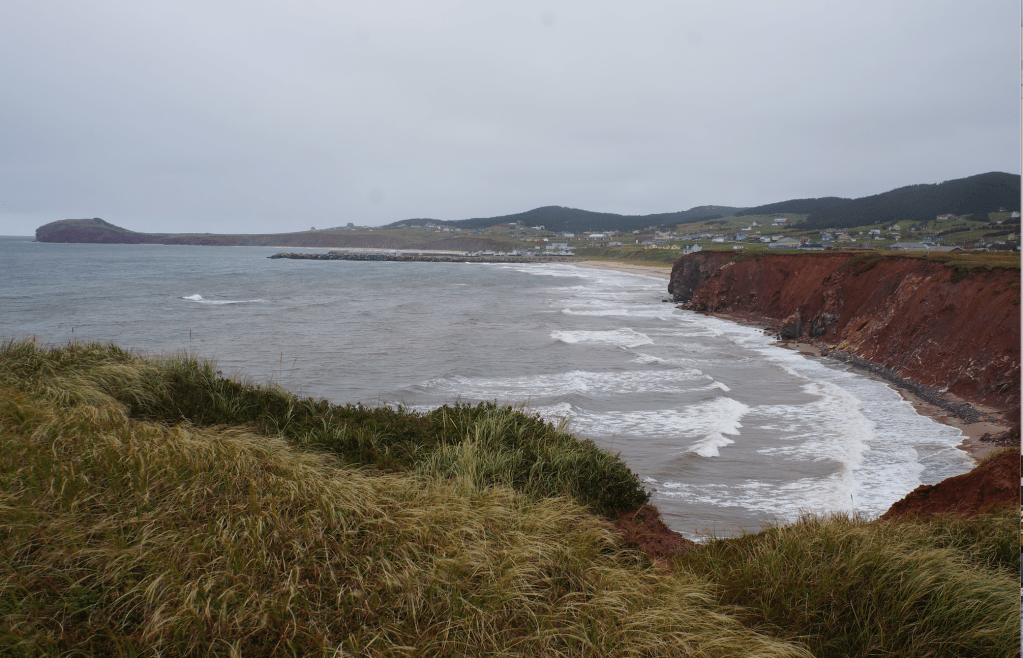
As we disembarked onto the Isle du la Madeleine, we were both struck by how busy this port community of Cap aux Meules is. It is the economic center for the island and has gas stations, banks, a hospital, and grocery stores, and also three car dealerships. The island is basically an isthmus, a long sliver of land, shaped in a crescent. On each end of the crescent are island like landmasses that are populated and have fishing villages and residential areas. These landmasses, are connected by a thin strip of land, the isthsmus, on which the highway #199 causeway is built. There are four main populated areas, Ile du Havre-Aubert and Grosse-ile et Grande-Entree on each end of the isthmus and Ill du Cap-aux-Meules and Ill du Havre-aux-Maisons part way up the southern end of the isthmus. Ile du Cap-aux-Meules is the main business centre, the main port and the terminal for the ferry. This archipelago is actually twelve islands, six are linked by the isthmus. The whole island is approx.90 kms long. There is about 300 kms of sandy beaches. The geological make up of the island is large red sandstone cliffs anchoring the island and miles of sand dunes and beaches in between. Approximately ½ km from shore there is a low ridge of sand bank that has formed a long lagoon between the ocean and the sandy beaches. This provides a warm water basin and shelter from the winds, and attracts thousands of sunbathers every year.
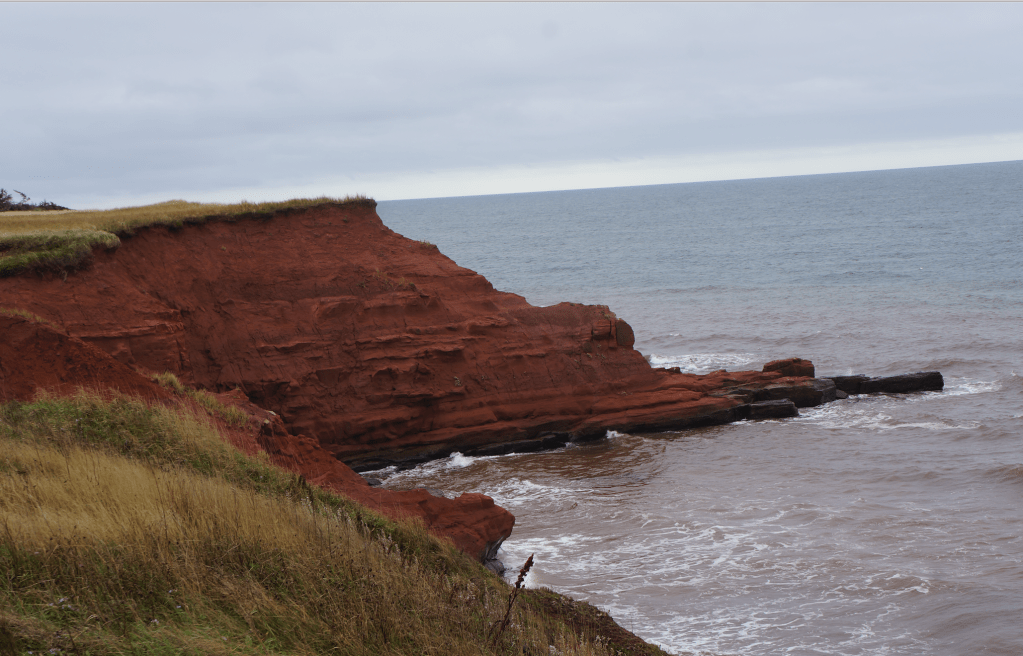
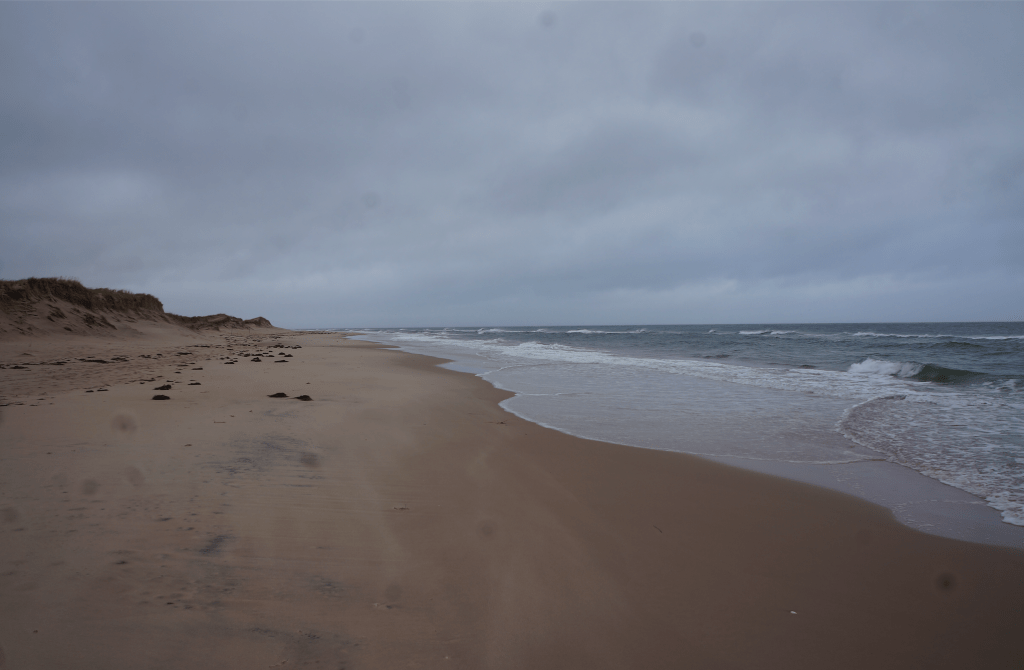
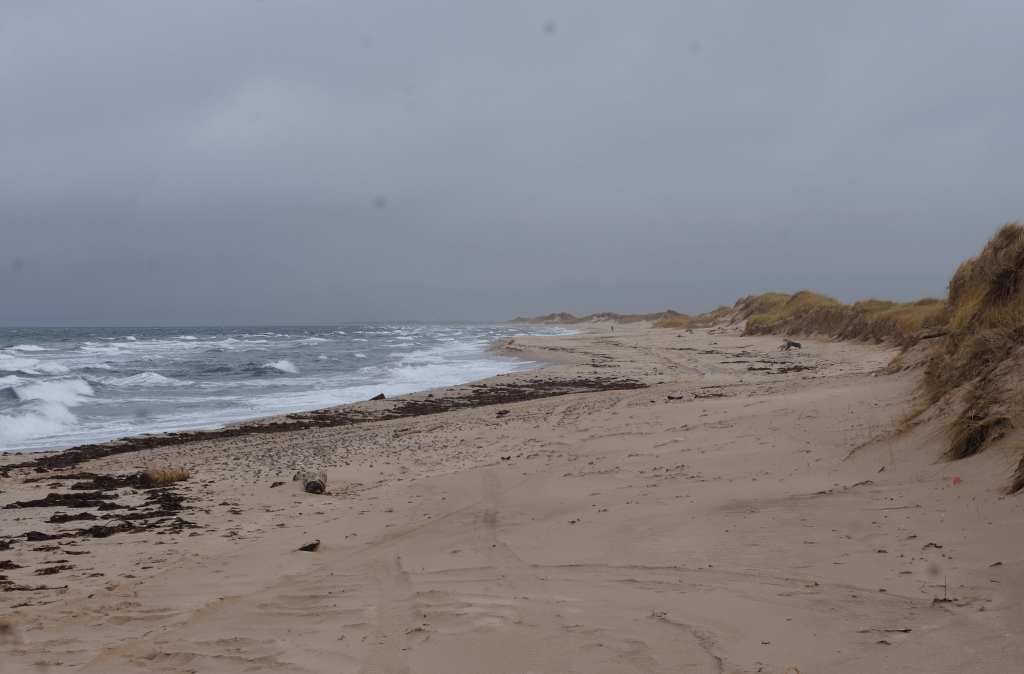
Our B&B is approximately 17kms, from the ferry terminal on the Ile du Havre-Aubert and we checked in at about 7:30. JP and Lucy had called and we are going for a coffee and a get-together at a small restaurant nearby.
JP picked us up and Lucy joined us shortly thereafter. The restaurant, “Café La Grave”, was once a grocery store in the early 1900’s. After a severe storm,in 1930, which destroyed many buildings in the area, the building was abandoned for several years. Enterprising individuals later realized the importance of these buildings and began renovations and eventually the area became a famous tourist destination. There are now artisan shops, restaurants, art studios and boutiques.
The four of us visited and enjoyed some lattes, and made plans for the next few days. We would be going for supper at their house tomorrow and Lucy had secured tickets for a dinner and music performance the following night. We are fortunate that we came here this weekend because the majority of the restaurants and tourist destinations are shutting down this weekend for the season. JP and Lucy made several suggestions for us to visit and explore and then JP drove us back to our B+B.
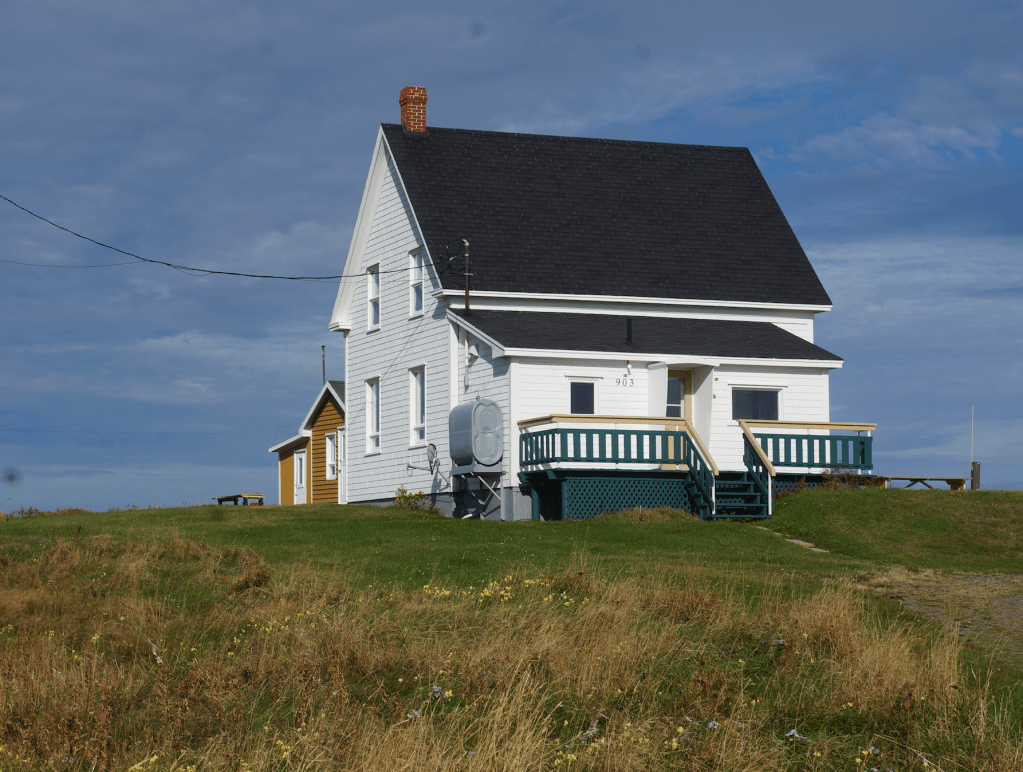
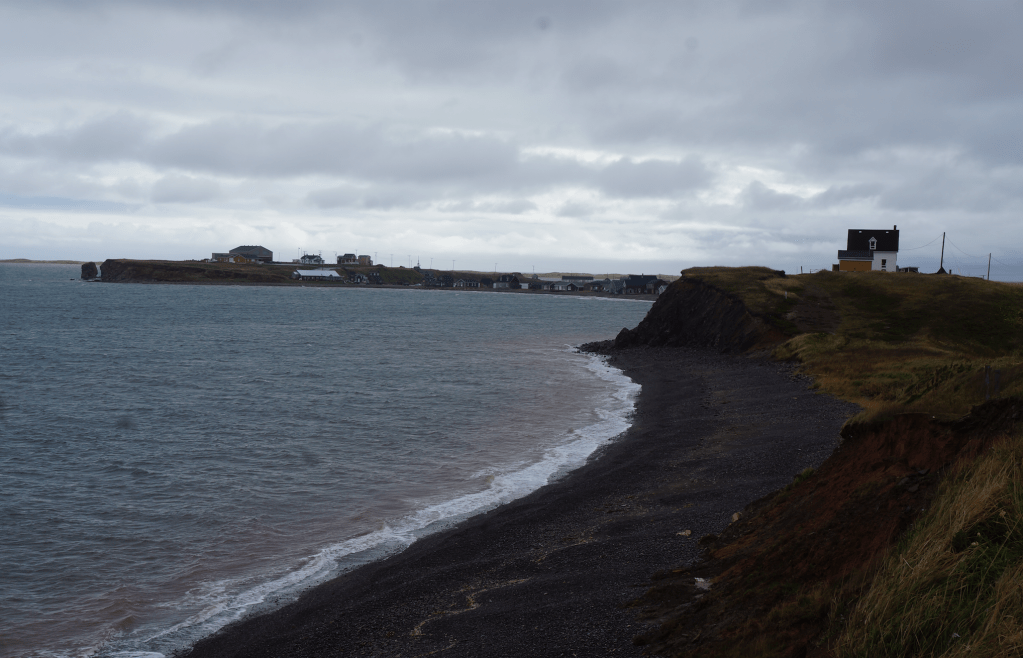
On our way he showed us the house that Lucy grew up in. Her brother now owns it. The house is built on a high point of land overlooking the ocean and the village. JP explained that over the years, the cliffs have been slowly eroding and the parcel of land is diminishing. Lucy has nine other siblings and they all grew up on the island. Five of the siblings still live on the island. We said goodnight to JP and Lucy, and went to our room.

 Quilting in a Kayak
Finally you’re at a place I’ve been..went lobster fishing many years ago in Souris..also tried some local ‘moonshine’..:)
LikeLike
Hi Doug. That lobster fishing is a hard gig. I have a new respect for those boys. Didn’t find any moonshine though. Presently in Amherst NS..
LikeLike