Oct 2, 2019
We woke to a windy and cloudy day again. The weather man promised scattered rain most of the day. Our plans are to cruise down to Joggins, to see the Fossil Cliffs, a UNESCO site. These cliffs are at the edge of the shores of the Bay of Fundy and are subject to the action of the huge tides that roll in every day. It was a short drive from Amherst, so after showers and breakfast we headed out.
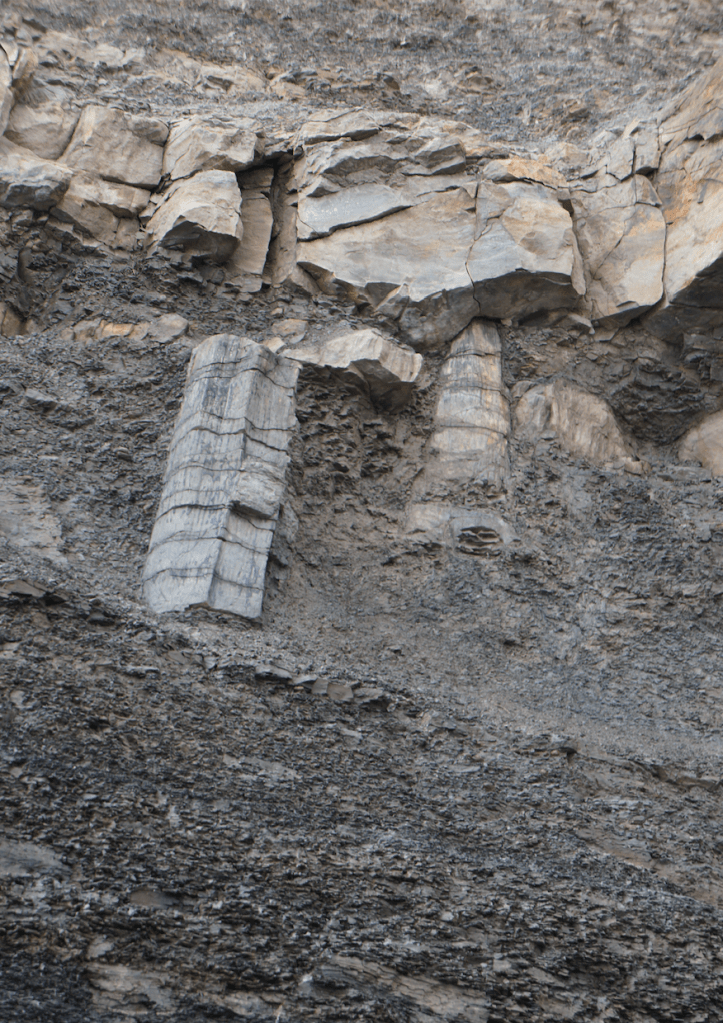
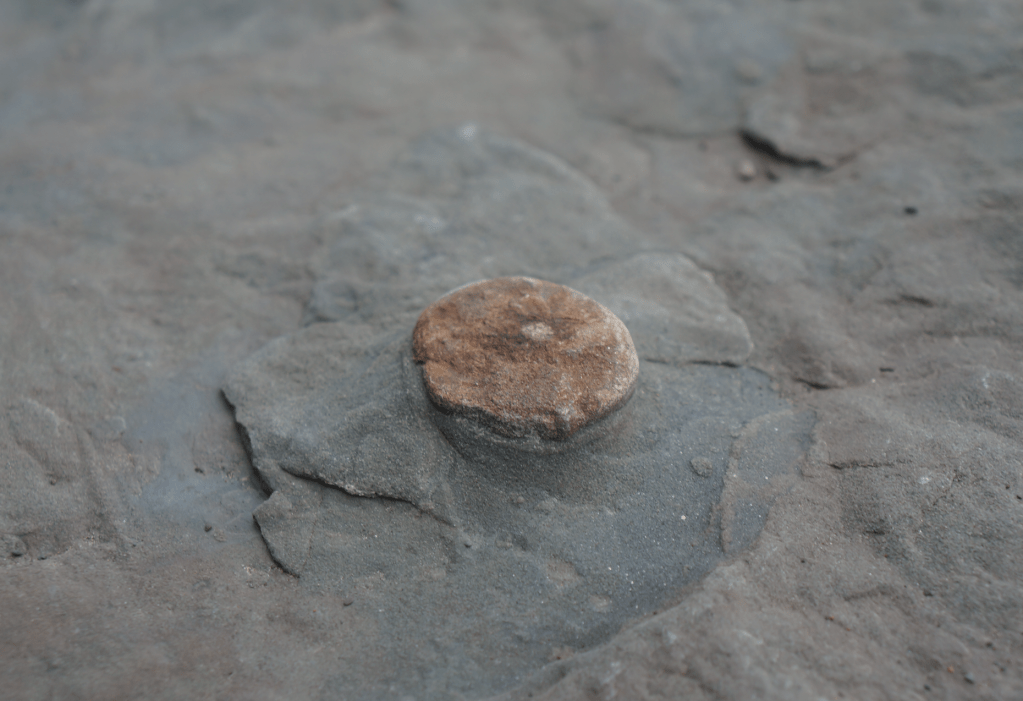
We arrived just in time to be part of a tour by the geologist-in-residence. We started out from the interpretive center and followed him down the stairs to the beach. The cliffs loom 80 to 100 feet over the beach. The tide was out so the rocky beach was exposed as well as the face of the cliffs. Our guide explained that within the next three hours, the tide would be expected to reach about 15 feet up the cliff walls. The constant wave action is eroding the cliff walls continuously and exposing more fossils and each day can bring a surprise. He explained how the shifting of the plates of the earths crust, the ice age and the cooling of the earth’s surface had created these layers upon layers of rock formations, each one telling us more about the history of our world. Joggins is the site that revealed the oldest known reptile. As we walked along the cliff face we saw fossilized tree trunks. Many of these fossilized trees were actually hollow and reptiles and insects were found inside the center. The original site of Joggins was an active coalmine until the early 1900’s, and many fossils were found as the coal was mined. Debbie and I walked the shoreline for an hour and half until it was time to climb the stairs, as the tide was coming in quickly. The interpretive center was very interesting and had many displays of fossilized reptiles, insects and plants preserved forever in stone.
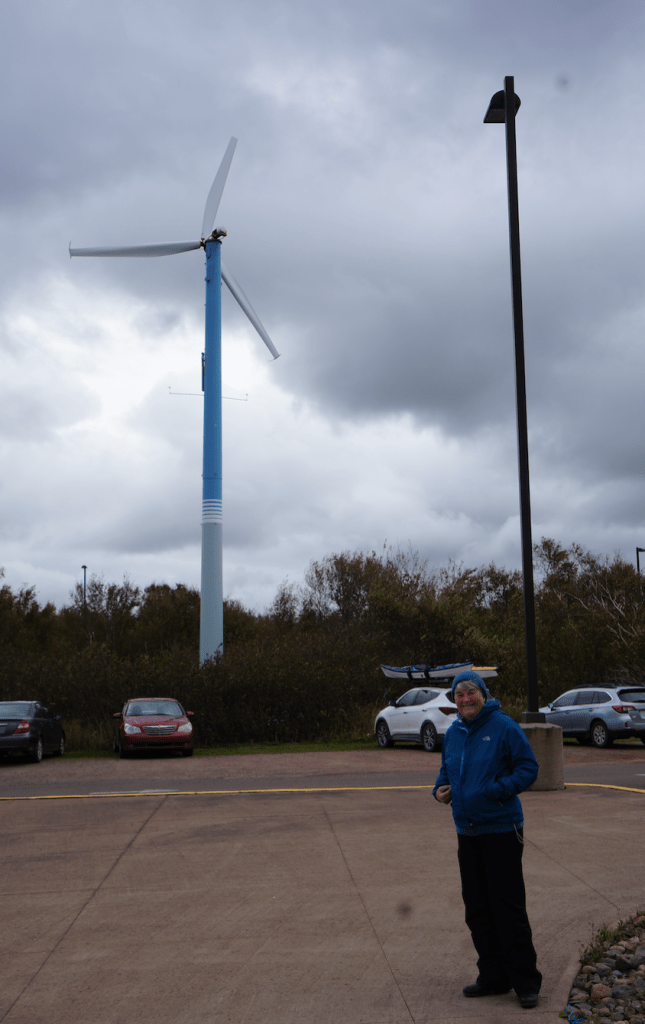
Just outside of the interpretive center is a wind turbine and half way up its support column are painted marking to show how high the tides of the Bay of Fundy are.


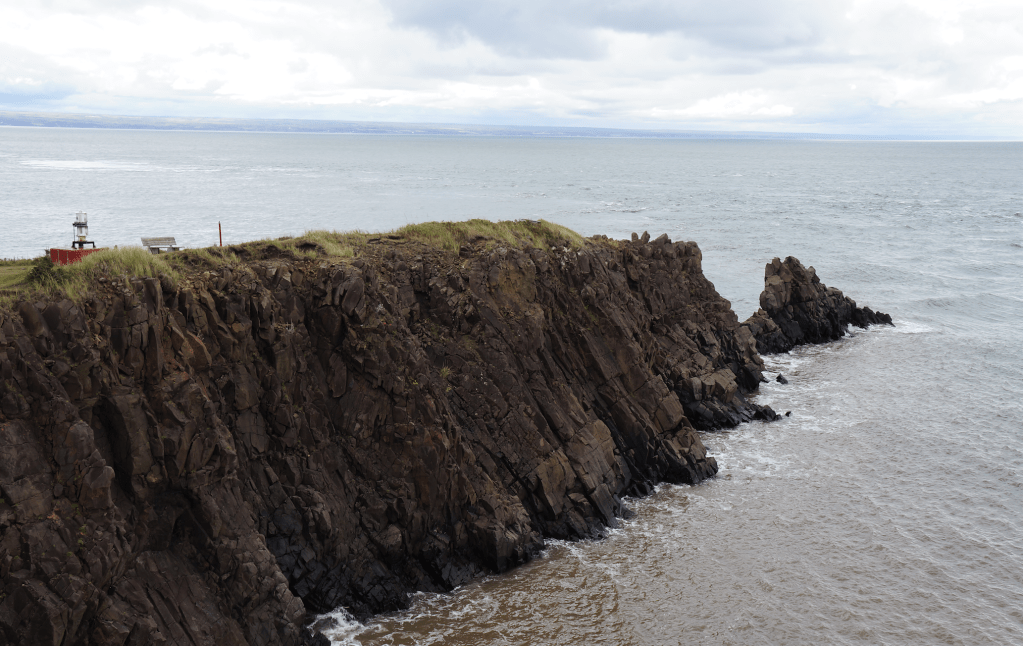
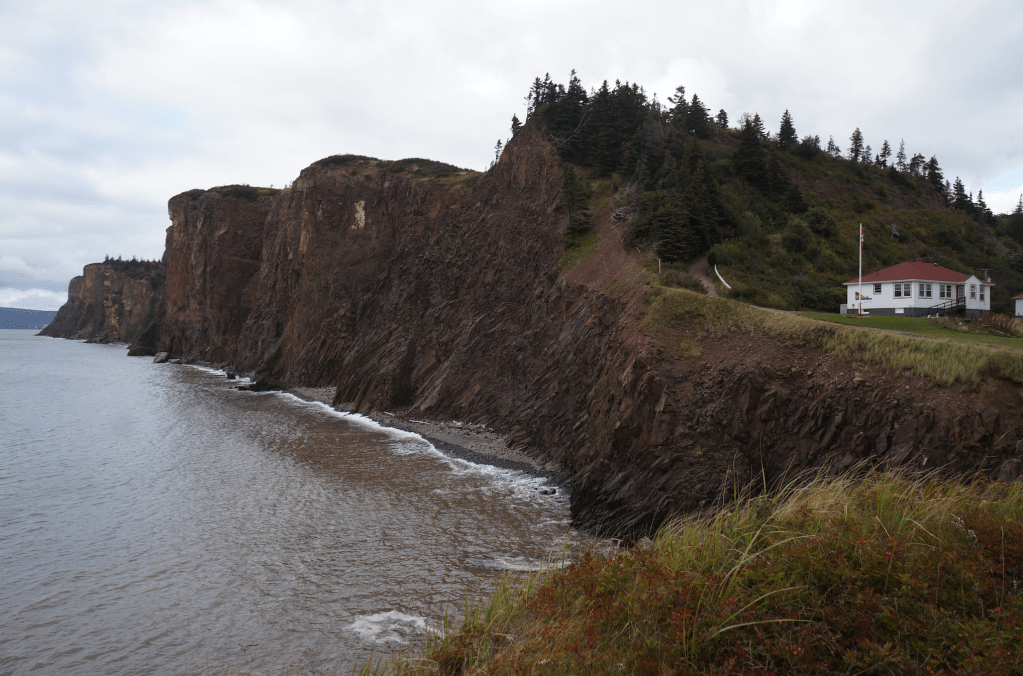
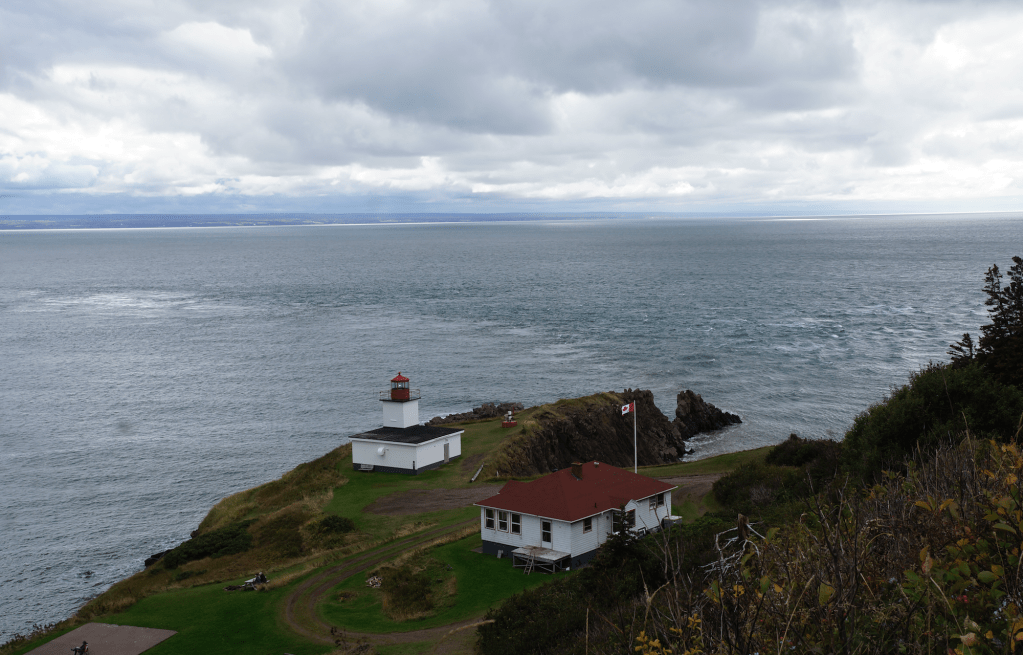
We then decided to continue our journey south to Cape d’Or. We followed a rough secondary road along the coast until we arrived in the village of Advocate Harbor. We turned onto a gravel road that took us to the end of the cape. The headlands are awesome and the high tide was now crashing against the rocks. We walked down to the lighthouse that sits on a rocky shelf half way down the cliff side. We learned that as the tide comes in, it splits into three different currents. As it comes ashore near the Cape d’Or, it turns abruptly and clashes with the other currents creating huge rip tides. The locals call these Dory Rips. The tide was still coming in as we stood on the rocks by the lighthouse and watched the standing waves clashing with each other.
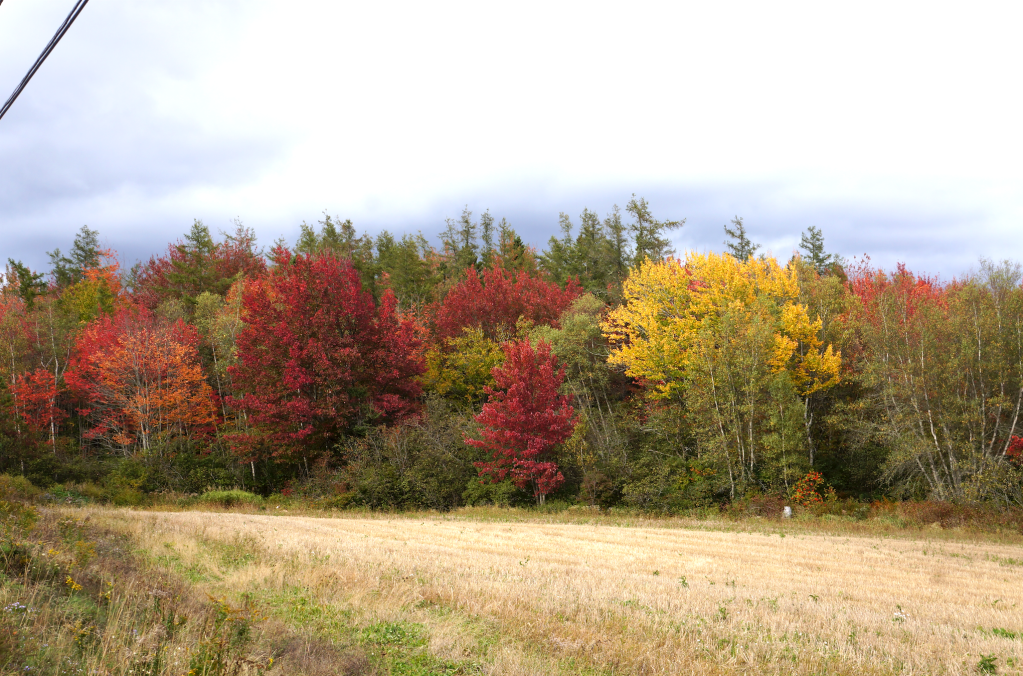
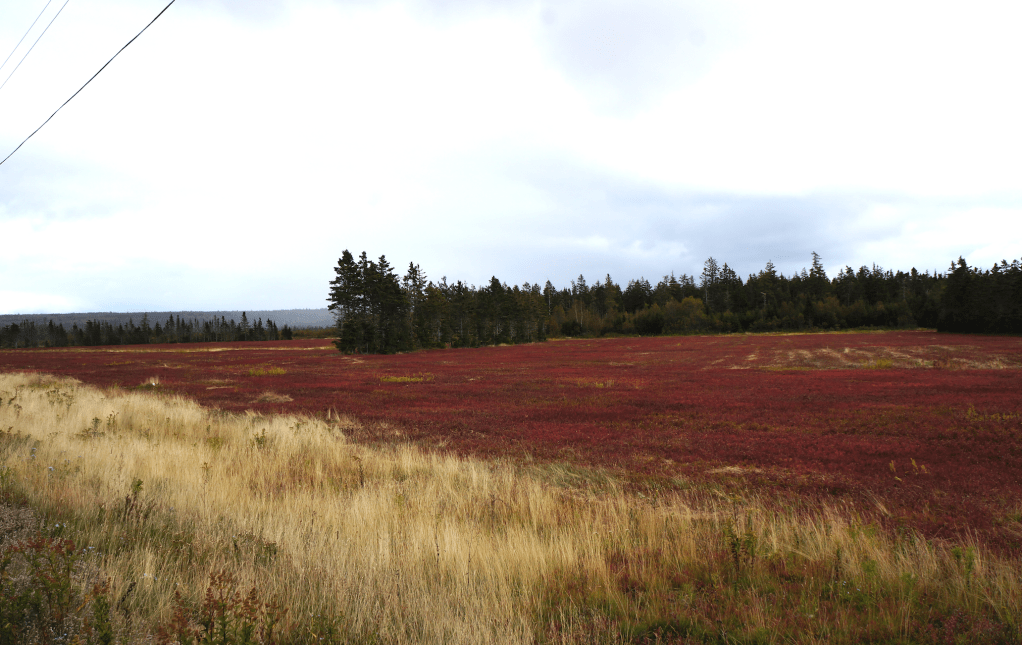
Our journey then took us along the south shores of the peninsula to Parrsboro and then north again to Amherst. We marveled at the red-sided hills. The hills are covered with blueberry bushes. Wild blueberry bushes grow to about eight inches high. They reproduce by sending out shoots underground and the farmer controls the weeds and pests. Nova Scotia produces 30 million pounds of wild blueberries. It is one of the primary horticultural industries of the province. The blueberry bushes had all turned red after they have been harvested. The hills are now a red color and are framed by the green forests, which are also slowly changing into fall colors. As we returned to the trailer we discussed the many interesting things that we learned and saw about this province.
Tomorrow we are “pulling up stakes” and heading down to the Halifax area. As I type this blog, the furnace is on and the temperature outside is going down to 2 degrees tonight. We are visiting as many places as we can however, we are finding more and more attractions closed for the season.

 Quilting in a Kayak