Terry Fox, Mile 0, and the Market.

Sept 21, 2019

It is another mausey day here in St. John’s.  It rained throughout the night and now its windy, cold and rainy drizzle.  We went straight downtown this morning to enjoy a bakery that we had passed several times when we walked on Water St.  The Rocket is a bakery that has a local low budget décor but its reviews in conversations and internet posts tell about the amazing food.  We were going there for breakfast.  Debbie had a bacon and egg croissant and I had a quiche. Both did not disappoint.  Debbie had made an appointment for a hairdresser to do some trimming and this gave me the opportunity to post some blogs.  

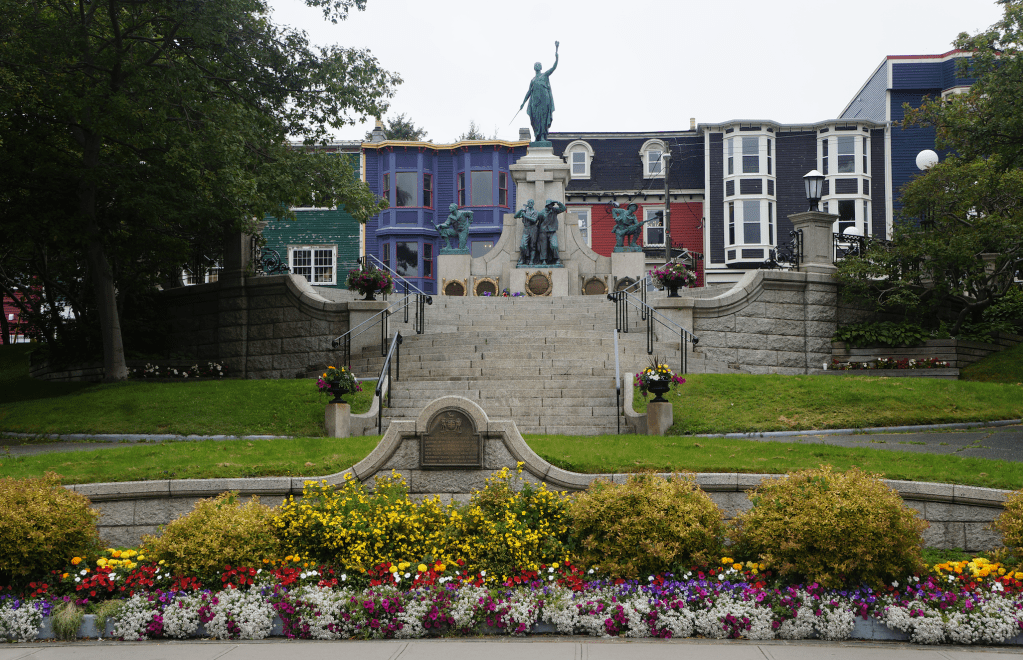
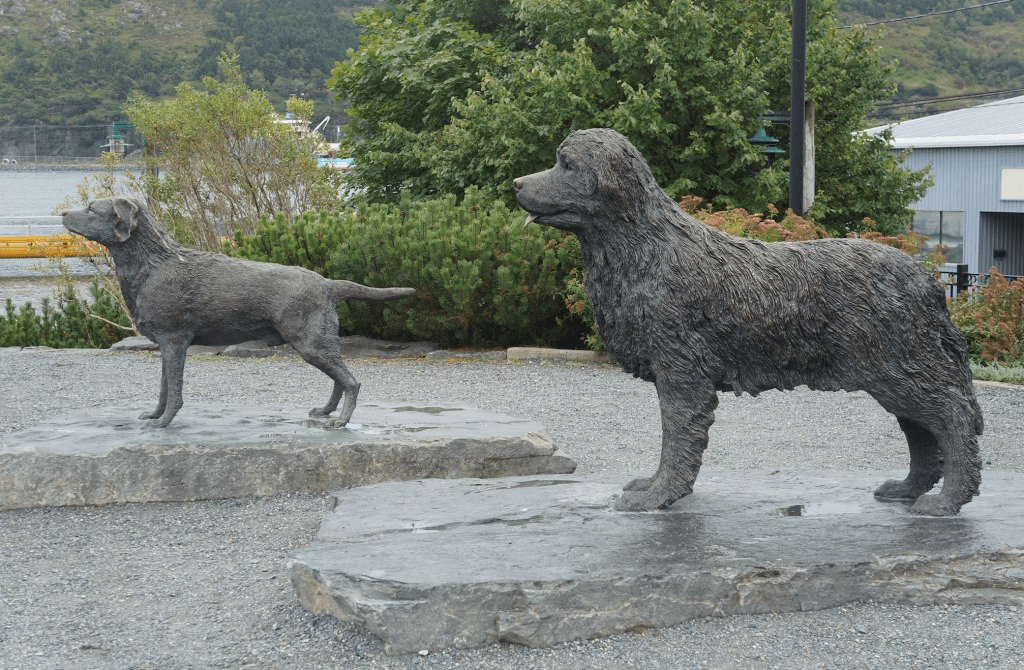
When she returned, we decided to walk the length of Water Street and visit the Mile 0 location as well as the Terry Fox memorial. The war memorial and cenotaph is another impressive monument in the heart of the downtown area. We walked by the harbour monument. The city of St. John’s developed this square to commemorate the stages of development of the harbor and the buildings in the region. Included in this plaza is a tribute to the Labrador and the Newfoundlander dog. Another cruise ship had arrived and the streets were filling up with ”cruisers”, shopping and taking in the sights of St. John’s.
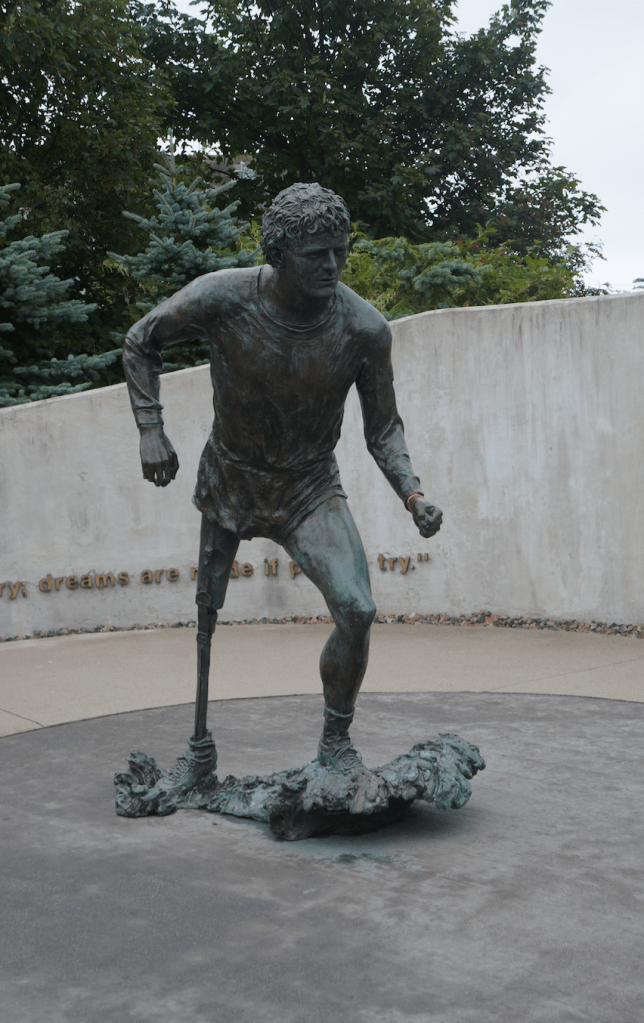
The Terry Fox memorial is at one end of Water St.  The City of St. John’s has developed a very well designed memorial of Terry.  This is the place that he dipped his foot into the ocean to begin his run across Canada. Debbie and I have now visited his memorial in Thunder Bay, where Terry had to stop running because his cancer had returned, and now this one where he started his marathon run.  Both these memorials are impressive, touching and inspiring.  His legacy lives on.

We walked back toward the center of town.  Along one side of Harbor Street, a huge mountain of sand/salt has formed.  This sand/salt mix will be used locally as well as other areas of Newfoundland to be spread on roads in the winter.  Cargo ships have off loaded this massive pile.  It will then be loaded later into holds of other ships to take to various other outlying harbors in Newfoundland.

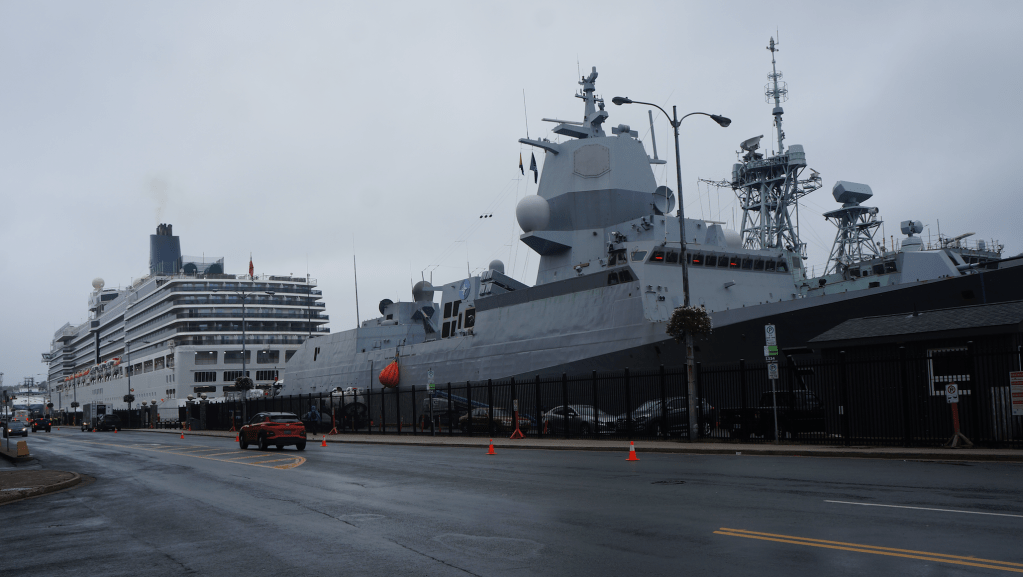
We walked past the Arcadia cruise ship, all 950 feet of her. Passengers were coming and going, climbing onto waiting tour buses and walking in small groups downtown.  St. John’s has become a regular port of call for many of these vessels.  There were also two navy vessels that were visiting.  This is definitely a busy harbor. 
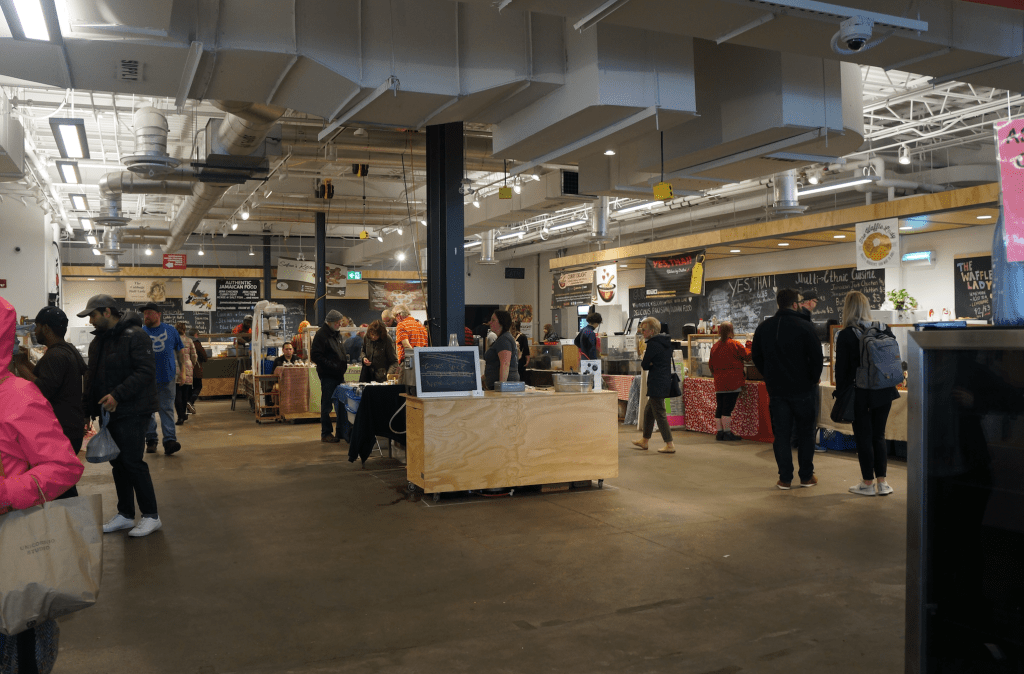
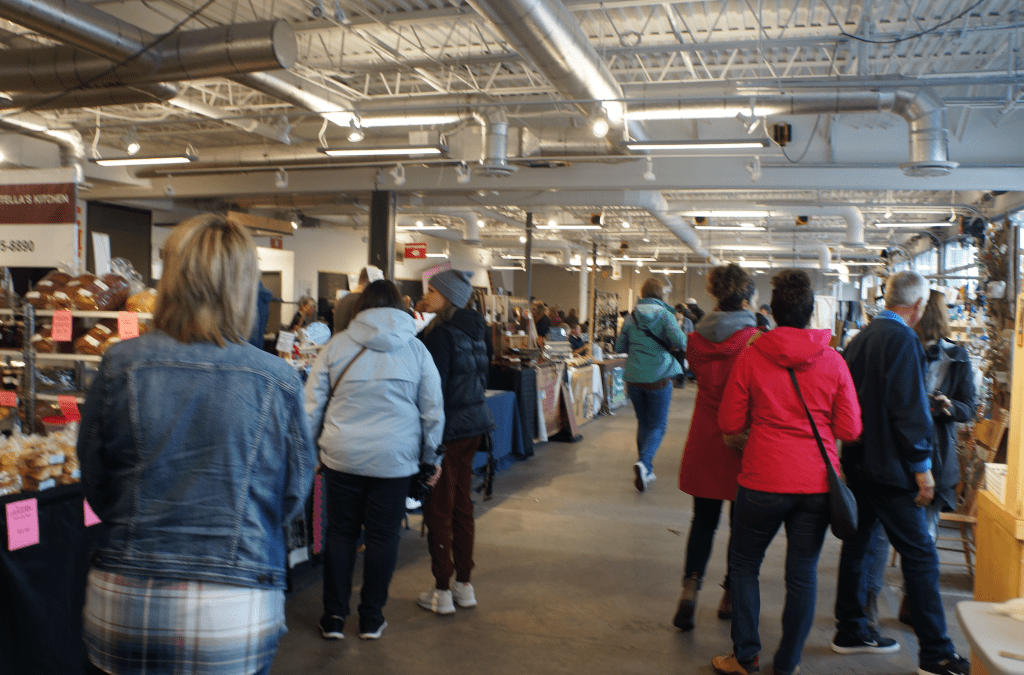
Our next stop was to visit the local Farmers market.  This market is held every Saturday in the old transit bus terminal.  It was a thriving place with many vegetable stands outside and inside were kiosks selling crafts, jams, clothing and jewelry and woodworking.  There were about eight different ethnic food vendors.  A large eating area is set up at one end and a musician entertains the diners.  Debbie bought a small plate of perogies and I had a bowl of borsht.  We enjoyed our time at the market and I bought a couple of small jars of local jam. We drove back to the trailer.  We wanted to make some plans and arrangements for our next leg of our journey into Nova Scotia and New Brunswick.  We used up our root vegetables tonight as we cannot take them into another province, as well as cooked up our last fillet of cod.  Tomorrow we head down to Argentia to meet the ferry at 5:00 pm. 
Exploring the Avalon Peninsula.

Sept 20, 2019

We woke up a little tired and groggy today.  We had a late breakfast and decided that we would try to visit the eastern side of the Avalon Peninsula today.  This area is called the Irish coast because of the high influx of Irish settlers back in the 1700s. As you leave the city of St. John’s, for a short distance, there are small farms that appear to grow grains. As we travelled further south, the landscape changed to forests again.  

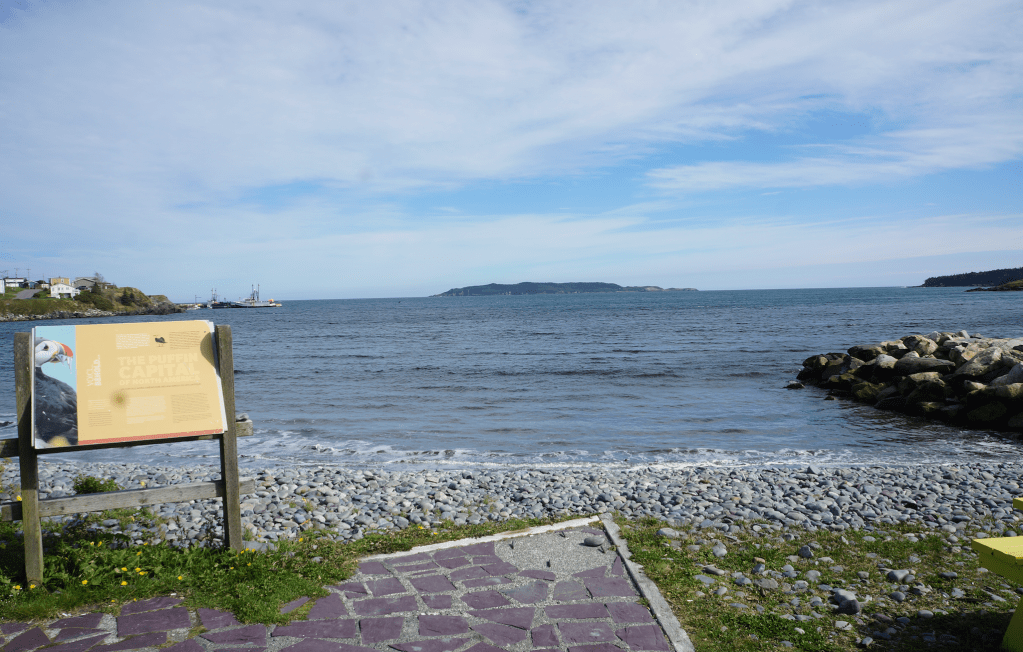
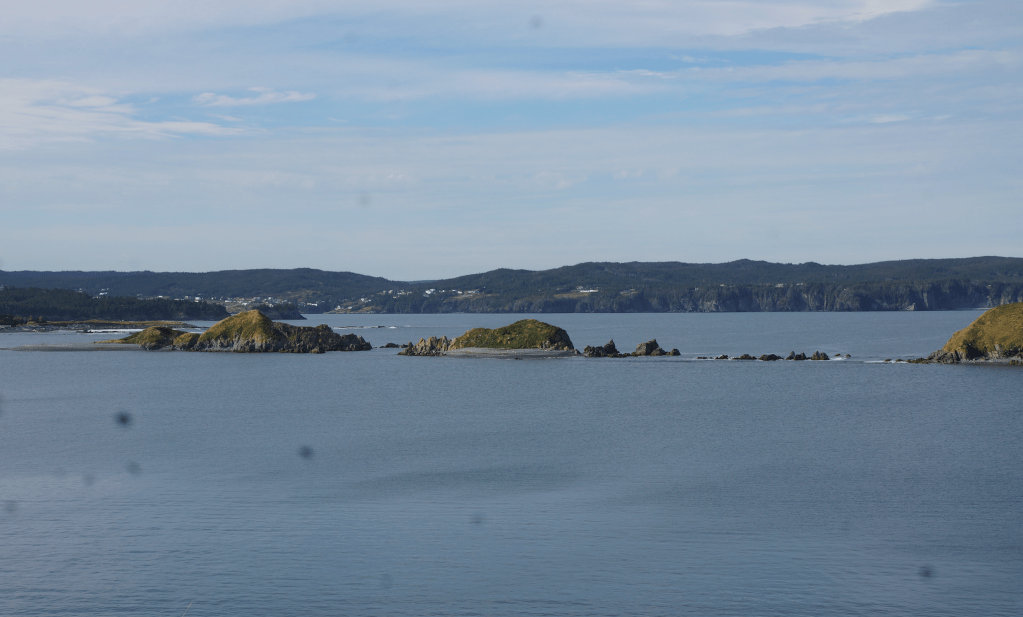
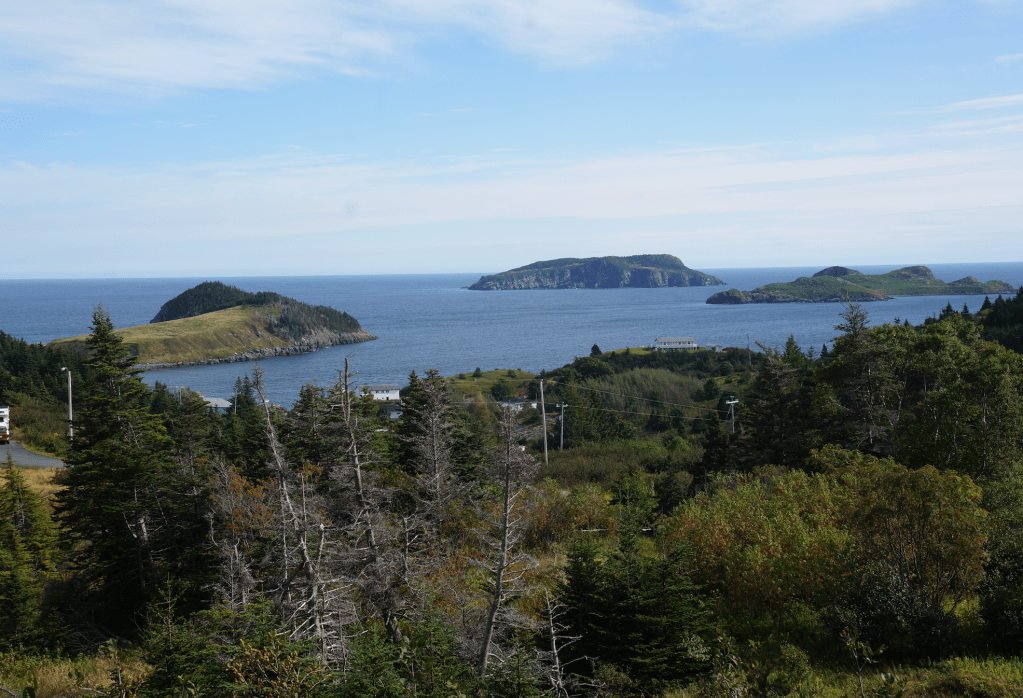
Witless Bay is along this coastline and I wanted to visit that also.  Over 60% of the puffin population in North America makes this area their nesting ground. It is now an ecological reserve.  Our stop in Witless Bay was picturesque.  The ecological reserve consists of four barren islands that you can see from the shore.  The only birds on the islands were sea gulls.  We learned that the black backed sea gull is the main predator of the puffins.  These sea gulls are highly predatory and hunt and kill juvenile puffins.  We also learned that puffins spend their first three early years totally at sea. 

We continued our trip south and stopped in several small villages along the way.  We were particularly impressed with the villages of Burnt Cove, Bauline South. These villages are positioned at the end of the bays and have small accessible beaches.  We wanted to find some sheltered coves but most of them are open to the Atlantic.  As I was reading some information signs at Witless Bay, a lady drove up in her car. She had kayak ranks on the car. She rolled down her window and said that if I was looking to go kayaking she suggested Ferryland or Aquaforte. Both of these coves are protected and accessible.  Due to the expected high winds and surges from the hurricane Humberto we did not want to venture out too far.  The problem now is that both these places were too far south for us to have any time to go kayaking.  We decided to visit them anyway.  

Ferryland is impressive as it was the first settled colony in Newfoundland.  In 1621, Lord Baltimore developed the Colony of Avalon in this bay and successfully repelled several attacks from the French during those early years. It now a National Historical Site and archeological digs are still going on there today. We drove as far as we were allowed toward the lighthouse that was located on the point. Hikers can go to the lighthouse and order a lunch to take out to the point and have a picnic. Unfortunately it closed when we got there.    

We drove into the village of Aquaforte.  This tiny village is nestled behind the headlands with a long sheltered harbor.  Truly a perfect kayaking area, but it was too late in the day for us to attempt. Aquaforte also has the lowest postal code in Canada – A0A 1A0.  

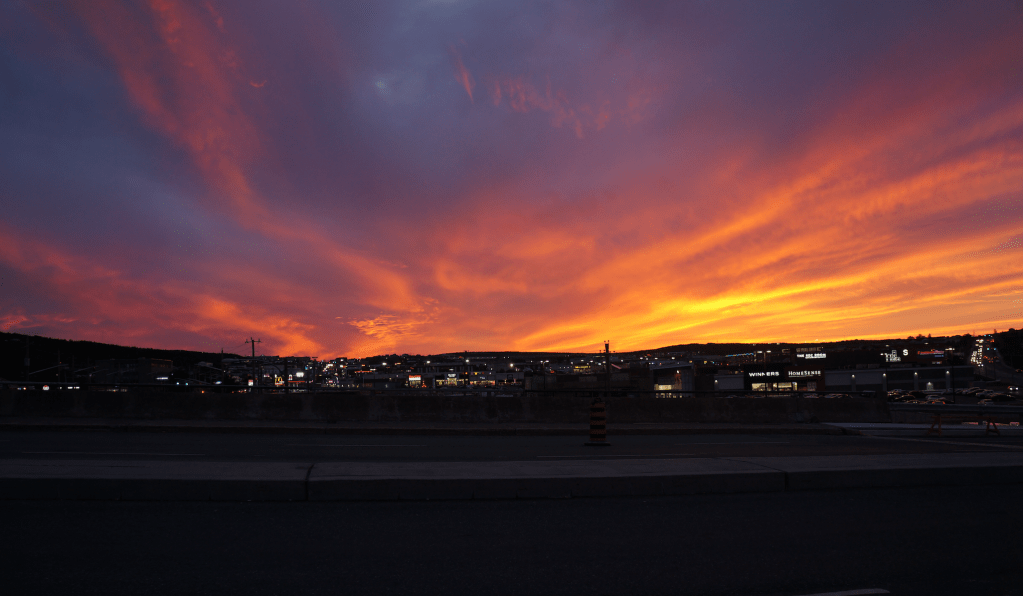
We felt it was time to return to St. John’s as it was getting dark.  As we approached St. John’s the evening sky began to turn a brilliant red/orange. There had been a serious water main break near our campground and several of the main roads now had detours. We tried to get into our campground and kept getting sent around to various barricades.  We finally explained our dilemma to one of the flag persons who called their supervisor.  He directed us to a blocked off area, told us to take down the barricade, drive trough and then replace it!  Debbie got out, stopped traffic, moved some cones, then replaced them after I drove through.  We never did found out why we were the only ones allowed to go through this way, as there are several other campers in the campground.

We paid for two more nights here, as the Argentia ferry was postponed until Sunday due to the hurricane warnings.  We were pleased that we had explored the Avalon Peninsula and saw another interesting area of this province. 

Screeched!!

Sept 19, 2019 

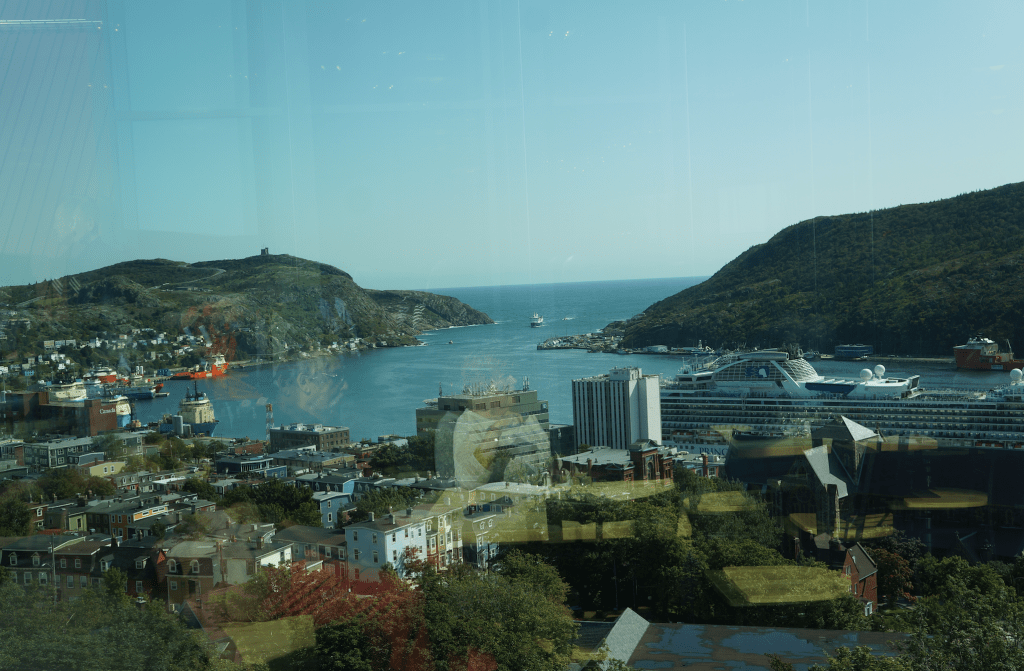
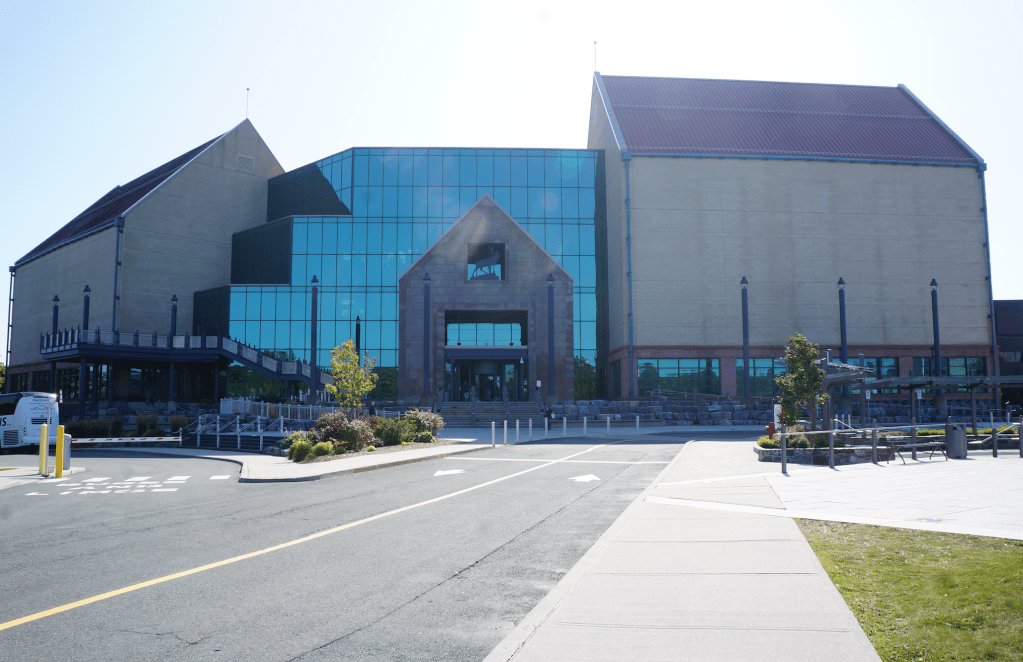
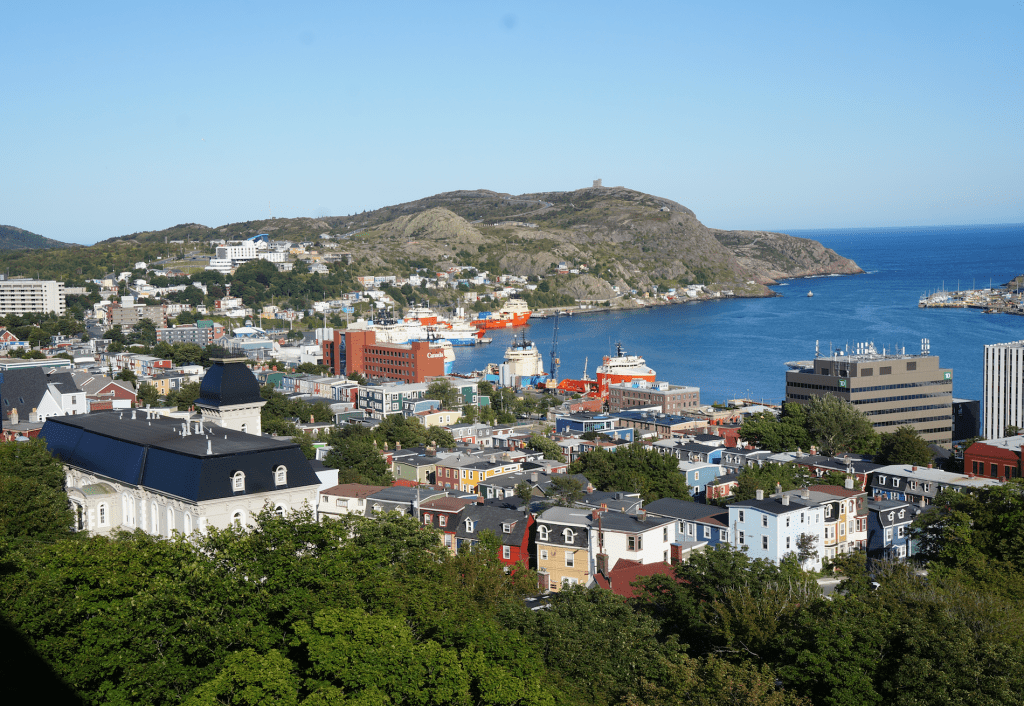
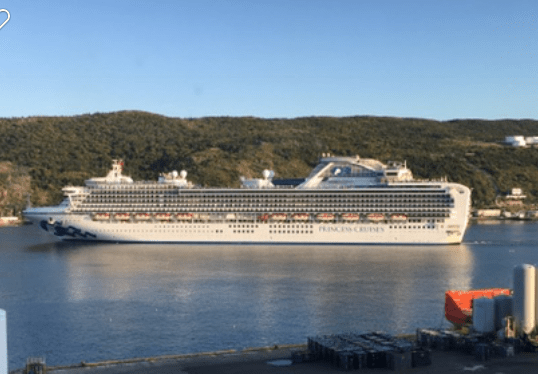
We woke up to a beautiful day.  Today we planned to visit the Rooms.  Room’s is the name of the St. John’s cultural building and it is the home for a Museum, Provincial Archives and the Art Gallery.  It was built in 2005, on the site of Fort Townsend, an important defensive fort that protected the Port of St. John’s in the 18thcentury.  This impressive building overlooks the city of St. John’s.   We enjoyed a coffee in the café and looked at the Port of St. John’s below. A large cruise ship, Sapphire Princess, was docked at the visitor pier. 

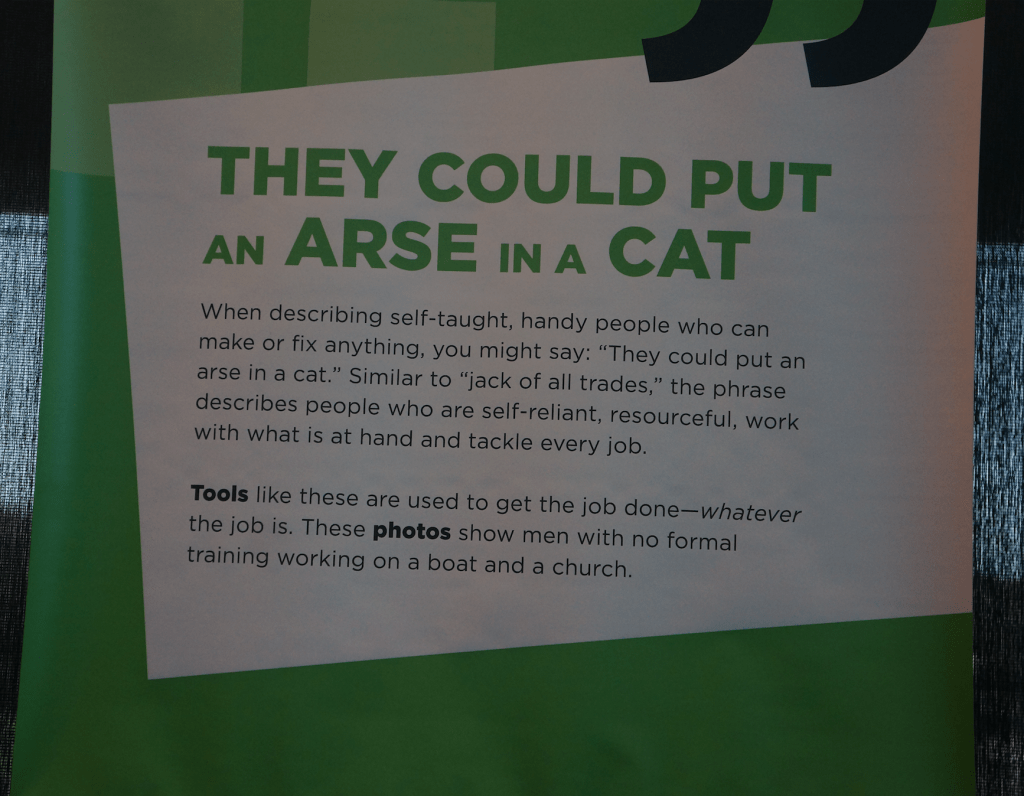
Debbie and I spent five hours there and went through many of the exhibits.  The museum featured the history of the many cultures that make up the patchwork of Newfoundland’s rich history.  It featured the Innu, Inuit, Mi’kmaq, Southern Inuit, Irish, French and Acadian cultures and how these peoples influenced each other, and shaped the Newfoundland culture. We also learned some new Newfie sayings! We also enjoyed the exhibit featuring the whole fishing industry of Newfoundland, from whaling, seal hunting, and cod and squid fishing.  We then learned about the Royal Newfoundland Regiment, the 166thNewfoundland Field Regiment and the 59thNewfoundland Heavy Regiment along with the Royal Artillery. This province supplied a great many young men and women for many of these military units in the various conflicts. It was very informative and interesting.  

Another interesting feature was a documentary film that was recently completed about the first flight of Amelia Earhart. She was actually a passenger on that flight.  The little unknown fact is that Amelia Earhart actually landed in Trepassey, Newfoundland and then continued on to England.  She actually landed in Wales. The producer, Lorne Warr, presented the film and gave insight into his research and producing and other little known facts about this flight.  On her second flight she landed in Harbor Grace, Newfoundland.  A statute of her is erected there.

We went back to our trailer, changed and then went downtown to meet Meg at her hotel. Before we left the trailer we got a message that the Argentia ferry was cancelled for Saturday and our departure day was now Sunday. Hurricane Hoberto was making its way up the eastern coast. I think that big black cloud had found us again. We arrived in Newfoundland with a hurricane following us and now we were leaving with one coming

Tonight we are planning to get screeched!  Meg offered to take some of the things that Debbie had collected on our trip, back to Nanaimo, as she had room in her suitcase.  (That gave some more room in our small trailer.) From her hotel room we watched the Sapphire Princess leave her berth and sail out into the Atlantic.  We then walked down onto Water Street and ate dinner at the Bier Market.  Meg had to work tomorrow so after dinner we walked her back to her hotel and then Debbie and I returned to George St. to find a place to get screeched.  

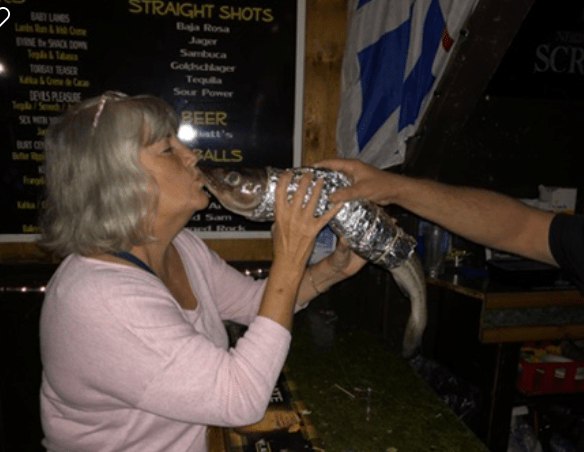
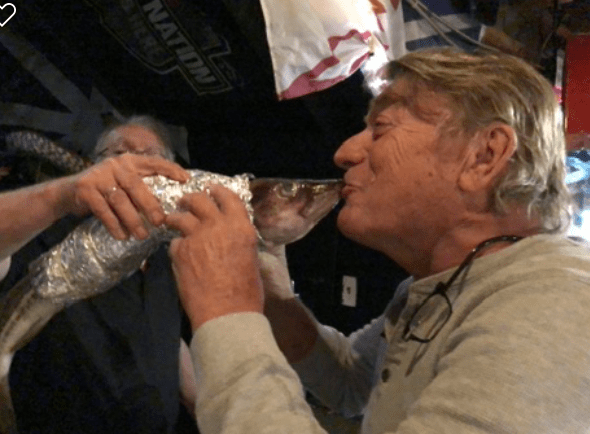
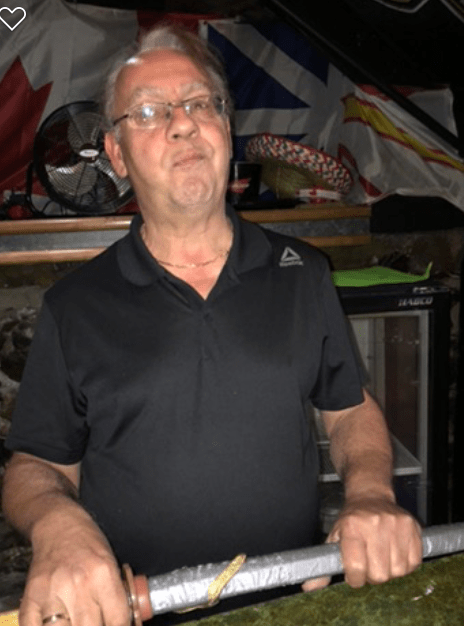
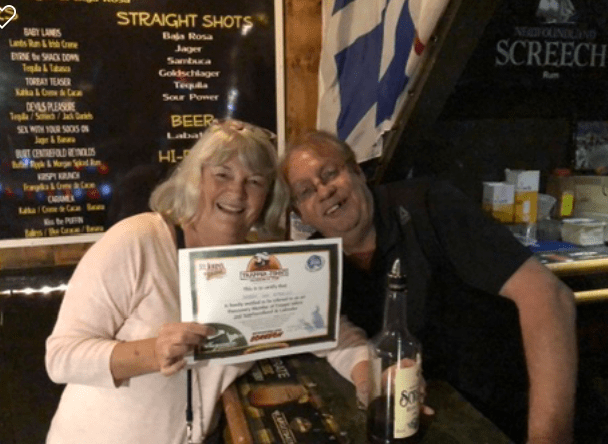
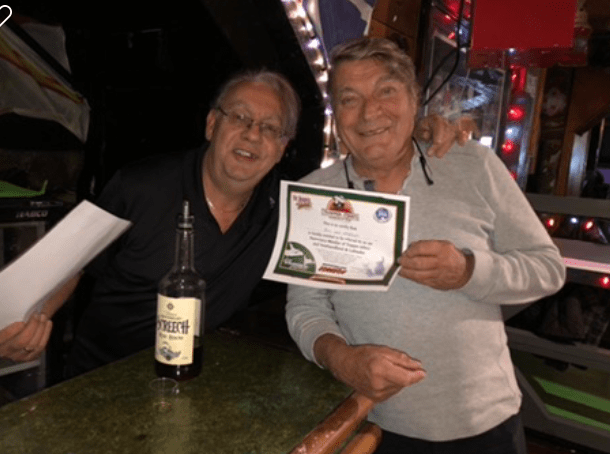
We entered Trapper Johns, a place that had been recommended to us, by several people.  (It is actually a little scuzzy.) Trapper Johns was full of customers enjoying the last part of a comedy hour.  We registered with John and then watched the remaining five comedians.  Of those five, only one was actually funny.  Perhaps we should have had more to drink before coming here.  After comedy hour, it was time to be screeched.  John explained the process and of course the first thing that we needed to do was have a shot of Newfoundland screech.  Newfoundland screech is actually very strong rum. We had to down it in one gulp and Debbie was a master!  John then asks us if we are true Newfoundlanders. We then had to repeat a Newfoundland greeting, ”Indeed I is, me ol’ cock! And long may yer big jib draw!”  It means, “Yes, I am, my old friend, and may your sails always catch wind.”  We then had to kiss a cod fish on its lips.  John then took his paddle and touched our shoulders and declared that we are Honorary Newfoundlanders. He then gave us certificates to make it authentic.
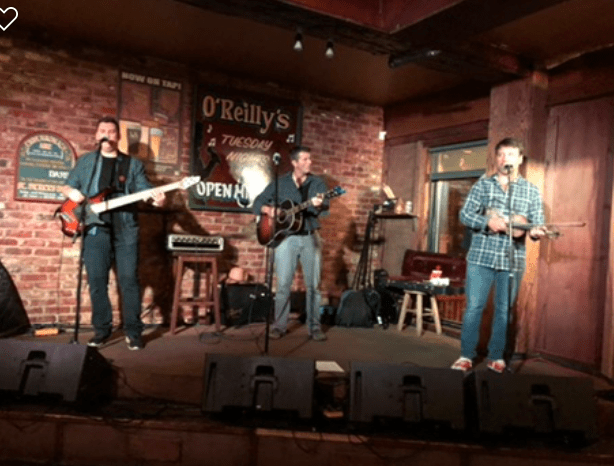
After another beer, Debbie and I went to another pub, O’Riley’s.  A small band was playing, the place was packed and it was rocking.  They were playing Irish songs and Newfie songs and everyone was having great time.  We paid the cover charge and went inside.  We drank and danced until 1:30!  The band had finished playing and it was time for us to go home.  At the end of the street a long line of taxis were waiting to take people home.  We selected one and got home safely.  We were feeling pretty good, having been screeched.  We fell into bed.   

Exploring St. John’s!

Sept 18, 2019

The Newfoundlanders call this a mausey day.  There is a heavy misty rain driven by an easterly wind.  Our plan for today is to explore the lower city in the legendary Water St. and George St. districts.  Debbie had found a quilt shop in that area that she wanted to see.  I was interested in the activities that were happening on the docks.

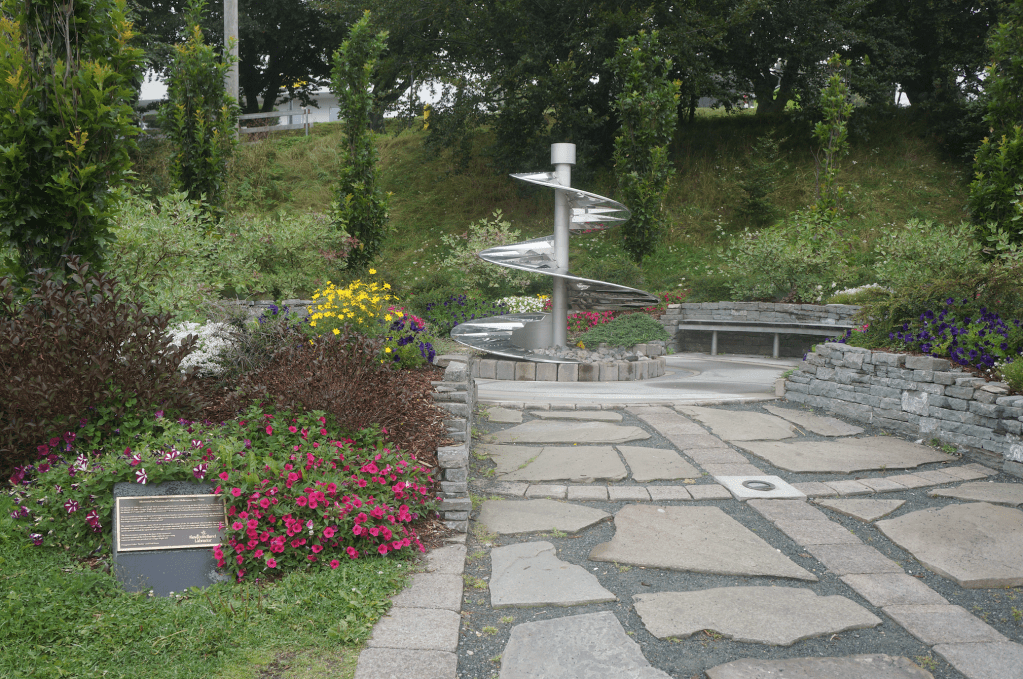
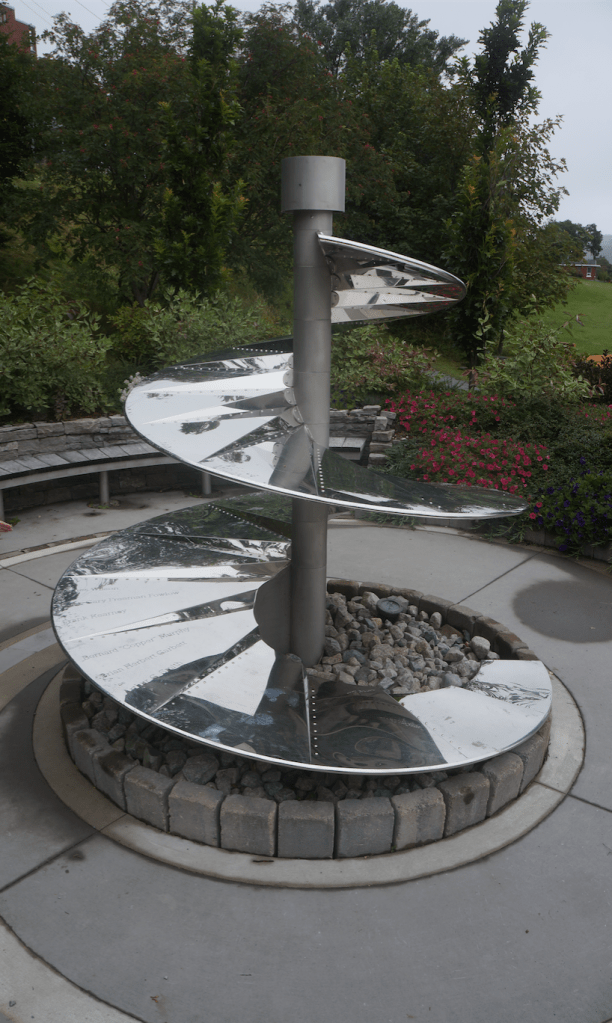
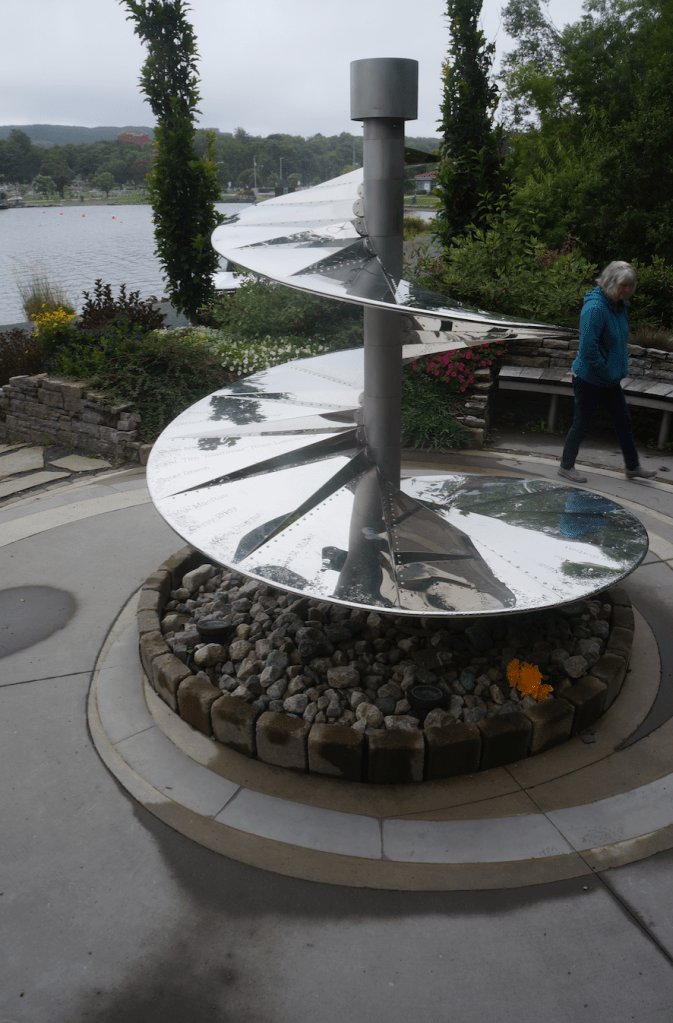
Before we are going there we wanted to visit the Memorial of the Cougar Flight 491.  This memorial was erected to remember the 17 victims who had died in the helicopter crash on March 12, 2009.  This day is important to us as our daughter Myra was flying for Cougar Helicopters at the time but was not working that day.  This is also the day that our first granddaughter was born to our other daughter Rina.   The memorial is built on the side of the Quidi Vidi Lake.  It is in the shaped of stainless steel spiral that is similar to the drawings done by Leonardo Di Vinci when he developed the first helicopter. The names of the victims are engraved in the steel plates.  They also include the names of the victims of a similar crash in 1985. At night the center pole illuminates a light into the sky to show the way home.

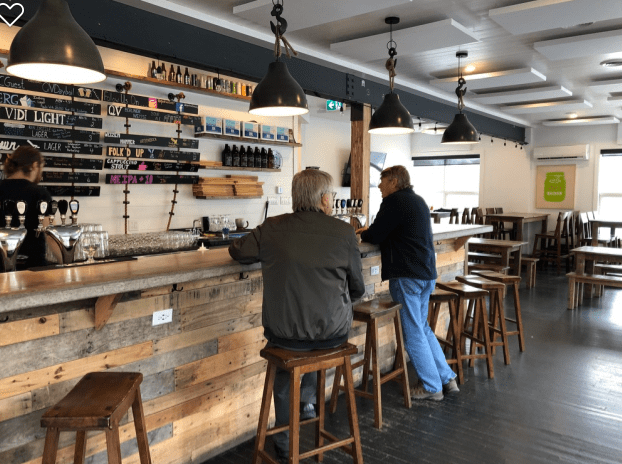
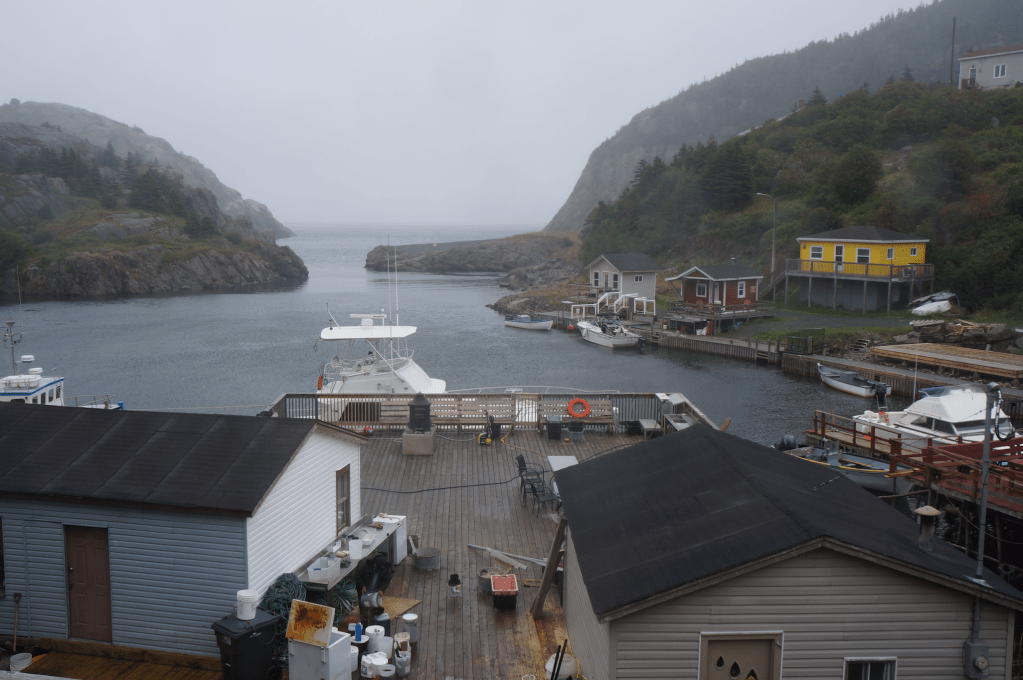
 We then drove to the tiny hamlet of Quidi Vidi.  This tiny fishing village is tucked into the end of Quidi Vidi bay.  In the war of 1812, it was a battery placement and in World War 2 it was also an air force base.  The largest Newfoundland brewery is built on the banks of the bay. We stopped in at the Quidi Vidi Brewery and tried out several of their beers.  Debbie then visited a local craft shop nearby and then met me at the Mallard Cottage.  

Mallard Cottage is one of the oldest wood structures in North America.  It is now designated a National Historic Site.  The cottage has been renovated and maintained in its original architecture. It is now a small restaurant and hosts traditional activities.  We enjoyed a wonderful lunch there.  

The weather did not clear up so we went downtown.  Debbie went out to look for her quilt shop and I walked the docks.  I had seen the ship Polar Prince berthed there, and I hoped to get a tour of it.  

The Polar Prince was once a Canadian Coast Guard Ice breaker until it was sold to a private firm three years ago.  It was renamed Canada C3 to commemorate the Canada 150 celebrations and was used to do a North West Passage tour.  Canadians could apply to travel on the ship on one of the 23 legs of the journey.  After the trip was over it was renamed as the Polar Prince. I spoke to a watchman on the gangway to request a tour, however, he refused and told me that they don’t allow tours any longer.  

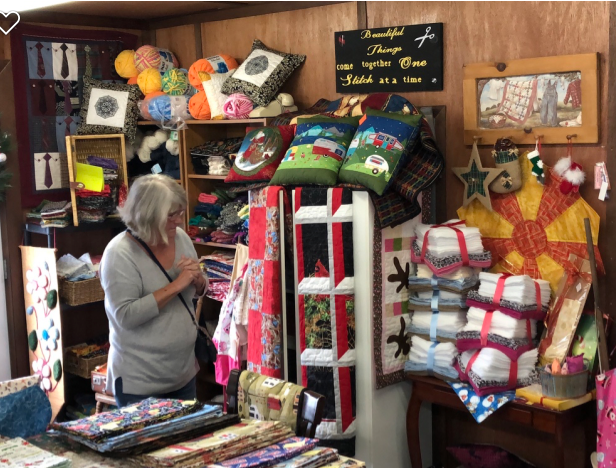
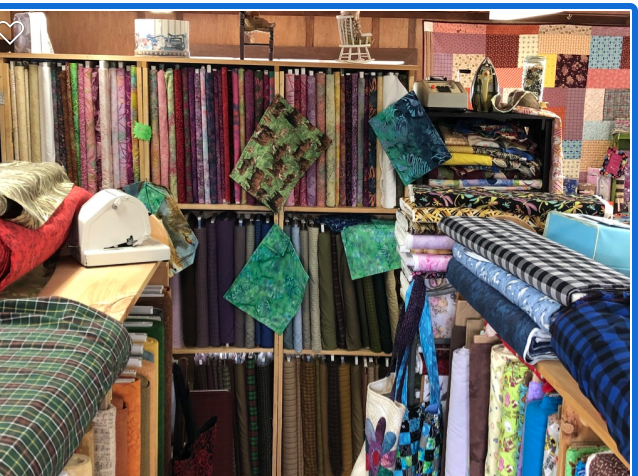
I was wet and cold and tracked Debbie down on Water St.  She was also looking for the quilt shop that had now moved to a different address.  We walked together in the rain to the new location and as she was going in, I spotted a Starbucks!  Perfect, I could warm up as she shopped.  Debbie met me with a smile on her face, after buying some more material.  We enjoyed a coffee and a hot chocolate and then decided to go back to the trailer, as we were both wet and cold.  We came back and relaxed, I caught up on the blogs and then watched a movie with Debbie.  Hopefully tomorrow we will have nicer weather.     

Cape Spear and Signal Hill!

Sept 17, 2019

It’s a rainy day today but we are excited to explore this city. We decided that before we do, we should take care of business.  Debbie wanted to do laundry, and I wanted to check out more details for some of the other plans that we have.  We want to visit the French Islands before we leave Newfoundland, however, since we are now leaving earlier than we had planned we determined that we would not be able to make that trip.  We discussed this with another couple camping here.  They too wanted to see the French Islands but decided not to.  The ferry to the islands are scheduled in such a way that there is only one day a week that you can travel there and back in one day. All the other trips require you to stay overnight.  Our schedule was not going to work with that arrangement.  That was a bit on a disappointment.  We learned that this is set up in order to control the volume of people who visit the islands.

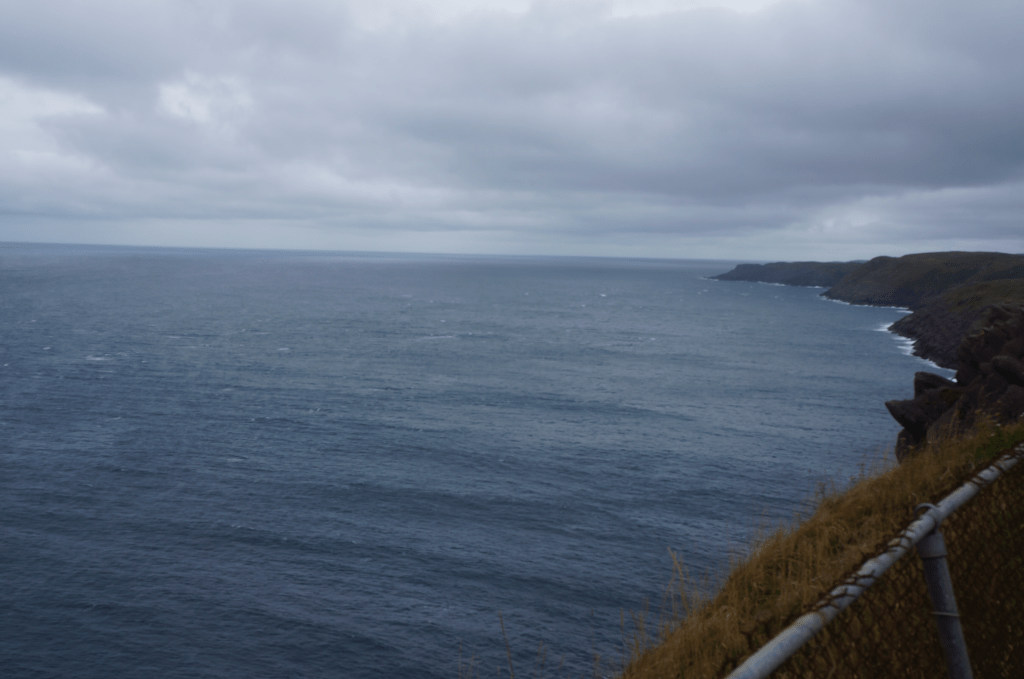
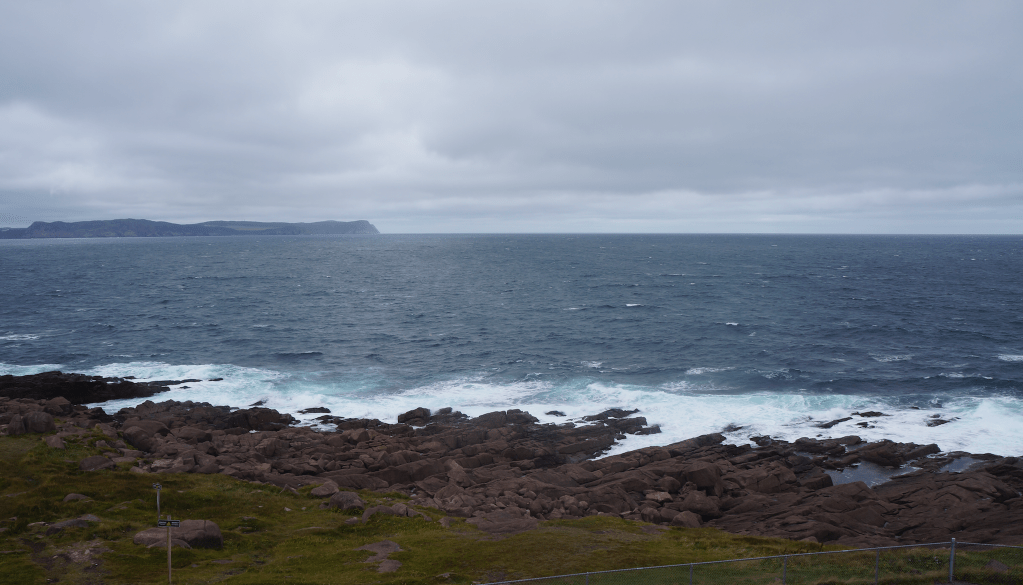
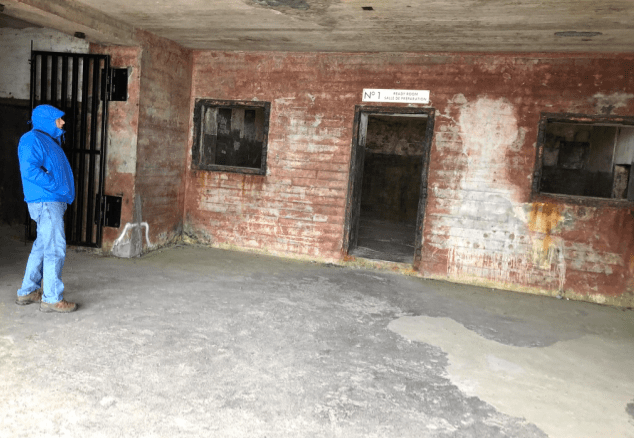
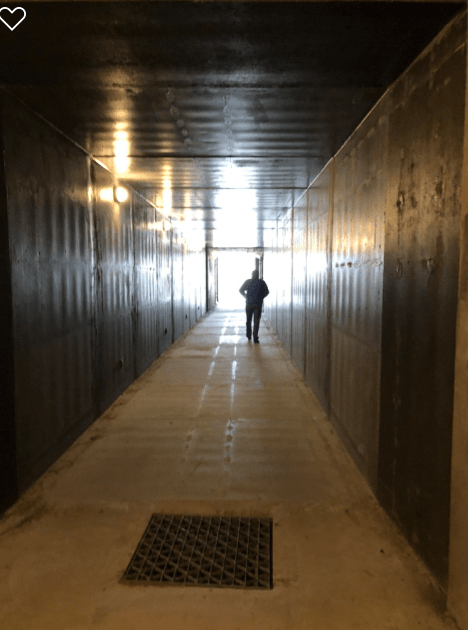
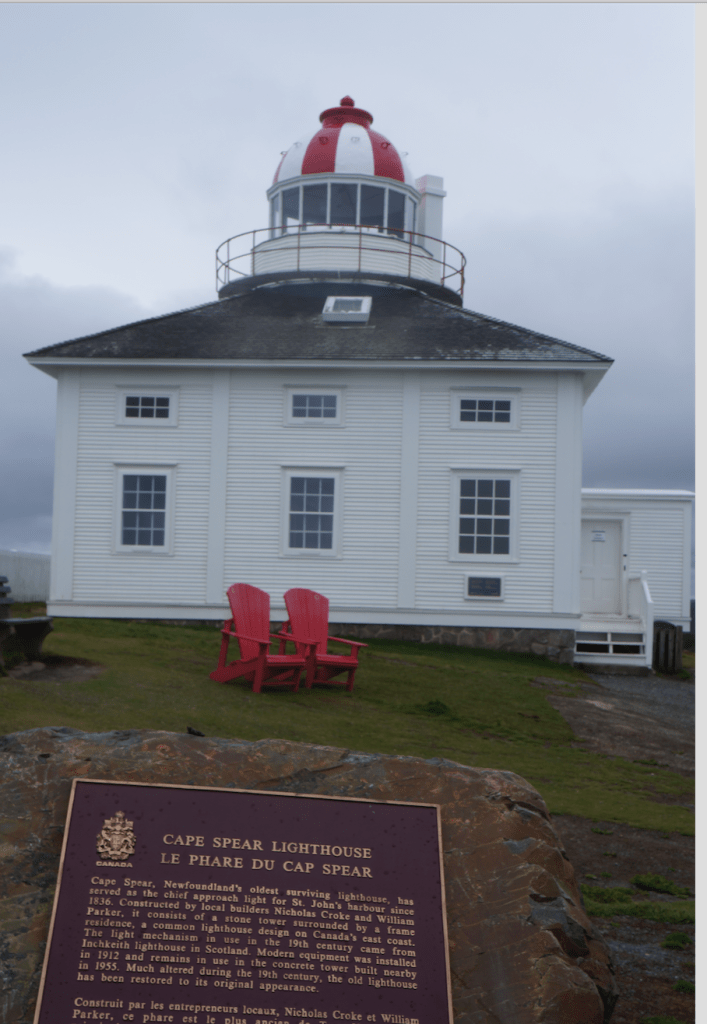
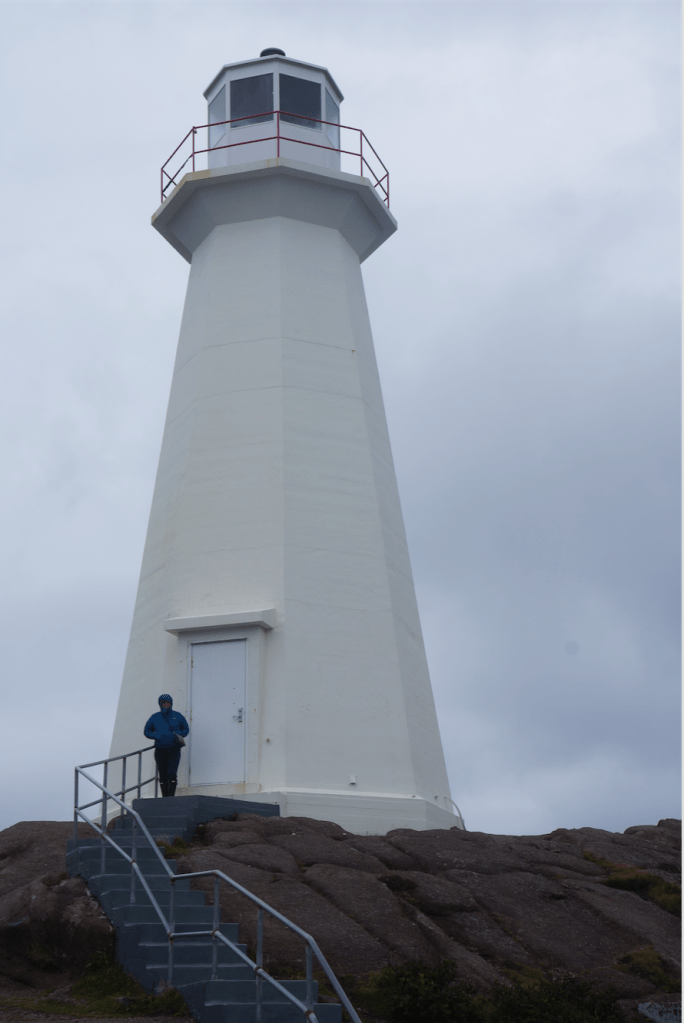
After the laundry was done, we had the rest of the day to explore some of the sights.  We first drove to Cape Spear.  Since we had travelled from the west coast, it was important to go to the most eastern part of North America.  The wind was howling and we dressed for the weather.  This National Historic Site gets about 750,000 visitors per year, but today it seemed to be a quiet day as there were less than 50 of us brave souls walking on the boardwalks.   The Atlantic Ocean was crashing against the rocky shores.  A lone Canadian Coast Guard ship was chugging through the waves and was working on a marker bouy about a kilometer from shore.  We walked through the narrow underground hallways that once housed the military garrison that was so important to the defense of the Port of St. Johns.  The footings of the some of the buildings are all that is left along with one barrel of a cannon.  Above this site is the Cape Spear Lighthouse.  Both the old fort and the lighthouse are built on the headlands that rise about 300 feet above the ocean.

The original lighthouse was built in 1836. The main light tower is built in the center of the lighthouse keeper’s house.  The lighthouse has now been replaced with an automated light tower nearby.  The original lighthouse is open for viewing and I had the opportunity to speak to the Canada Parks guide about the life of the lighthouse keeper and his family.  

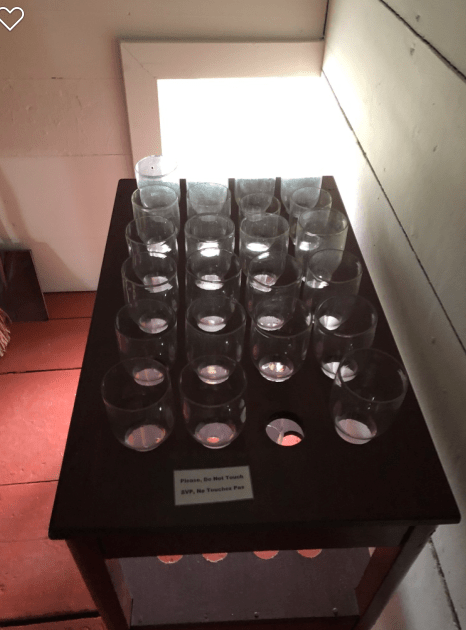
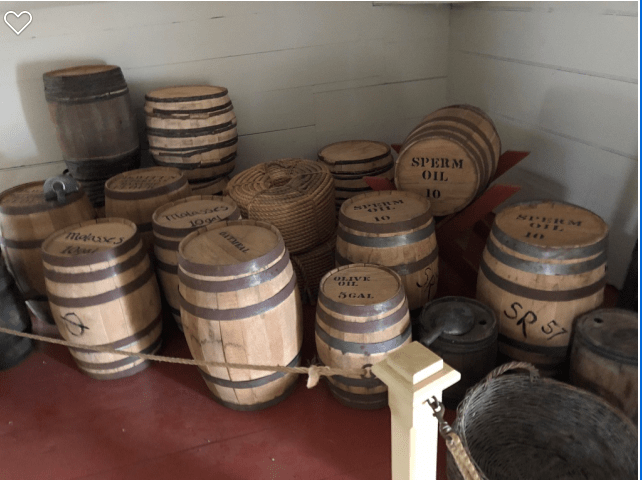
Sperm whale oil was used to light the lamps for the light. These lights look similar to coal oil lanterns and each had a glass chimney.   The lighthouse keeper had to clean the glass every day to remove the soot from the reflectors and the glass chimneys.  He also had to rewind the mechanism that rotated the light every three hours.  This mechanism is spring loaded and on weights to make it rotate.  On the top floor of his house is the warehouse that stored the twenty gallon wood barrels of sperm whale oil.  These were brought to the lighthouse by horse and buggy and then hoisted to the third floor with the use of a rope and pulley system from the main kitchen entrance.  Under the Canadian Lighthouse Act, the family of the lighthouse keeper and his children were to be employed as the keepers of the light, so the Cantwells were employed as keepers for 150 years! Incidentally, the lady that we talked to while doing our laundry is a cousin to the Cantwells. Her uncle was a lighthouse keeper at this lighthouse!

The wind was very strong as we walked outside and several times we had to hold onto the railings to prevent us from being blown off the boardwalk. 

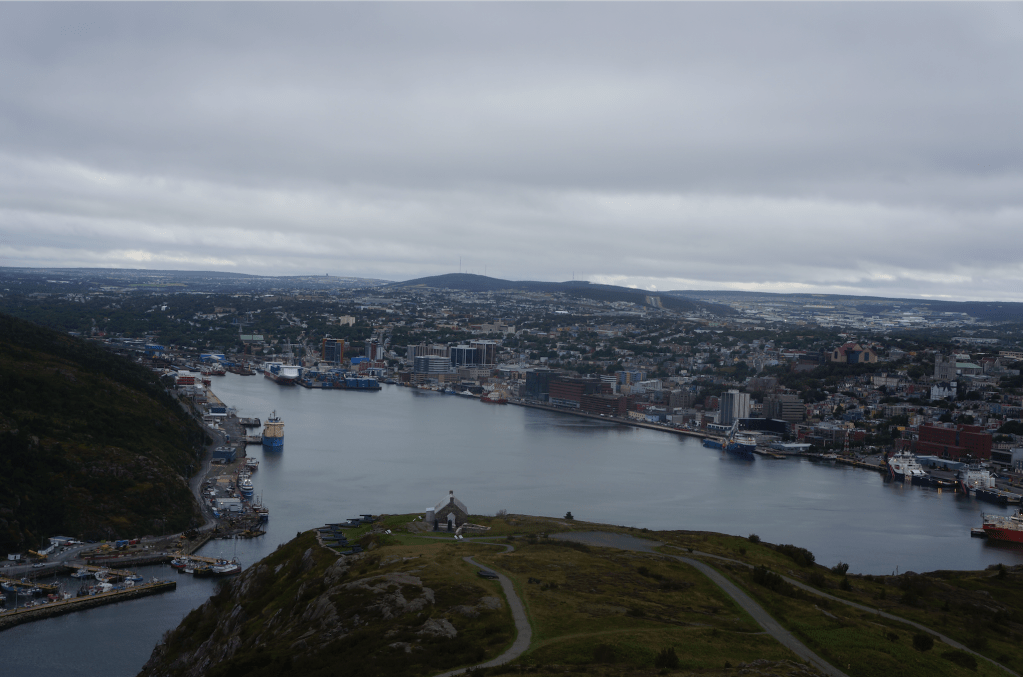
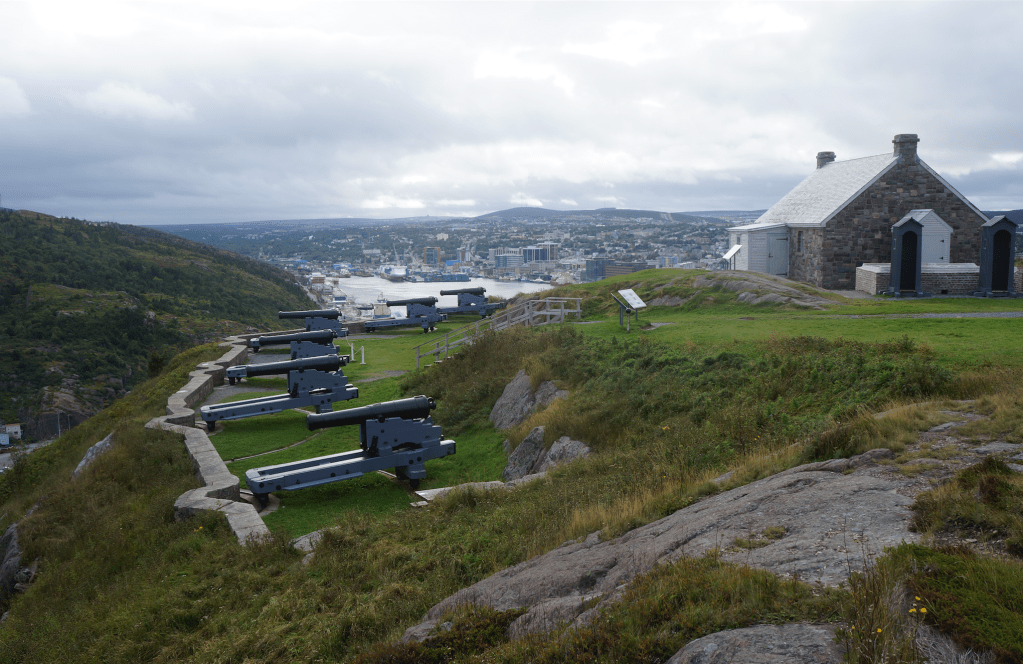
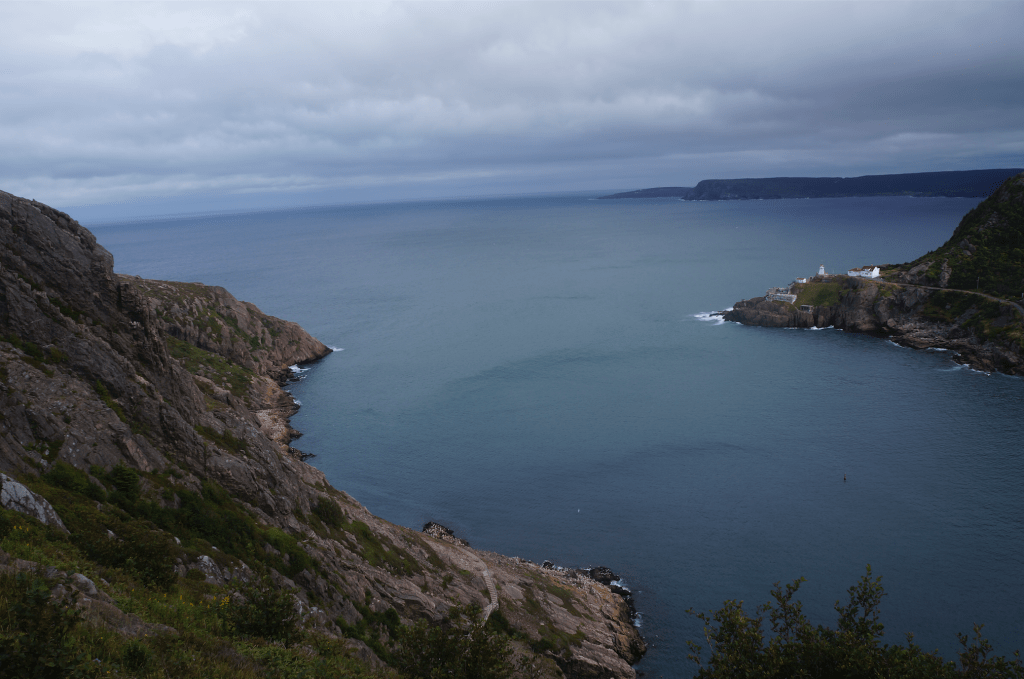
We then drove to the next famous National Historic Site, Signal Hill.  You can see Signal Hill from Cape Spears and vice versa.  This is an important fact because both these sites formed the defense of the St. Johns Harbor. This harbor is tucked in behind high headlands and ships had to pass through a narrow channel to enter the harbor.  This harbor was so vitally important to Canada throughout history.  During the Second World War, merchant marine convoys were sent to Europe from St. Johns under the protection of the Canadian Navy.  A plaque near the site tells of over 5500 merchant ships that were lost in the conflict as they travelled to Europe to supply the war effort.  The Germans were constantly threatening the harbor and their U-boats were successful in destroying several Navy vessels near the Harbor.  From the vantage point of Signal Hill and Cape Spear the coastline and ocean can be viewed for many miles and cannon batteries have been placed on the headlands to defend the entrance to the harbor.

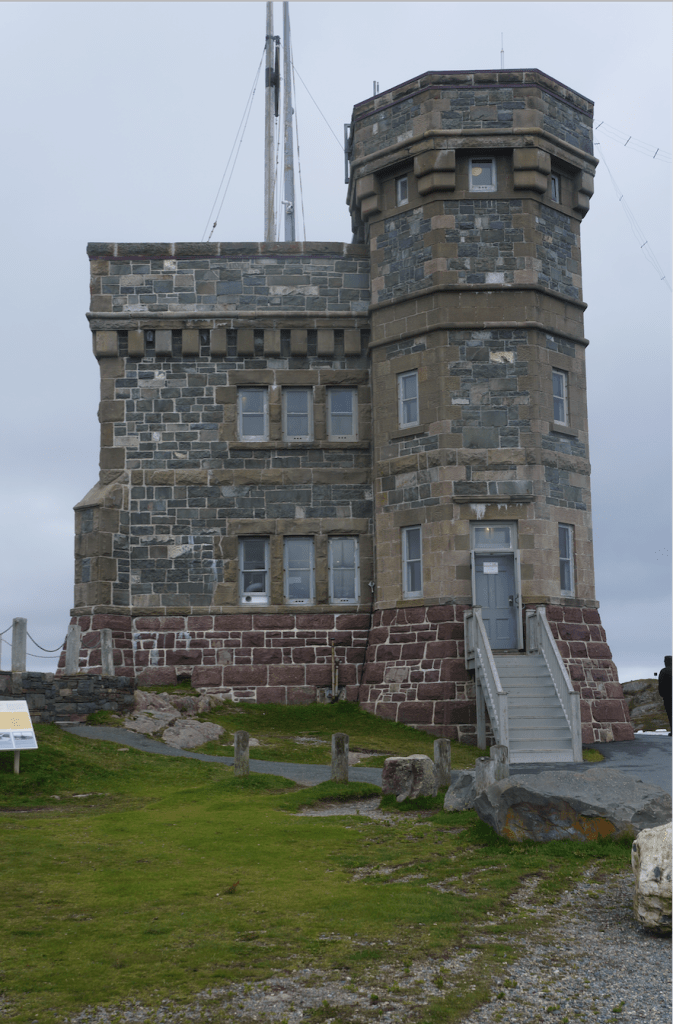
Signal Hill was also used by Guglielmo Marconi for his successful attempt to send radio signals across the Atlantic Ocean.  On the second floor of Cabot Tower is a display of the equipment used by Marconi to send and receive the radio signal on Dec 12, 1901. This famous milestone in communications changed the way the world would communicate in the future.  

We were both tired and wind blown when we finished visiting these two famous sites and so we returned to the trailer and changed into different clothes.  

Downtown St. Johns was busy as the Toronto Maple Leafs and the Ottawa Senators were playing an exhibition game in St. Johns.  It appears that Newfoundlanders are Toronto fans, judging by the many Leafs jerseys being worn downtown.   

We were meeting Meg again downtown for supper.  We met her at the Keg and enjoyed a tasty meal. We then walked Meg back to her hotel. On our way back to our car, we dropped into a small pub where a group of musicians were jamming. They were sitting around a table and some were playing fiddle, others playing guitar and there was an accordian and someone playing on a drum. They were playing Newfie and Irish/Celtic songs. We sat and enjoyed a beer listening to them. We sat with Gail and Dick from Peterborough Ontario. We had a great conversation with them and they told us about some of the places that they had gone to in St. Johns. After the beer, the jamming stopped and it was time for us to get back to our campsite. We said goodbye to them and walked back to our car and then returned to our trailer to end another interesting day in Newfoundland. 

Coincidentally while we were having supper with Meg, her husband Jeff and our daughter Myra had met at the Frankfurt airport.  Myra was coming from Africa and Jeff from Poland.  They travelled back to Nanaimo together!      

St. Johns and meeting of the Nanaimo Gang!

Sept 16, 2019

We woke up to the sound of Canada Geese wishing us a happy anniversary.  I got up and saw that the tide was in and the geese were swimming about 10 feet from the trailer.  The town of Clarenville was waking up and we also wanted to get moving.  We decided to pass on making breakfast and instead went to Tim Horton’s for a coffee and a breakfast meal.  That ended up as a lump in our gut for a few hours and we both said we won’t do that again! 

Debbie knew of a quilt store in the town so we drove there and I dropped her off while I went and refilled a propane tank and fuelled the truck.

After we left Clarenville we then drove to a small village called Thornlea. Debbie had heard about an amazing quilt shop called Jocelyn’s Quilt Shop. We drove down another secondary road for approximately 20 kms to get there. I swear it is the worst road in all of Newfoundland. I heard a joke the other day that describes the roads in Newfoundland:

In Canada we drive on the right side of the road,

In England they drive on the left side of the road,

And in Newfoundland they drive on what’s left of the road!

That pretty well sums it up! We got to Jocelyn’s Quilt Shop and she did not dissappoint. Debbie was very impressed with her inventory and of course bought some more fabric. Jocelyn only takes cheques or cash neither of which we had. Joceyln said, “Thats’ find get the money to me when you can.”! That is the way Newfoundlanders are. Incredible!

Our drive to St. Johns was uneventful, but the highway was in great condition and had no bumps to jar your teeth.  We heard about the delays in the traffic due to a large construction project about 40 kms west of the city.  We had talked to folks who had been delayed for as much as three hours. There is no way around this project. As we approached the construction zone and entered the detour, there were no vehicles ahead of us and we carried on through the 10 kms of detour at 50 kms with no problems! The local radio stations were reporting waits of up to one hour.  

Debbie had been texting and communicating with several of our friends on the way in and arranged for us to meet Maggie and Charlie for supper.  Then we found out that Doug and Brenda were also in town. They had towed their trailer to New Brunswick and then had flown into St. Johns.  They are touring Newfoundland for a few days.  Debbie arranged for them to meet us also for dinner. Then she contacted Meg who is also here in St. Johns working at the University and she is also going to meet for supper! 

We found our campground in St. Johns.  Pippy Park Campground is a large commercial campground and is conveniently located in the city.  As we were setting up we noticed Scott and Jennifer were set up across from us. We had met them in Brimstone Head in Fogo Island.  We compared stories and learned about some of the local sights that they had gone to the past three days.

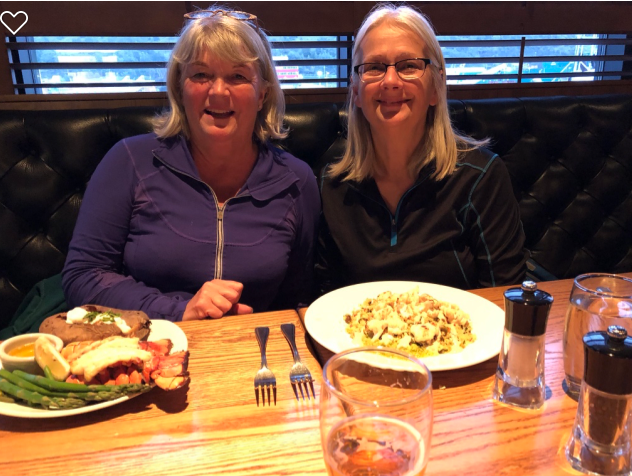
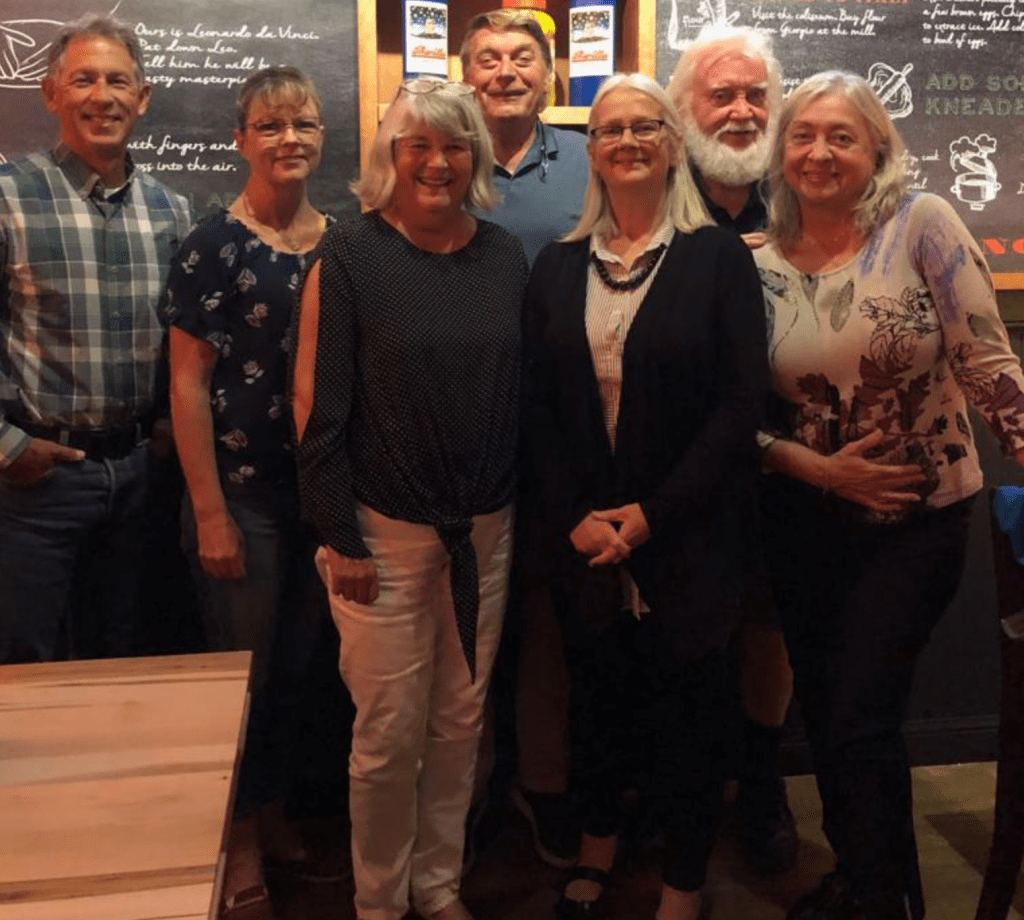
We showered and then called a taxi to take us downtown to East Side Mario’s for our supper. It so much fun to meet everyone!  Charlie and Maggie had never met Meg or Doug and Brenda, but it wasn’t long before everyone was telling stories and getting to know each other.  Charlie and Maggie gave us a nice anniversary gift of fall and Halloween items to decorate our trailer.  It was a real nice evening and we all enjoyed each other’s company.  It was one of those moments in time when seven people who know each other and are from the same town meet in a different place totally across the country.  

Doug and Brenda drove us back to the campground and we gave them a “tour” of our trailer.  They are off to Gros Morne tomorrow so we wished them the best and said goodbye. We will see them in Nanaimo again later this year.  It was a fun evening.

Bonavista Peninsula!

Sept 15, 2019

Today our goal is to travel to the Bonavista Peninsula. One of the things that I am looking forward to is seeing the puffins.  One of the areas that is a popular puffin watching place is Elliston point.  We decided to pull our little trailer up there and then find a place to camp tonight on the way back. That way we would have a short drive into St. John’s tomorrow. After breakfast and a shower we were off.

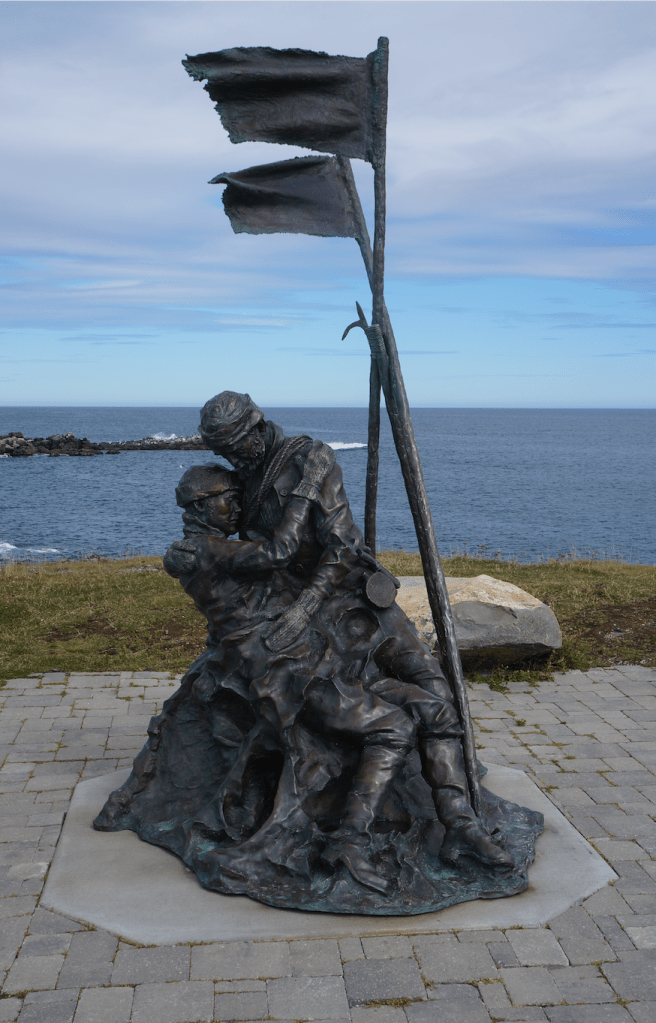
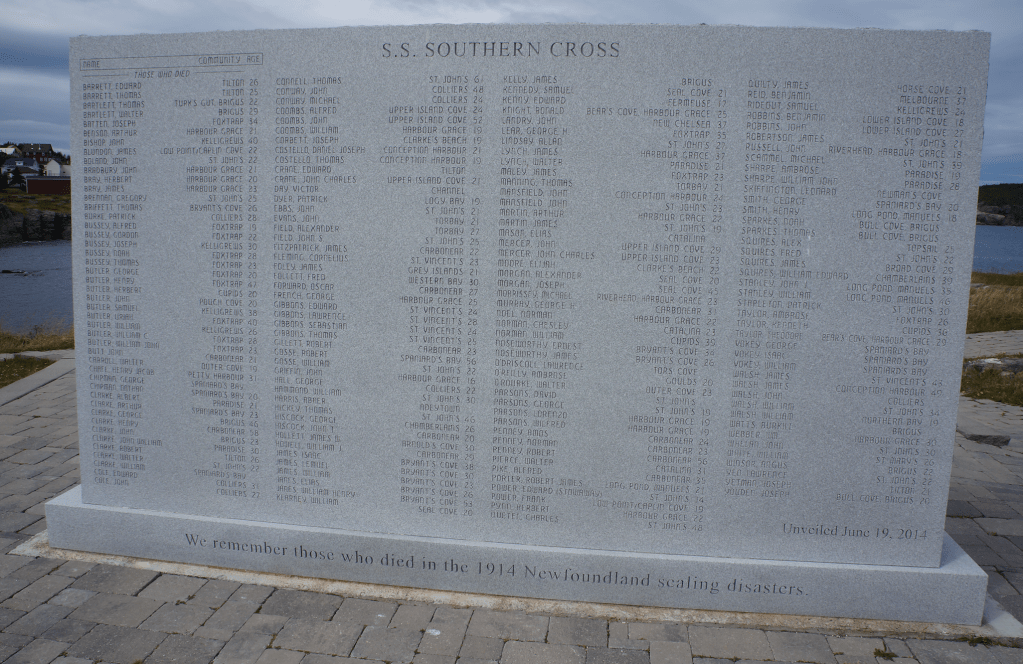
We toured the shoreline and suffered through the bumpy roads. We got to Elliston by 12:00 and parked in a small parking lot near the end of the point.  Elliston was at one time a thriving fishing village until the closing of the cod fishery. It is making a comeback with tourism. Many of the tourist attractions are developed by the municipality. A large granite memorial is erected commemorating the deaths of 364 seal hunters during the 1914 sealing disaster. A bronze statue is also built showing a father holding his teenage son who is freezing to death. The father and son were locals from Elliston who had died on the ice floes. Debbie and I then hiked the 2 km trail into the puffin viewing site. 

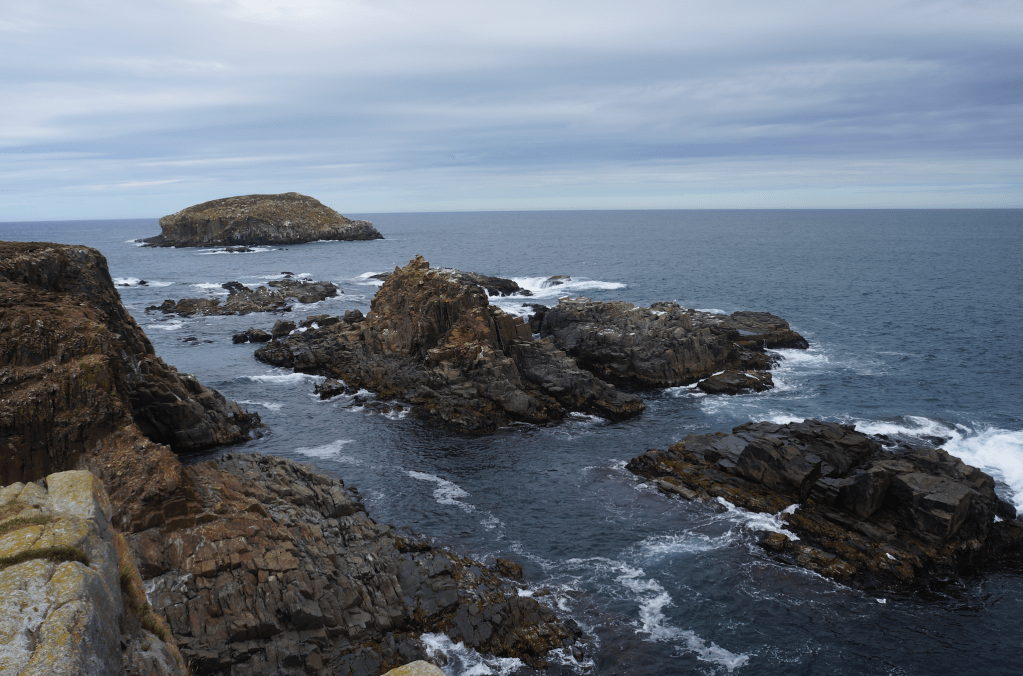
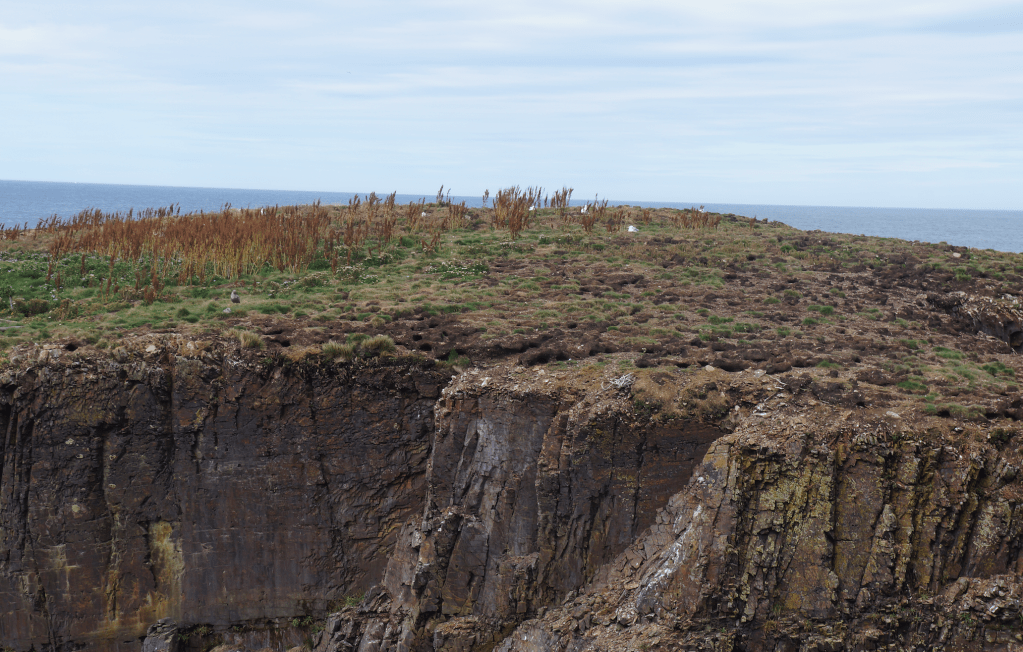
This point of land is the headlands of the peninsula and is rugged and wild.  The Atlantic is crashing against the craggy shores and there are several small rock islands along the shores.  The puffins have built their nests into the grasslands on top of these small islands. Unfortunately there were no puffins. It is late in the season, however the local guide did assure us that there are puffins still here, but they are not in their nests today.  That was a disappointment, however there are some other places south of here that we will visit that also have the puffin nesting areas.  Puffins build their nest in the soil and lay one egg per year. They return every year in the spring after wintering in the northern Atlantic states.  They often return to the same nests.

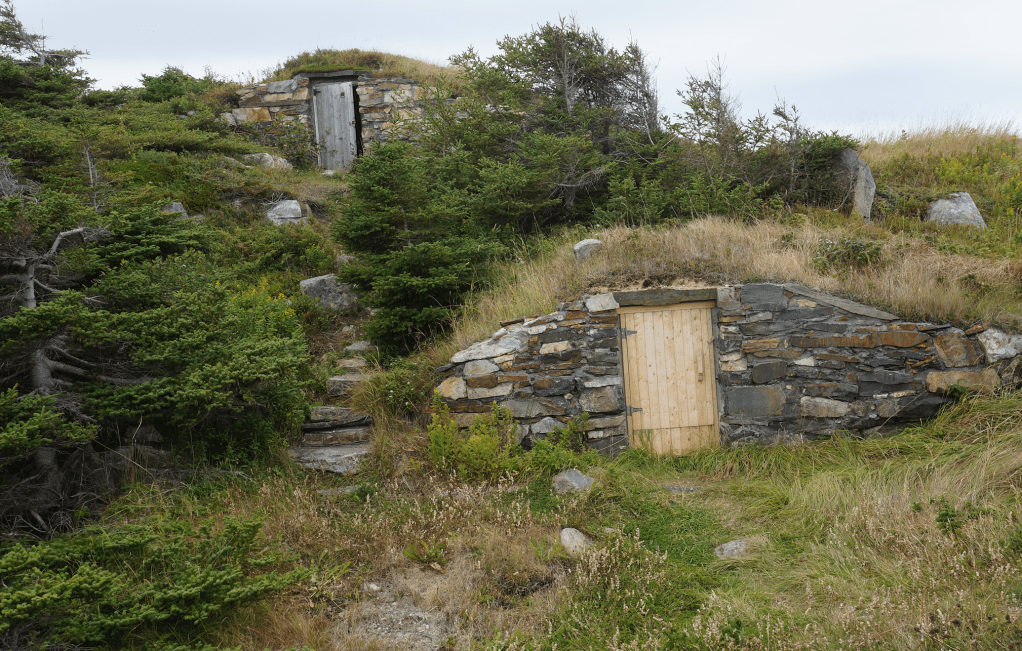
Root cellars built in 1914

We talked to Mark, the local guide, who explained and showed us some of the berries that grow on the hills and rocks in the area.  Debbie was interested in picking some partridge berries that thrived in the grasslands along the road. Mark told her that she has to wait until after the first frost. He showed us a berry with a small worm inside. After the first frost, the worm leaves the berry and then the berry can be picked. That changed Debbie’s mind for any more berry picking. We also looked at several of the root cellars that had been built into the hillsides all along the rocky coastline. There are about 130 of these root cellars dug into the hilsides.  Some of these root cellars, which are still being used to store vegetables etc., are over 100 years old.

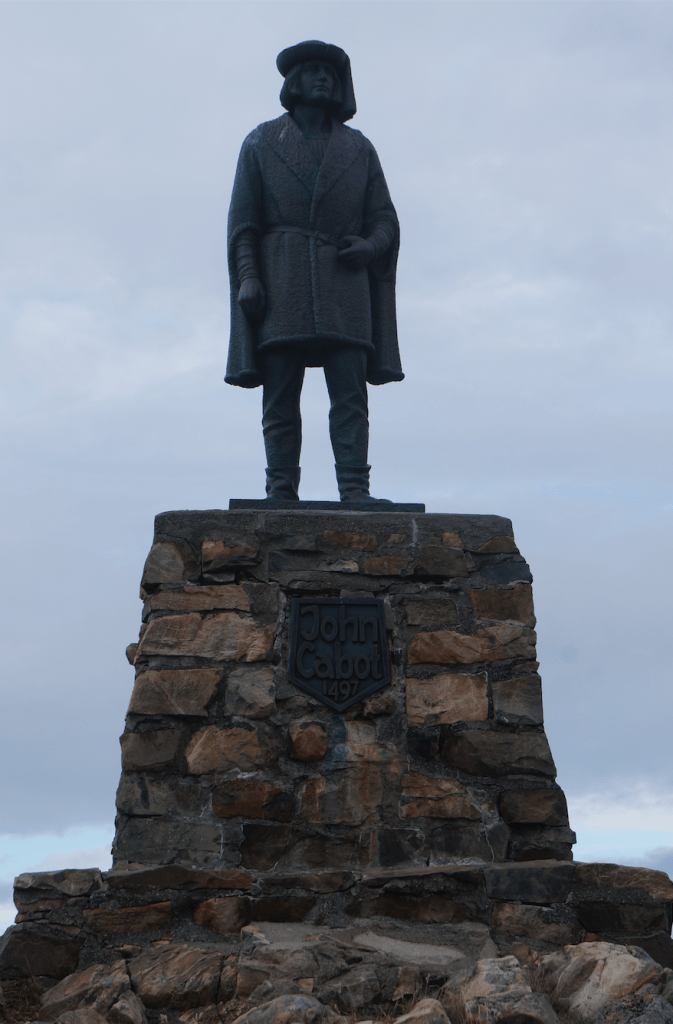
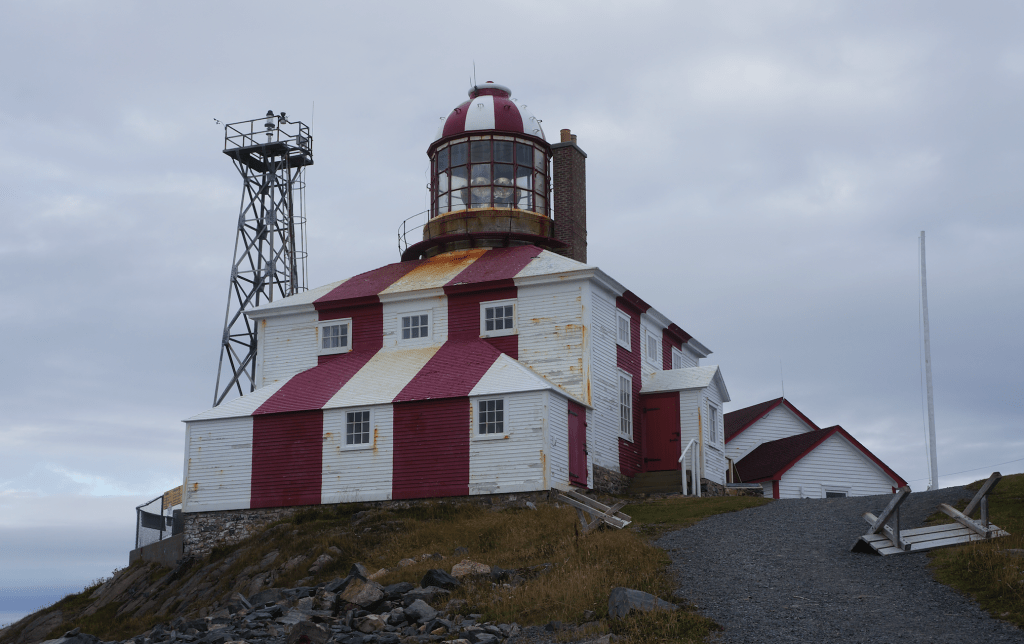
We then drove to the tip of the Bonavista Peninsula.  The Cape Bonavista lighthouse that is built on this point is now a historic site, and was built on the rocks in 1843. Again, this lighthouse museum featured the lifestyle of the lighthouse keeper who looked after the light until he was 88 yrs old.  The next three generations of his family continued to maintain this lighthouse. This point is also a historic site because it reportedly is the landing site for John Cabot in 1497. A statute of John Cabot is erected there.  

We stopped in at a small restaurant near the lighthouse and had an early supper.  Then we drove back down the peninsula until it started to get dark and stopped into Clarenville.  We chose a small park on the edge of the shore, in town and boondocked for the night.  We hope that no one will chase us out tonight.    

Deadman’s Bay and Terra Nova National Park!

Sept 14, 2019

It is Saturday morning in Change Island and it is quiet!  We woke up and the sun is bright but there is a brisk wind blowing.  We thought we could go and have a quick breakfast at a restaurant and do some sightseeing before we headed out.  Kayaking is out of the question.  We drove around the quiet little village, no one was stirring and both of the restaurants were closed.  We both realized that in this type of village, the fishermen and the kids are sleeping in after a hard week on the water and at school.  I couldn’t blame them for that!  We went back to the trailer and made our own breakfast and enjoyed the early morning sun. 

We hitched up and headed for the ferry.  There isn’t a lot more to do on this small island, but we had wanted to check out the Newfoundland Ponies and see the village.  Throughout our visits on Fogo Island and Change Island, Debbie kept remarking what a great idyllic life this would be.  I tried to explain what the winters would be like here.  That may have changed her mind….I’m not sure though.

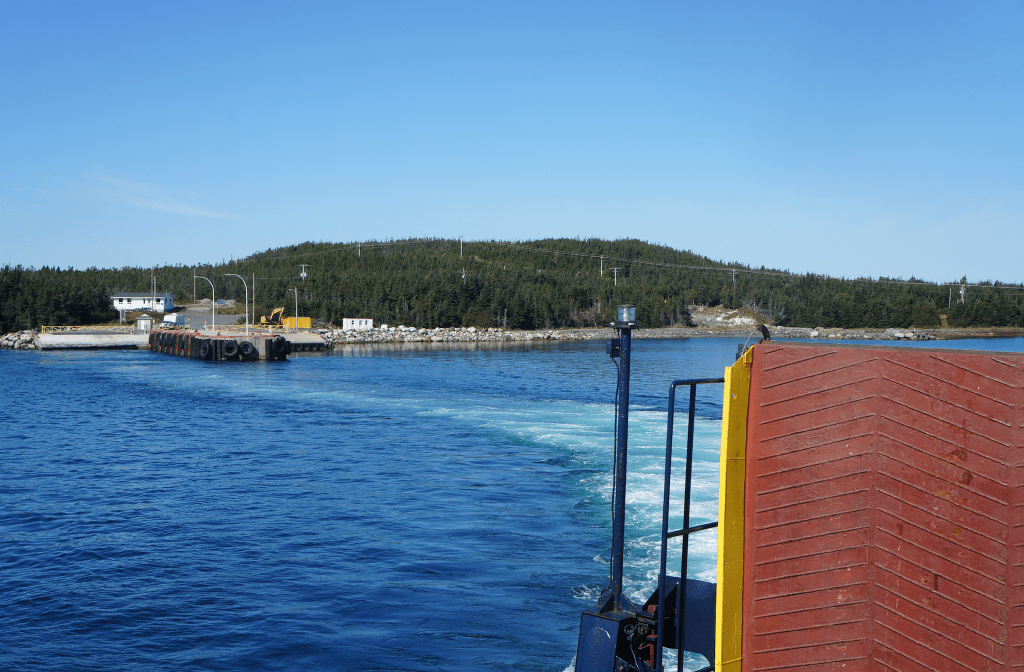
Leaving Change Island

Our destination, after getting off the ferry, is Terra Nova National Park and we followed the shoreline.  The 160 kms is a beautiful drive, but the road condition has a lot to be desired!  There are huge lumps and humps and potholes, with very little warning signage.  Debbie has done a great job in securing things inside the trailer, but every time we open the trailer we find something that has shaken loose. 

As we cruised the shoreline, we admired the many tiny villages and communities with their colorful houses.  I told Debbie that I am still looking for that young red haired little girl who is running over the rocky shores that they advertise on those Newfoundland tourist TV commercials.  We still haven’t found her….! 

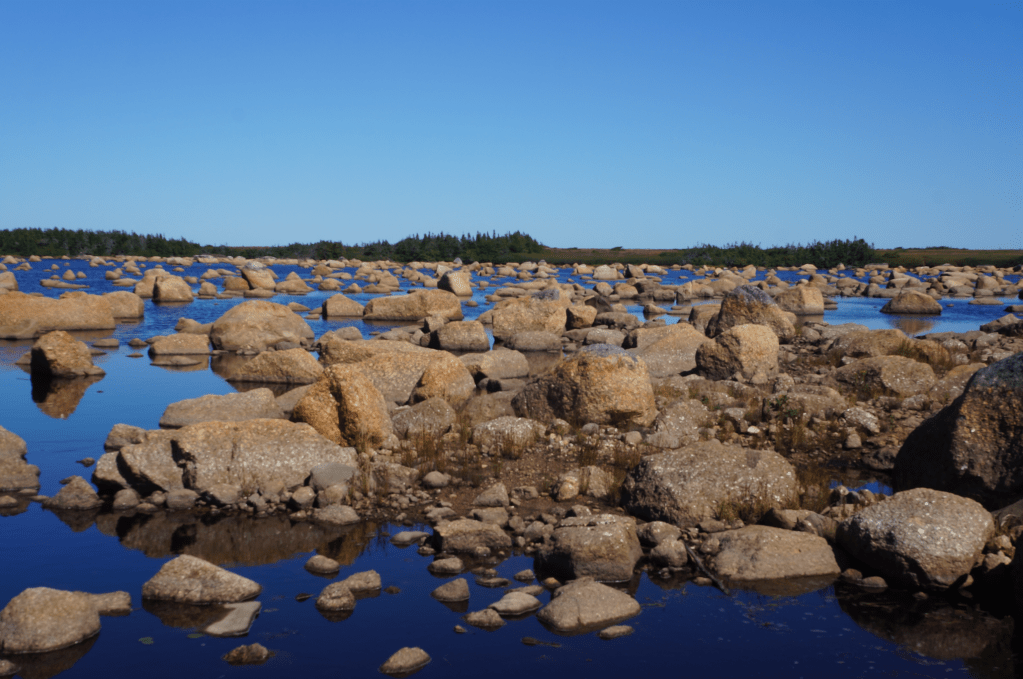
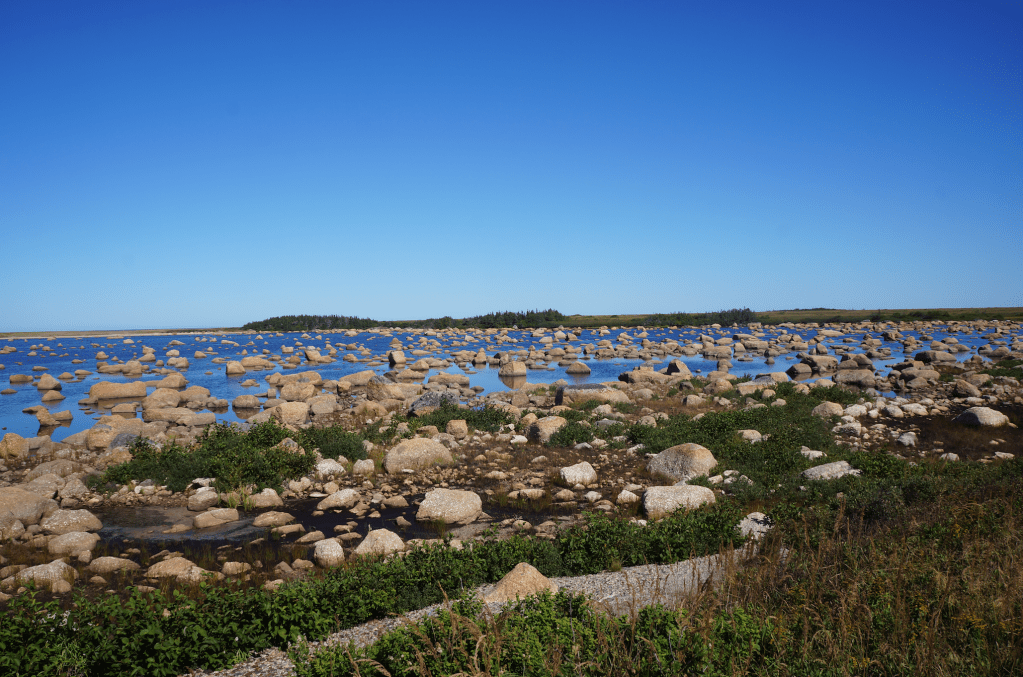
We stopped along the shore of Deadman’s bay and took photos. At low tide this bay is strewn with large rocks. It is such as surreal landscape We were surprised when we came into the village of Lumsden. The shoreline is about 7 kms of sandy beach and large sand dunes.  We stopped on the sandy spit and rested there for a while. 

We arrived at Terra Nova Park at 5:30 and checked in.  This park will remain open until the Thanksgiving weekend.  All of the Provincial Parks are now closing this weekend. The park attendant told us there are about 200 campers in this campground.  It can accommodate up to 800 campers.  Our campsite backed near the showers.  It is also a WIFI hotspot so I finished up the blog posts.

We had to make some new travel decisions today.  After this weekend many of the campgrounds are closed and many of the tourist services also close.  Our goal is to reach St. John’s by the 16thand meet Maggie and Charlie to celebrate our 47thanniversary. We are also meeting Meg this week! We intend to see as much as we can in this region before we board the Argentia Ferry on the 21st.  This ferry service shuts down after the 21stwhich means that in order to get off of the island at a later date, we would have to travel back 900 kms to take the ferry out of Port au Basque. 

After barbequing a chicken breast, we watched a movie and went to bed. 

Neta and the Newfoundland Ponies!

Sept 13, 2019

The morning sun was shining into our trailer and I woke up early.  I wanted to be caught up on my blogs and the WIFI at the campground was working well. I have to drive up to the office to achieve a decent signal.  After having a shower, I worked on the blogs until 8:30 and then joined Debbie in the trailer for breakfast.

It was time to leave the campground and catch the ferry to Change Island.  I dismantled the camp while Debbie went over to Kevin and Wanda’s motorhome to give Wanda some books she had finished.  We finally left the campground and travelled to the ferry terminal.  We had to wait for a couple of hours so it was a perfect time to finish the blogs.  I finally got caught up!!

The 25-minute ferry trip to Change Island was pleasant and Debbie and I stood outside on the deck admiring the small islands as the ferry cruised by them.  Debbie spotted two whales on the starboard side. It was the first sighting of a whale since we have come to Newfoundland.  I joked that Debbie has difficulty reading street signs but she is able to spot whales and caribou!

In order to get off the ferry I had to back out!  That was certainly a different way to disembark! Change Island is a smaller island than Fogo but is more forested.  The community of Change Island has a population of about 250 folks, but in the summer it actually doubles.  There are many people who have summer homes here.  The village is a fishing community formed along the shoreline of a bay.

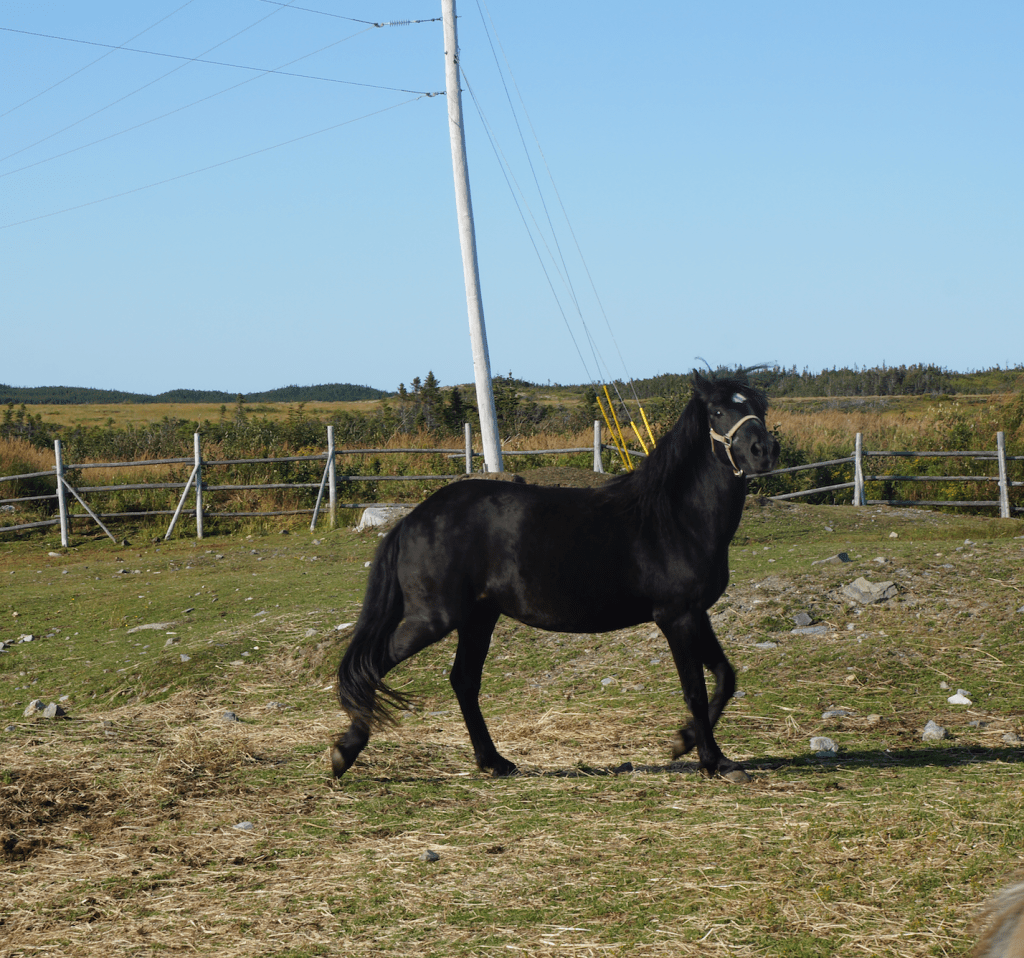
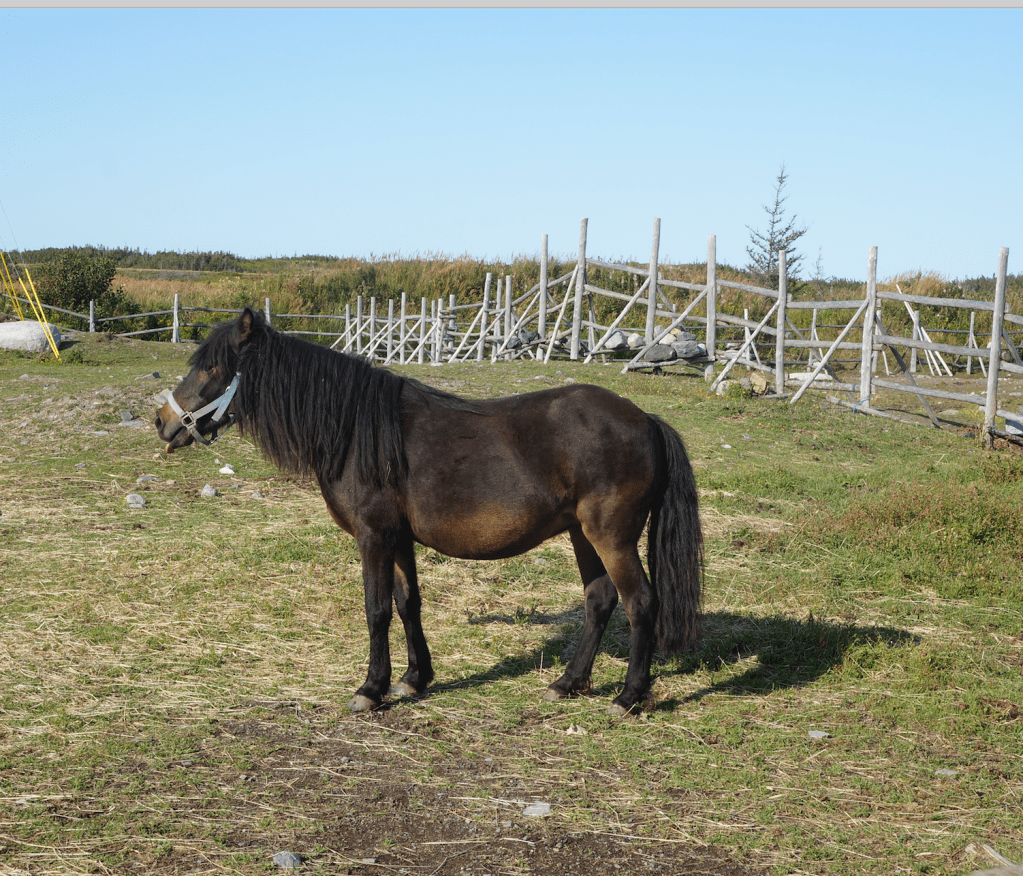
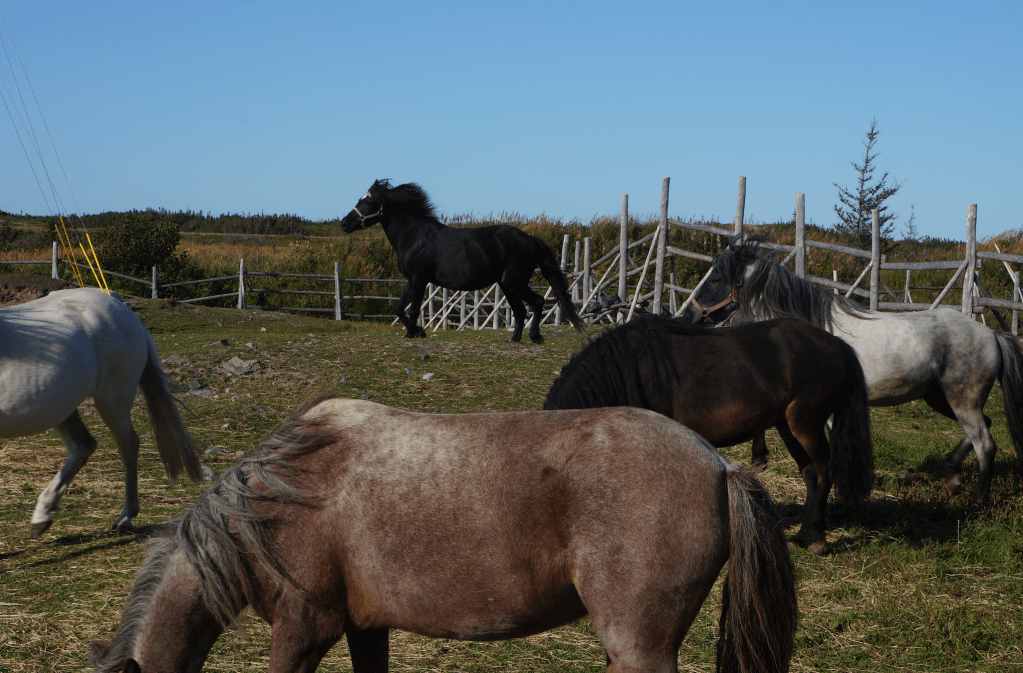
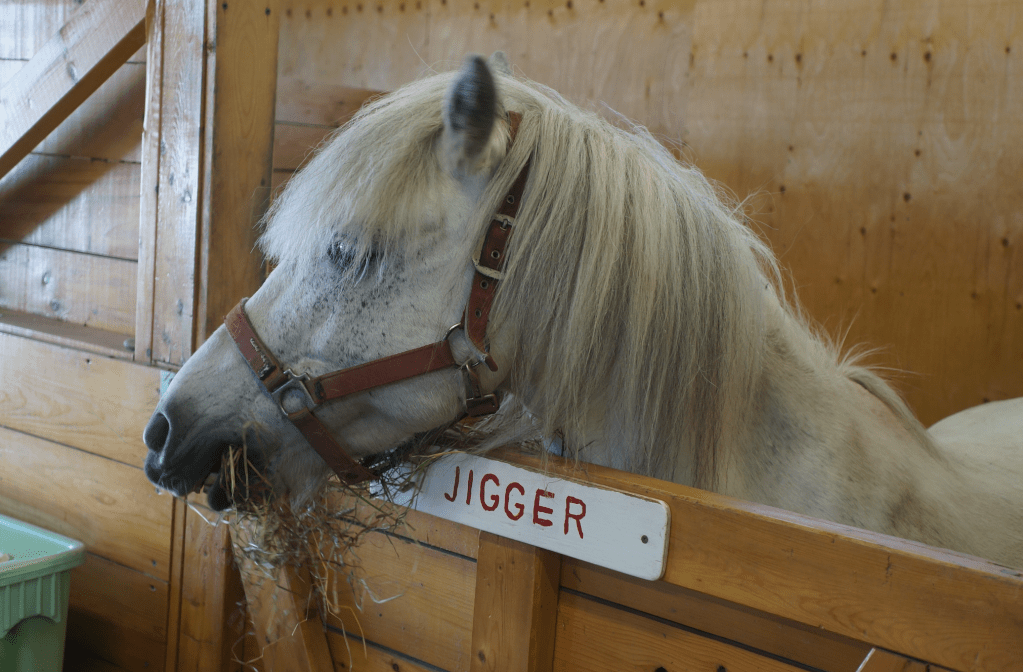
As we got near the village, we stopped in at the Newfoundland pony refuge.  The Newfoundland pony is considered to be the only purebred horse native to Newfoundland. They are distinctly a smaller horse in size. They are larger than a Shetland pony and have different colors. They are used locally for pulling firewood out of the bush, and they pull sleds of firewood in the winter. They have also been used to plow small fields on the island.    

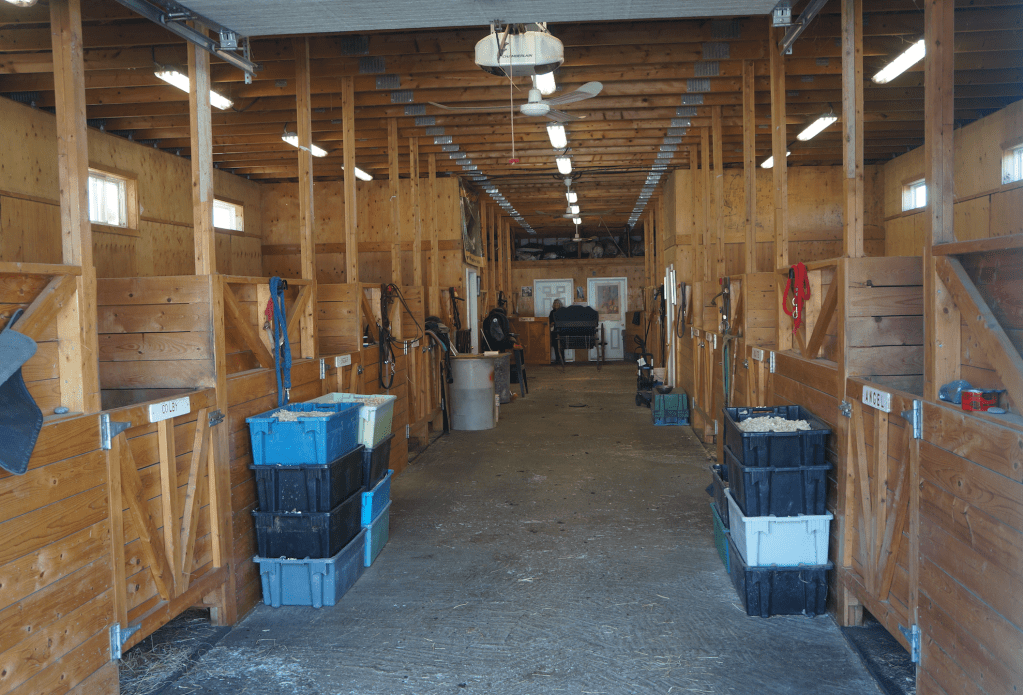
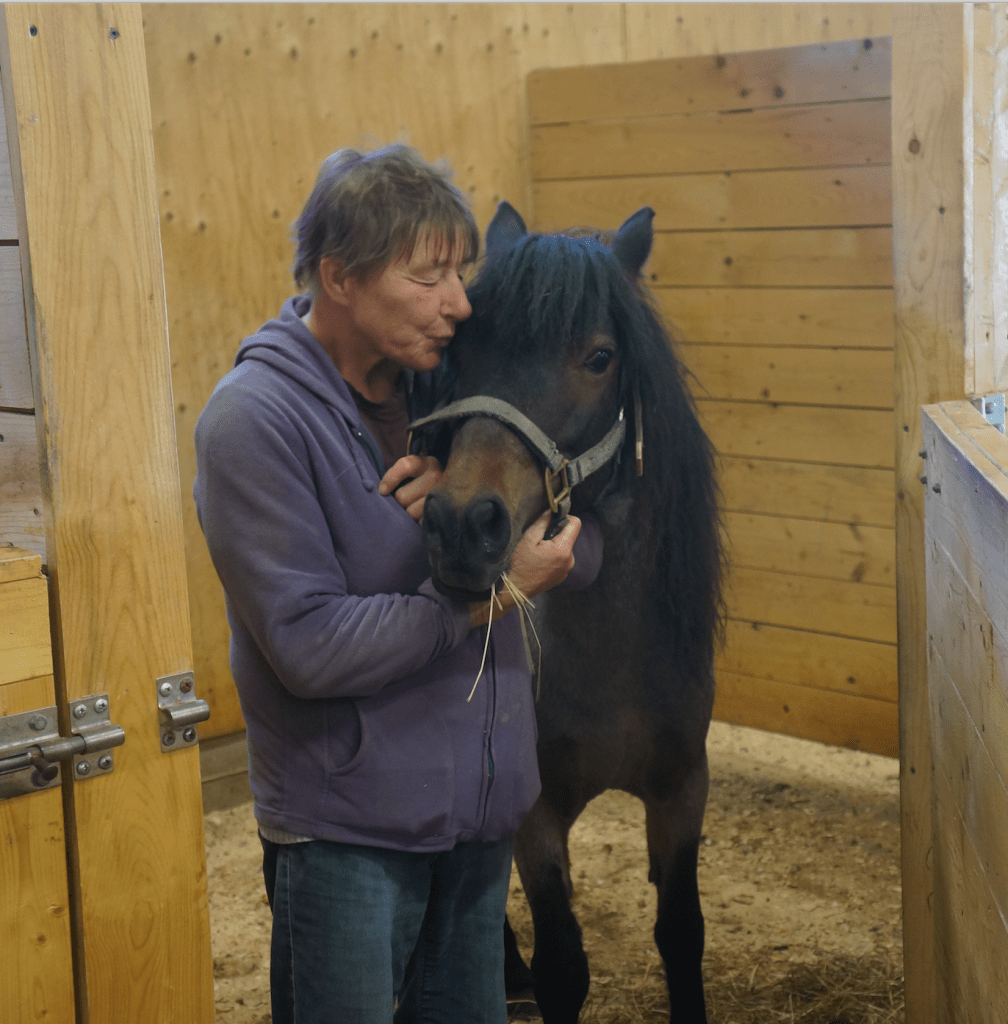
We met Neta, the caretaker of the horses.  Neta was working inside the barn and she welcomed us in. The horses could be seen in the corrals outside the barn and in the pastures.  Neta told us that the horses will be brought back into the barn at 4:30 and encouraged us to return then.

We went into the village and found the campground.  Peter Potter runs the local museum as well as the campground.  We set up the campsite and then returned to the horse refuge.

Neta explained that she has been the caretaker of the horses for the past 9 years.  She fund raised, and successfully applied for government grants, about 6 years ago, that allowed a new barn to be built, however, it has been existing ever since on public donations.  Neta does not receive wages and does this work totally out of love for the horses. She told us that these horses are on the brink of extinction.  She is looking for another Newfoundland stud right now to further the breeding program. 

She told us that just the feeding of hay for the 11 horses costs $10,000 a year.  Visitors are encouraged to give a donation.  The refuge is open to the public for horseback rides. I told Neta that I would be adding the Etransfer address in my blog in the event that a blog reader wants to donate to this cause.  The Etransfer address is nlponysanctuary@hotmail.com.  Donations through PayPal can also be sent to nlponysanctuary.com.  

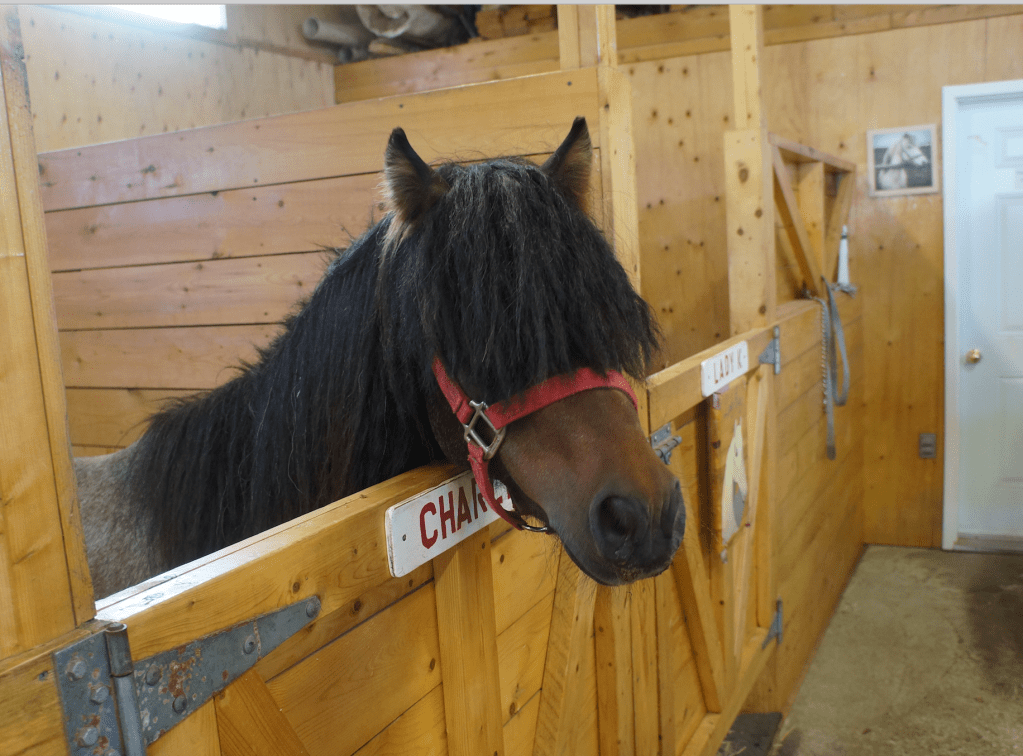
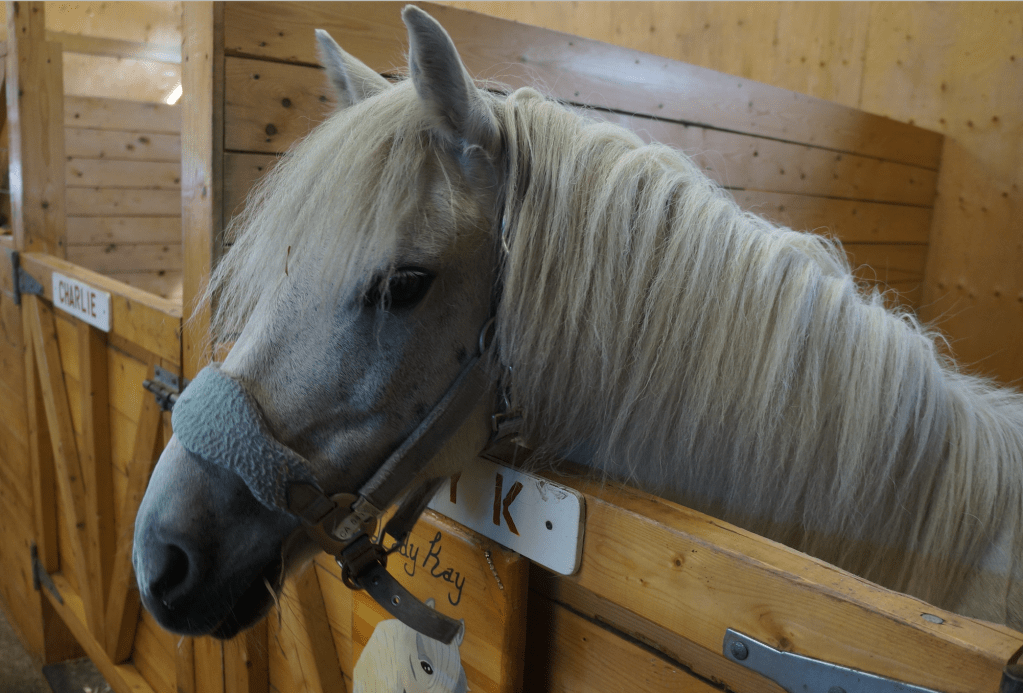
Debbie and I stayed and watched as the horses were called to the barn and they each went into their designated stalls.  The five horses in the pasture decided that they were not going to come on their own, so Neta had to walk out to the pasture to coax them in.  As they approached the barn, they jumped and chased each other inside the corral, and one decided to roll in the dirt. They were playful and acting like children.  Neta explained that they were acting out because we were there.  I took photos of each of the horses and told Neta that I will be sending her the photos. She definitely loves the horses and is truly dedicated to the cause. 

We left the refuge and stopped in at the Harbourside Café and enjoyed a tea and a piece of pie as we had not eaten since breakfast.  We returned to the trailer and finished setting it up and began to barbeque an Atlantic salmon fillet.  As the sun began to set, the temperature dropped quickly and a harvest full moon began to rise over the horizon.  We enjoyed our supper inside the trailer, and then watched a movie, blogged and read.  Tomorrow we will explore this island more and hopefully get some kayaking in.

Fogo Island Inn and Quilters!

Sept 12, 2019

Debbie has spoken about Fogo Island ever since we started this trip.  She especially wanted to see the Fogo Island Inn.  From her research she also knew that this island had a serious group of quilters. We ate a quick breakfast and we were out the door. The winds were blowing hard and stormy

Fogo Island is an island that is a about 25 kms wide and 30 kms long.  It has a very rugged coastline and there are about five small fishing villages tucked on the ends of several of these bays.  The Atlantic Ocean surrounds this island and the ocean winds buffet the rocky landscape.  There are melt ponds dotting the rocky hills.  Short, ragged and windblown boreal forest struggle to grow around the rock outcroppings. Short bushes fill in the open areas. The island is known for it rich berry bushes, blue berry, partridge berry, and bake apple, to name a few.  

The Fogo Islanders brag that there actually seven seasons on Fogo Island, all distinctive times tied in with the fishing seasons, and the growing of berries, as well as the winter season activities.  

Debbie had arranged a tour of the Fogo Island Inn.  This inn was built on Fogo Island by a life long resident Zita Cobb.  Zita was born and raised on Fogo Island, then left the island to pursue a career in the tech industry.  She completed her high school in Fogo Island and her university business education in Ottawa. She was very successful in the building J D S Uniphase and subsequently became extremely wealthy. She was awarded the Order of Canda.  

Zita returned to her roots, and with the assistance of her brothers began the building of the Inn as well as establishing the Shorefast Foundation.  All of the profits from the Inn go directly back into the community. (The starting price of a room is $2200.00 per night!) The inn employs approximately 250 locals.  

The Shorefast Foundation is an organization that builds cultural and economic resilience on Fogo Island. It supports employment and education in the spin off trades required to provide support for the Inn, from food, to firewood and building supplies and transportation.  

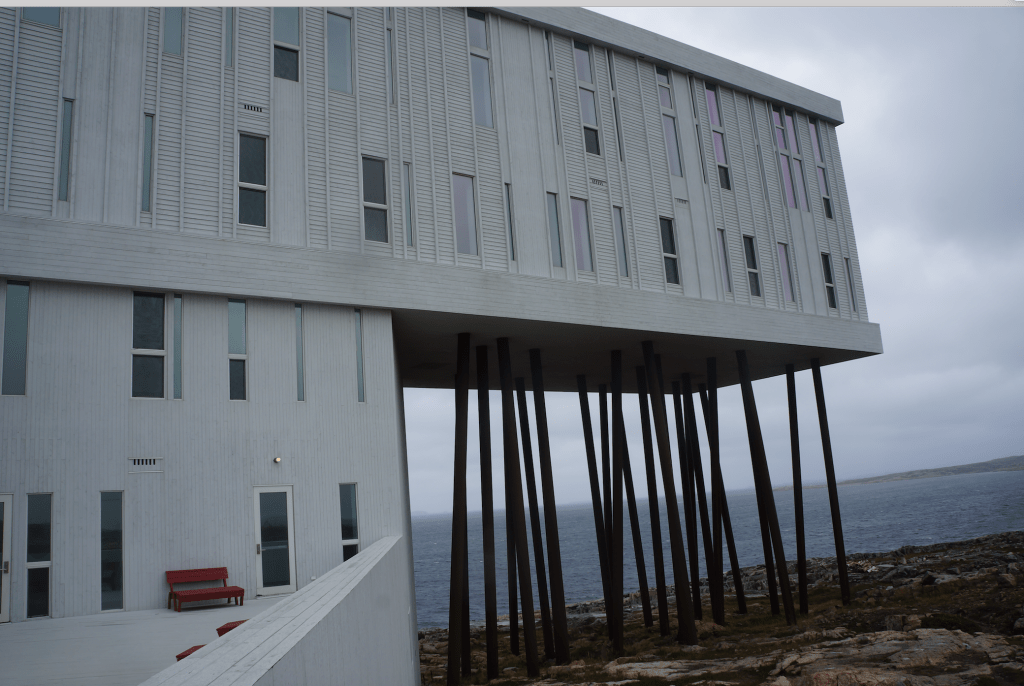
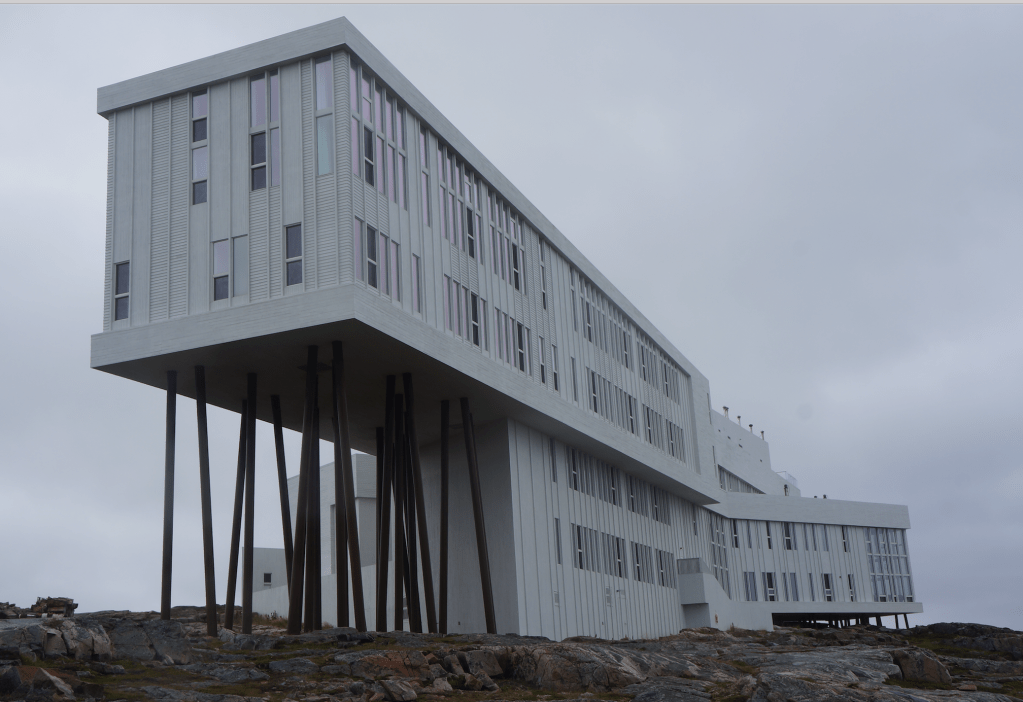
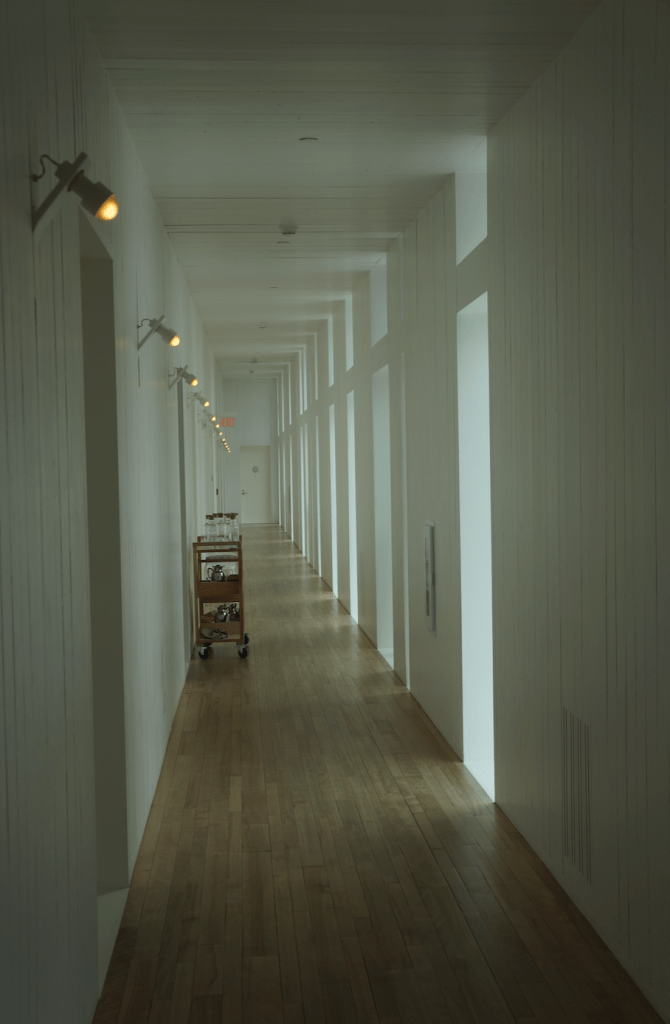
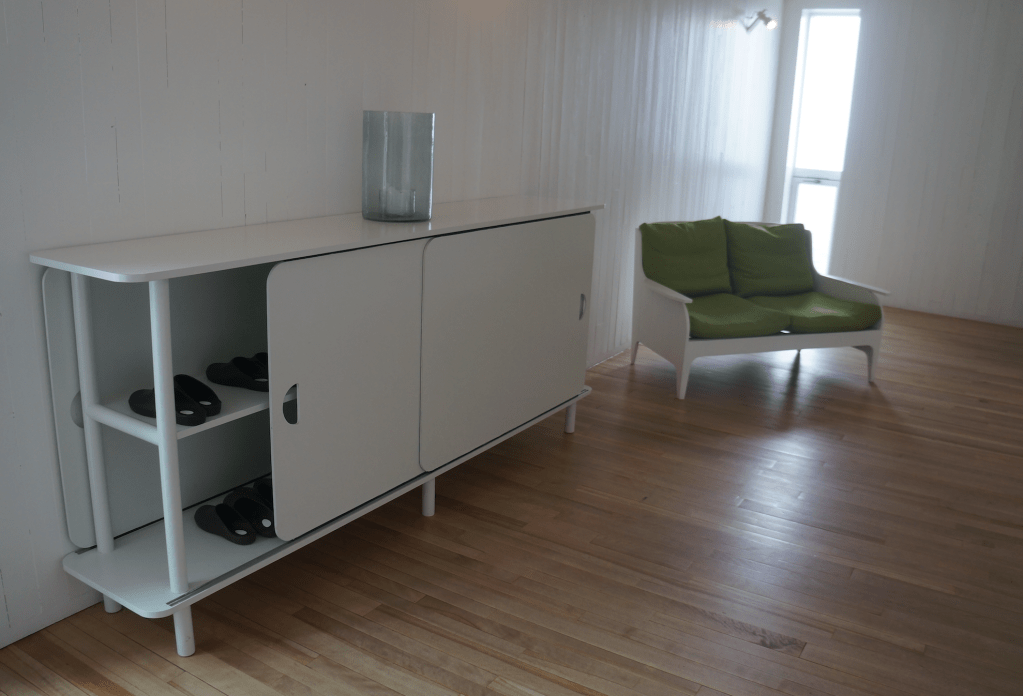
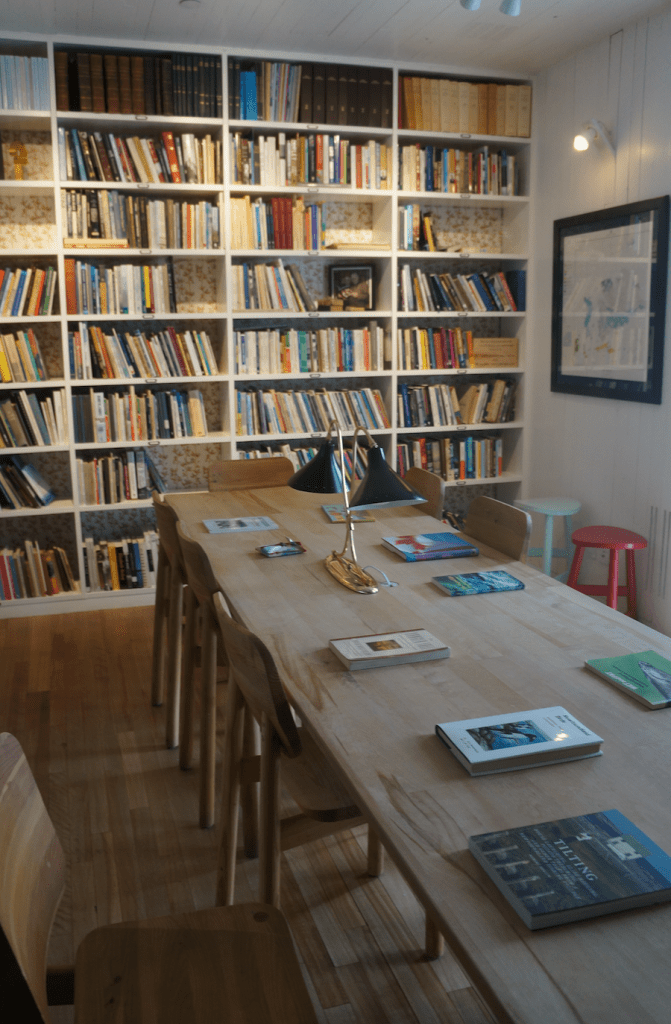
Todd Saunders, a famous architect, also a native Fogo Islander, designed the Inn.  He now lives in Norway. The building is quite eclectic in that it has very sharp angles, and is partially built on pilings on the rock.  All the rooms face out onto the Atlantic with floor to ceiling windows. The roof is lined with rock and designed to collect rainwater that is filtered through the rock and then used by the Inn. The entire building is built with the raw materials and wood from Fogo Island and Newfoundland. The walls are made of black and white spruce and the floors are solid birch.  The wallpaper is designed by local artists and is different in each room and floor. All the furniture is designed and built by local carpenters.  The 380 light sconces lighting the halls are built locally.  Handmade quilts made by local Fogo quilters cover each bed in the Inn. All the food in the dining room and cafeteria is made and baked on site, fresh with no preservatives.  

The Shorefast Foundation is also involved in supporting artists and artisans.  There are five separate studios built in various locations throughout the island. Over 2500 artists a year, worldwide, apply to participate in an “in residence” program to work in these studios. Only a handful are chosen each year. These studios, are also built with a unique design, and are not open to the public.  They are remote, and can only be reached on a footpath. 

We were hoping to enjoy a meal in the restaurant, however, the earliest reservation available is three days for now!  We were disappointed but still enjoyed the tour.  It is evident that this Inn is an important part of the island and provides opportunities to the local youth and trades of the island.  

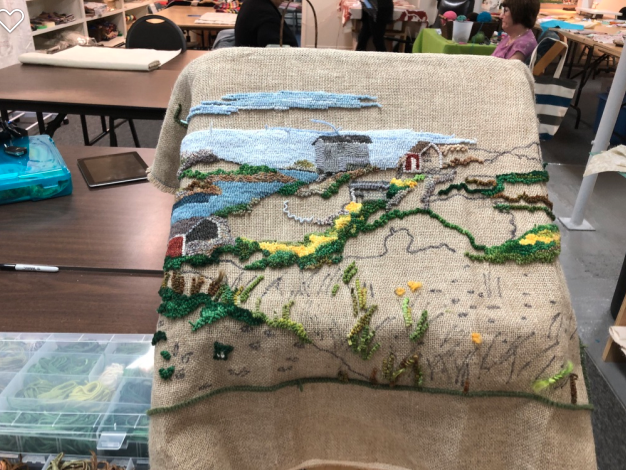
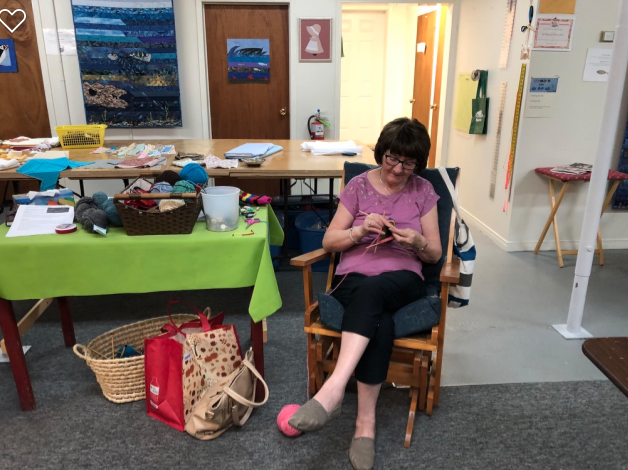
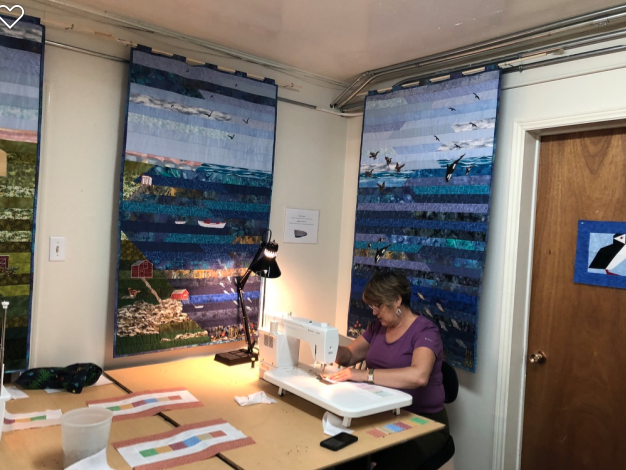
Also on Fogo Island there is a building that is a meeting place for various artisans.  Every Thursday quilters meet there to sew and make quilts.  These quilts are then sold through the local Artisan Guild.  Debbie dropped in and spent the next two hours talking and comparing “notes” with several dedicated quilters there.  She came away very impressed with the quality and designs of several quilts that she saw.  Also in the room were knitters, and rug hookers and she was able to talk with them also. There are about 75 artisans in this Guild.

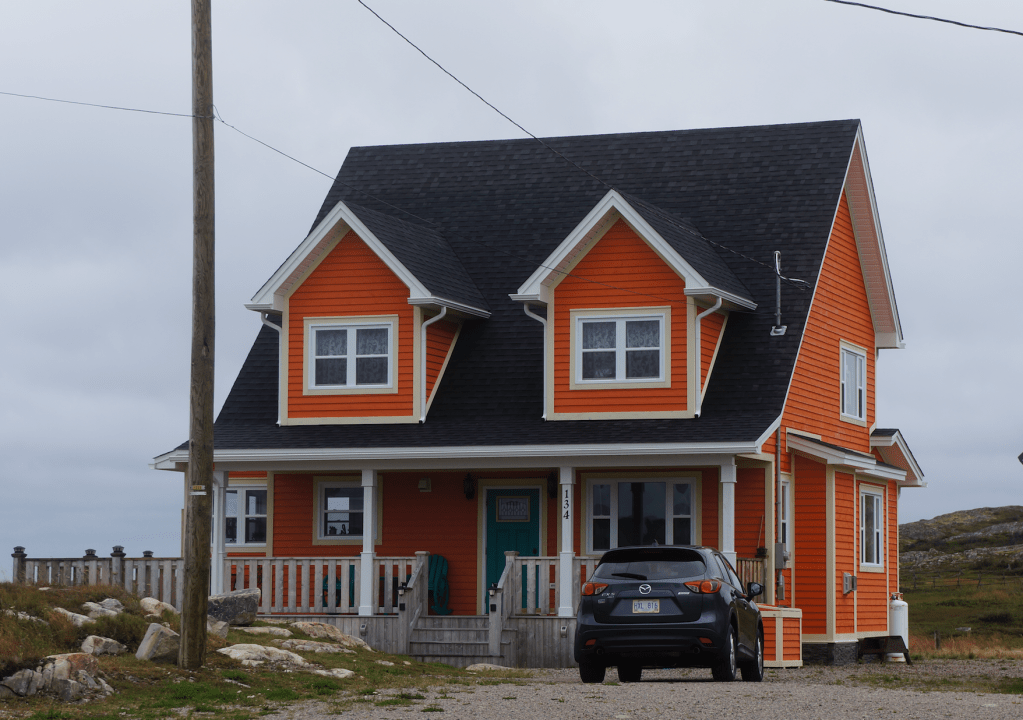
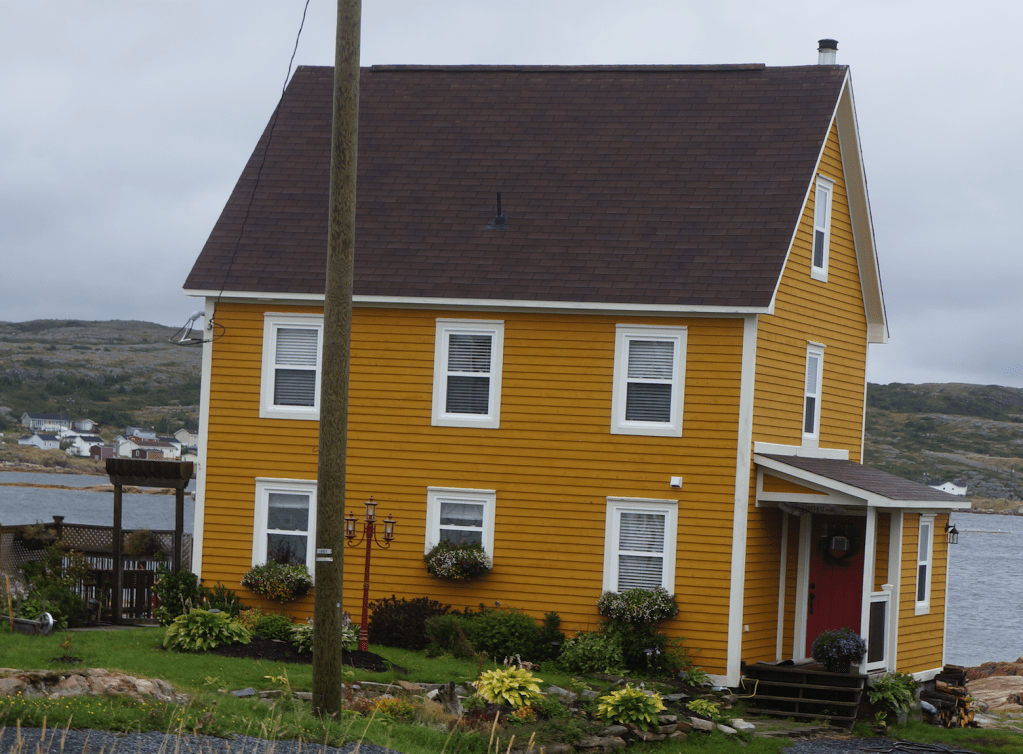
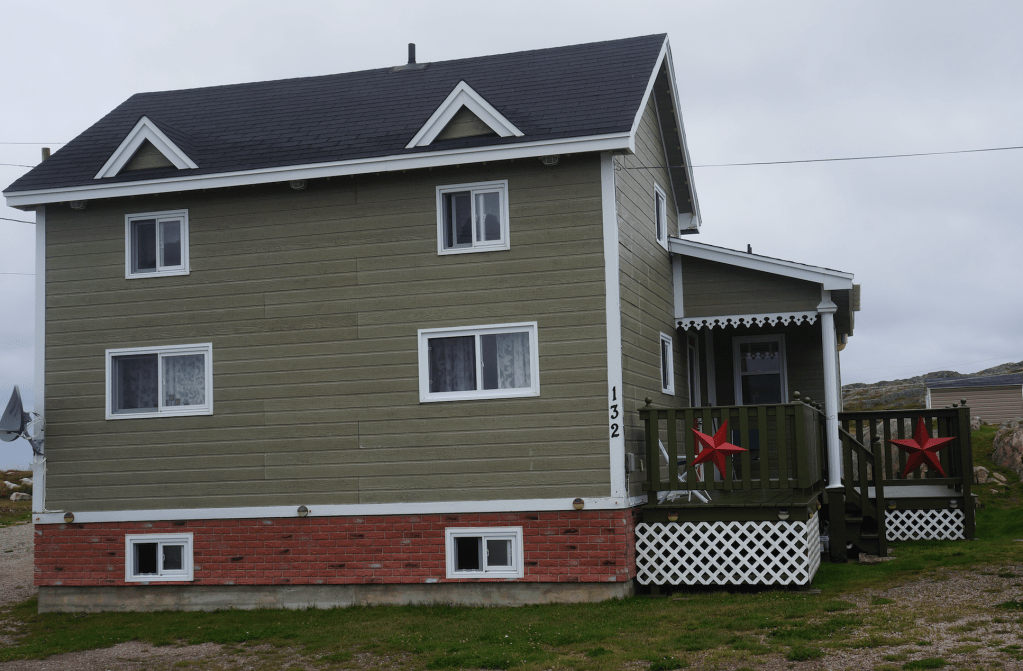
We had a wonderful lunch at the Cod Jigger’s Diner.  Debbie commented that the soup was the best homemade soup that we have had on this trip. As we travel across Newfoundland, we enjoy the many colors of the houses in the villages. The Newfoundlanders are not afraid to use colors for their houses.  

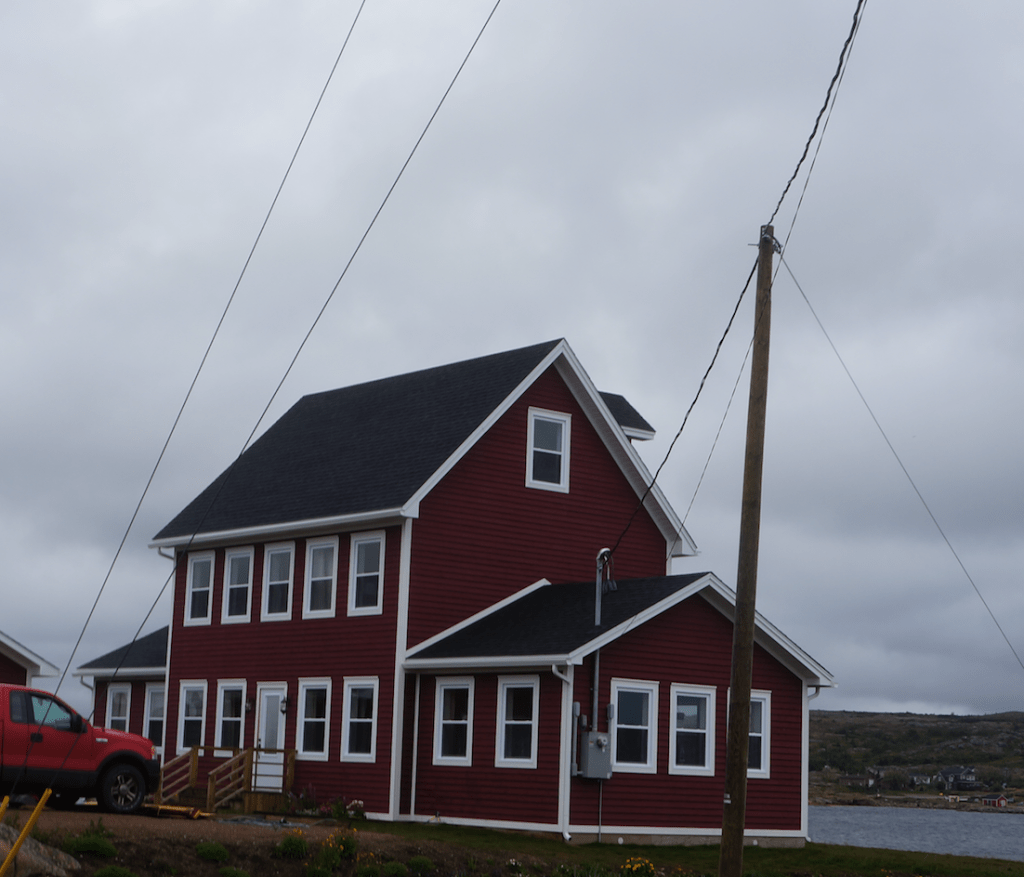
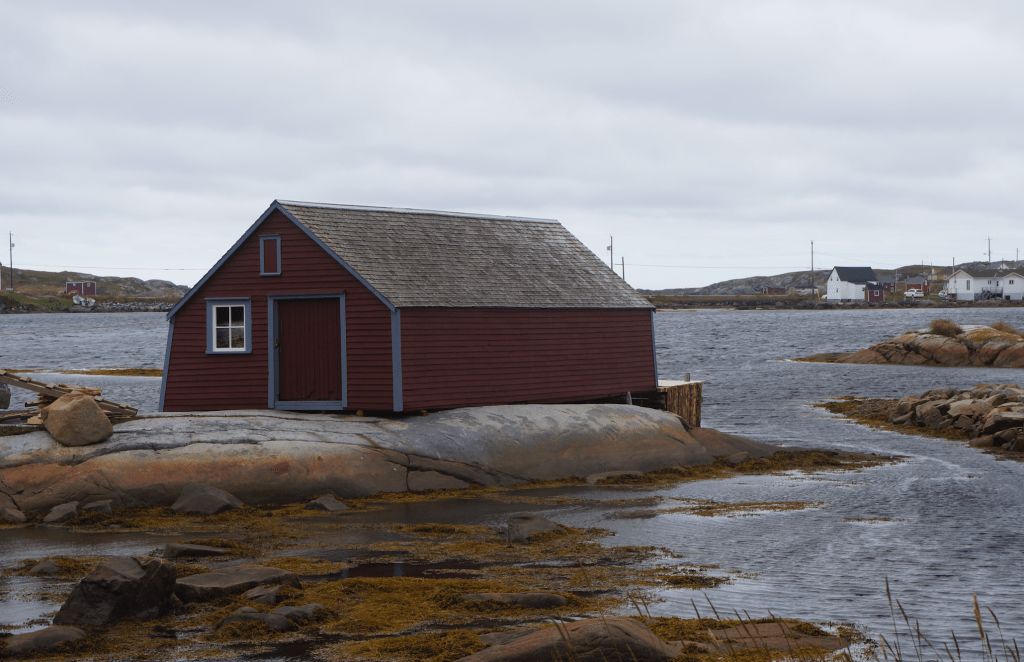
We then toured the other villages on the island.  The village of Tilting is one of the other fishing villages that is also an Historic site.  The homes are built all around the shoreline of the inlet.  Every other home has a short wharf that is supported on piers and at the end of each is a small boat house which houses the nets and equipment for the resident fisher.  Each house has the quintessential Salt Box design. Several generations of families have lived in the homes and additions have been built on over the years. One of our observations as we toured these villages is that although they are built in a haphazard fashion they are all painted brightly and are neat and tidy.  

We finally made it back to our trailer at the end of the bay, in Fogo.  The squid fishermen were still out on the water and the wind was still blowing hard. We went indoors and read and I worked on the blog. Tomorrow we will be taking the ferry to Change Island to visit the famous Newfoundland ponies.