June 30. 2019
Today was another day to “pull up stakes and move on”. We had enjoyed Moose Mountain Provincial Park, but we had decided to go to Yorkton to spend Canada Day there. The Parks had distributed a brochure showing the Canada Day festivities planned for the park. We were sad that we were leaving, as we would have enjoyed them, however, we had reservations in Yorkton. We left the Park after saying goodbye to Tracey and her family. They had suggested that we stop at the Red Barn Market approximately 4 kms past the park entrance as there was a farmer’s market there and reportedly to be quite an event. As we approached we were surprised by the number of cars parked along the highway and we decided to stop and take it in.
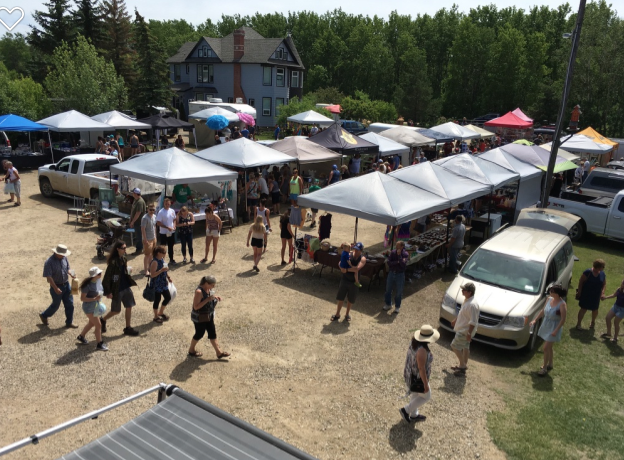
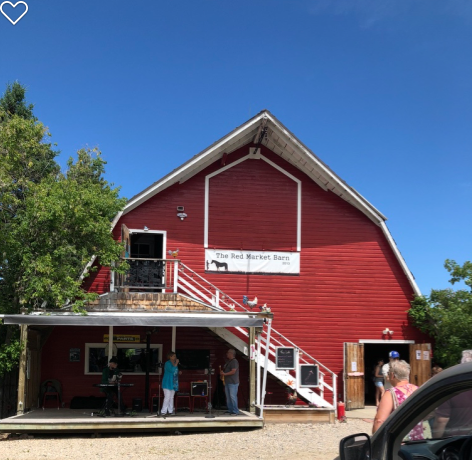
The place was packed with folks. Vendors of all sorts were selling crafts, vegetables, jams, ceramics, woodcraft, clothing and jewelry. A country Western band was entertaining the folks who were eating hot dogs and hamburgers. I found a small jar of Saskatoon berry jam, which I wanted for breakfasts. Debbie found some quilting patterns, so the stop was worthwhile and certainly a surprise, considering that the location is miles from any centre.
As we headed north toward Yorkton, we decided to divert west for 50 kms to take in the scenic drive through the Qu’appelle valley. The Qu’appelle valley stretches from the outskirts of Regina for 150 kms east towards the Manitoba border. The valley was created by ice age glaciers and has a series of lakes and the Qu’appelle river flowing east to Manitoba. The scenery is beautiful, with rolling hills, lush fertile fields and forests on the flanks of the hills. It truly was worth taking the extra time to see part of this valley.
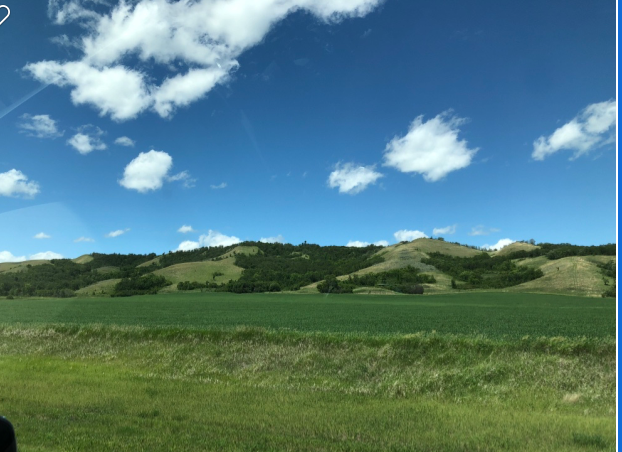
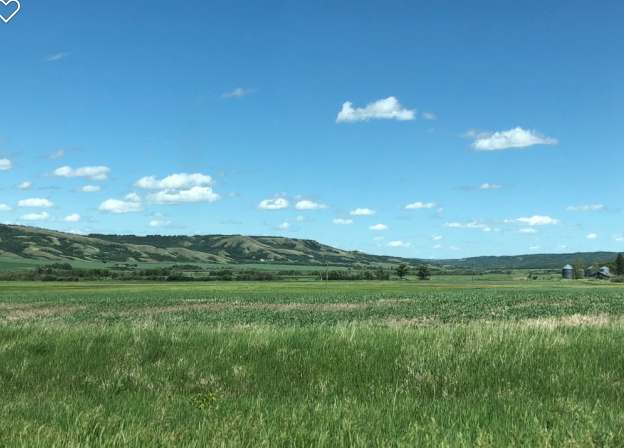
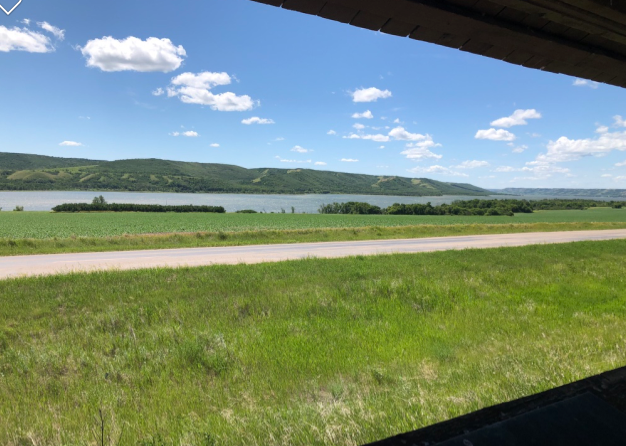
We climbed up out of the valley and continued Northeast on Hwy#47 and #10 to Yorkton. This is rich farmland and the crops are green and growing vigorously. In our travels through Saskatchewan, we have learned that Saskatchewan is Canada’s number one producer of crops. Saskatchewan grows 99% of Canada’s chick peas.96% of lentils, 86% of Durham wheat, 83% of flaxseed and 70% of mustard. They also grow half of Canada’s canola. Pretty impressive stats, and we were fortunate to see a lot of this province’s farmlands and their communities.
We found the Yorkton Municipal Campsite on the edge of the town and checked in. We were given a quiet site with no immediate neighbors and set up for the evening. Tomorrow we are going to celebrate Canada Day with the locals.


